Application of Silicon Carbide Refractory Bricks in Aluminum Electrolytic Cells

The electrolytic cell is a crucial component in the aluminum electrolysis process, and the two main factors affecting its lifespan are the carbon cathode and the refractory lining. This section explores the application of silicon carbide refractory bricks in aluminum electrolytic cells and the current challenges they face.

Aluminum electrolytic cell linings can be categorized into bottom linings and side linings. The bottom lining functionally supports the cathode structure and provides insulation. The side linings primarily protect the steel outer shell from corrosion by the molten electrolyte.
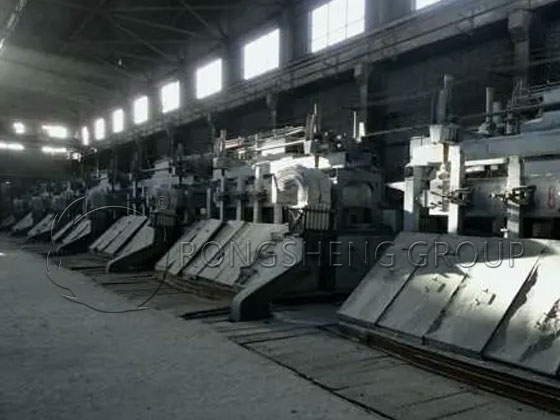
Aluminum Electrolysis Cells

Aluminum Electrolytic Cell

The side lining of an aluminum electrolytic cell is a crucial structural component. Modern concepts dictate that the sidewall material should possess the following important properties at high temperatures: high resistivity, good thermal conductivity, non-reactive to molten cryolite, low porosity, impermeability to electrolyte and aluminum, and resistance to air oxidation.

Since silicon carbide’s valence bond structure determines its superior properties, such as high strength, high hardness, high temperature resistance, oxidation resistance, high thermal conductivity, low thermal expansion coefficient, excellent thermal shock resistance, good chemical stability, and non-wetting by non-ferrous metals, and also exhibits good resistance to high-temperature chemical corrosion, it is particularly suitable as a refractory lining material for aluminum electrolytic cells.

With advancements in materials technology and the increasing capacity of electrolytic cells, the structure of the side lining material has evolved from the early double carbon block plus insulating brick structure to single-layer carbon blocks without insulating bricks, and ultimately to today’s single silicon carbide combined with silicon nitride materials.

Problems and Current Research Status

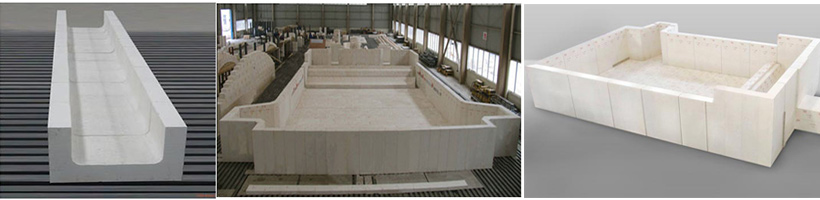
Silicon carbide refractory bricks are a new type of furnace-building material recently promoted and used in the non-ferrous metals industry, initially applied to a 320kA large prebaked aluminum electrolytic cell in an aluminum plant. In recent years, user experience has shown that regardless of whether pure silicon carbide refractory brick side blocks or composite side blocks are used, varying degrees of cracking and detachment have been commonly observed during production, with the silicon carbide layer in composite side blocks also exhibiting upward lifting.
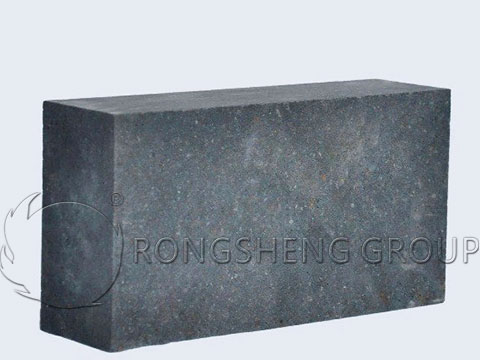
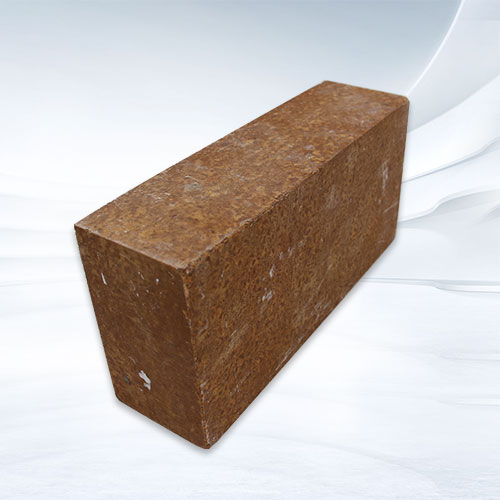
Silicon Carbide Bricks

Silicon Carbide Bricks

Temperature difference (with the upper edge of the artificial extension leg as the boundary) is the main cause of silicon carbide brick cracking. Although silicon carbide bricks have good thermal conductivity and a low coefficient of thermal expansion, because the products are fired at temperatures above 1450℃, forming a hexagonal ceramic structure, their resistance to thermal shock and temperature differences is poor. Under environments where repeated temperature differences are formed between the upper and lower parts of the silicon carbide refractory brick, it is extremely prone to cracking.

When the silicon carbide composite layer fractures, electrolyte seeps into the crack. When the electrolytic cell returns to normal temperature from the initial effect temperature, the electrolyte in the crack solidifies and shrinks, and new electrolyte enters and solidifies again. During the next effect, the solid electrolyte in the crack expands due to heat, pushing up the upper fractured block. When the cell temperature returns to normal, the electrolyte solidifies and shrinks again, forming a gap. Then, new electrolyte enters and solidifies again. During the next effect, expansion pushes the fractured block up again, and this process repeats, gradually raising the upper part of the fracture.

During aluminum electrolysis, the temperature approaches 1000℃. At this temperature, the erosion of the electrolytic cell lining mainly consists of three parts: the molten aluminum near the bottom, the molten electrolyte in the middle, and various corrosive gases (such as HF, AlN, and AlF4) in the upper part. Typically, in the electrolyte-alumina molten liquid, cation penetration is mainly Na+, and anion penetration is mainly F-.

Porosity, matrix phase, wettability, and other factors can all affect the erosion resistance of refractory materials. Materials with high porosity and large pore size generally have poor corrosion resistance because cryolite or molten aluminum can directly penetrate into the material’s interior. The limiting pore sizes of molten metal in refractory materials are 30 μm for molten steel, 5 μm for molten iron, and 0.5 μm for molten aluminum; therefore, molten aluminum has a very strong penetrating ability. A thin matrix phase results in good corrosion resistance, but its strength is directly affected; a thick matrix phase results in poor corrosion resistance. A large wetting angle between the material and molten aluminum leads to superior corrosion resistance.

The resistance of SiC materials with various bonding phases to electrolyte corrosion was studied. The results showed that, except for self-bonded SiC, Si3N4-bonded SiC materials exhibited the best electrolyte resistance. Although the Si3N4 bonding phase was wetted by the melt, the penetration was shallow and no decomposition occurred.

The results indicate that damage to Si3N4-bonded SiC products in the air interface is mainly due to the oxidation of Si3N4 and SiC. At the cryolite electrolyte-air interface, the vicious cycle of oxidation-erosion-penetration formed by chemical reactions results in the most severe corrosion. The dissolution of electrolytes in molten aluminum and the porosity of the sample structure itself are likely the main reasons for the corrosion of Si3N4-bonded SiC products in molten aluminum.
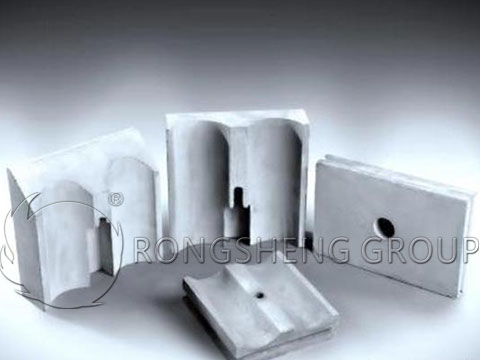
Silicon Nitride-Bound Silicon Carbide Bricks

Silicon Nitride-Bound Silicon Carbide Bricks

The erosion behavior of silicon nitride-bound silicon carbide refractories with different silicon nitride contents in cryolite molten salt was studied. The results showed that corrosion mainly occurred before 25 hours. After 25 hours, the weight gain of the Si3N4/SiC material remained essentially unchanged, while the Si3N4/SiC material with a low Si3N4 content (13%) exhibited good resistance to cryolite melt corrosion.

The study found that during aluminum electrolysis, porosity and β-Si3N4 content significantly affected the erosion resistance of Si3N4-bound SiC refractories. Higher porosity or higher β-Si3N4 content resulted in more severe erosion. A SiC aggregate content between 80% and 85% showed good erosion resistance.
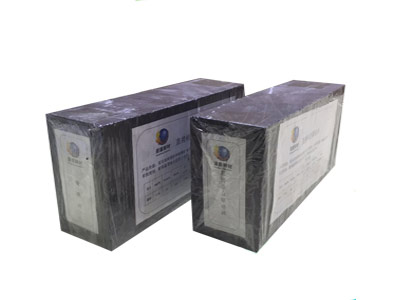
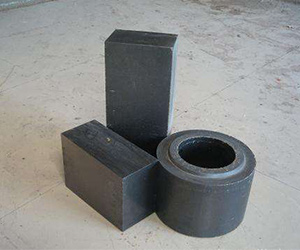
 

What are the Differences in the Refractory Materials Used for the Inner Lining of Electric Furnaces?

An electric arc furnace is an electric furnace that uses the energy of an electric arc to smelt metals. Industrially used electric arc furnaces can be divided into three categories: The first category is the direct heating type, where the electric arc occurs between a dedicated electrode rod and the charge being smelted, with the charge directly receiving the heat from the arc. It is mainly used for steelmaking, and also for smelting iron, copper, refractory materials, and refining molten steel. The second category is the indirect heating type, where the electric arc occurs between two dedicated electrode rods, with the charge receiving the radiant heat from the arc. It is used for smelting copper, copper alloys, etc. This type of furnace is noisy and produces poor smelting quality, and has gradually been replaced by other types of furnaces. The third category is called a submerged arc furnace, which uses high-resistivity ore as raw material. During operation, the lower part of the electrodes is generally buried in the charge. Its heating principle utilizes both the heat generated by the resistance of the charge when current passes through it and the heat generated by the electric arc between the electrodes and the charge. Therefore, it is also called an electric arc resistance furnace.

Electric Arc Furnace Wall Structure

The electric arc furnace wall is divided into three parts according to its operating conditions: the main furnace wall, the slag line, and the hot spots.

  • ① In the main furnace wall of high-power and ultra-high-power electric furnaces, directly bonded magnesia-chrome bricks, pre-reacted magnesia-chrome bricks, and magnesia bricks are mainly used.
  • ② The hot spots are close to the electric arc and are subjected to high-temperature radiation and slag splash, resulting in particularly severe damage. Oil-impregnated magnesia bricks, directly bonded magnesia-chrome bricks, cast magnesia-chrome bricks, and magnesia-carbon bricks are mainly used.
  • ③ The slag line is severely corroded by molten steel and slag, and its operating conditions are harsh. Therefore, high-quality refractory materials similar to those used for the hot spots should be used.

Due to the different operating conditions of different parts of the furnace wall, single-material construction is rare. Most furnaces use a combination of various bricks to achieve balanced corrosion. In the upper part of the furnace wall, the slag line and hot spots are weak points due to uneven corrosion caused by heat load, chemical erosion, and mechanical action. These “hot spots” can even limit the service life of the furnace wall. To meet the needs of these harshly corrosive areas, magnesia-carbon bricks, which are resistant to corrosion, thermal shock, and have low linear expansion, are increasingly used in the high-corrosion zones of electric arc furnaces. They have become the preferred refractory material for the walls of UHP electric arc furnaces both domestically and internationally.

Magnesia Chrome Bricks

What are the differences in the refractory materials used for the inner lining of electric arc furnaces?

Initially, high-temperature fired direct-bonded magnesia-chrome bricks were used for electric arc furnace walls. In the 1970s, to meet the needs of large electric arc furnaces and the hot spots of UHP (Unified High-Performance) electric arc furnaces, a combination of fused cast magnesia-chrome bricks and rebonded magnesia-chrome bricks was tested. In 1976, “Corhart” fused cast magnesia-chrome bricks were widely used in UHP electric arc furnaces, with 90%–95% used in hot spots and some in the slag line area. Fused cast bricks have a high degree of direct bonding between the magnesia-chrome spinel and the slag, resulting in a dense structure.

The development of electric arc furnace steelmaking in the United States was rapid. A major development that effectively improved the productivity of electric arc furnace steelmaking was the development and use of magnesia-carbon bricks in the high-loss areas of the furnace wall, which had lower raw material and process costs but better performance. These magnesia-carbon bricks were produced from high-purity, high-density sintered magnesia sand with a CaO/SiO2 ratio of 3, containing approximately 10% carbon, with an apparent porosity of 3% and a bulk density greater than 2.95 g/cm³.

In the former Soviet Union, electric arc furnace walls were mostly made of magnesia materials. Reconstituted magnesia-chrome bricks, produced from fused periclase and chromite sand, were tested and used in the severely eroded areas above the taphole of 100t electric arc furnaces. These bricks had few low-melting-point mineral phases, good corrosion resistance, and performed well.

In the UK, electric arc furnace walls generally use ordinary chrome-magnesia bricks (70% chromite, 30% seawater magnesia), fired magnesia-chrome bricks (70% seawater magnesia, 30% chromite), and high-quality magnesia bricks made from seawater magnesia. High-temperature fired magnesia bricks prepared from seawater magnesia or fired magnesia bricks impregnated with pitch and tar were used in hot spots and slag lines, achieving good results.

In Japan, electric arc furnace walls used magnesia-chrome bricks and magnesia bricks. In hot spots, magnesia bricks, magnesia-carbon bricks, cast magnesia-chrome bricks, and carbon bricks were used.

In the 1980s, my country’s electric arc furnace steelmaking developed rapidly, evolving from ordinary power electric arc furnaces to ultra-high power electric arc furnaces. Advances in electric arc furnace (EAF) steelmaking technology are closely linked to the synchronous development of refractory material technology, promoting a steady increase in EAF lifespan and a gradual decrease in refractory material consumption per unit area. My country’s ordinary power EAFs employ two types of linings: one is a monolithic lining made of rammed mortar containing low- and medium-temperature binders in sintered magnesia and fused magnesia; the other is a lining constructed with tar-bonded magnesia bricks and magnesia-carbon bricks of various standards. Alkaline carbonaceous materials are the main materials for furnace wall linings, and magnesia-carbon bricks play a crucial role in EAFs.

Application and Damage Mechanism of Magnesia-Carbon Bricks in Electric Arc Furnaces for Steelmaking

The working environment of electric arc furnace linings is extremely harsh, posing a significant challenge to the lining refractory materials. The two most severe challenges are temperature variations within the furnace and changes in slag composition.

Ordinary electric arc furnace operations complete the melting, oxidation, and reduction stages within the furnace. However, UHP (Ultra-High Power) electric arc furnaces utilize forced melting to significantly increase the melting rate, while alloying is achieved after refining in an LF (Fuel-Fuel-Low Power) furnace. Therefore, the specific power level of UHP electric arc furnaces is generally above 600 kVA per ton of steel, and modern furnaces reach 1000 kVA per ton of steel. The relationship between power level, furnace temperature, and melting time is discussed.

service life of MgO-C bricks in large converters
Magnesia Carbon Bricks

The high power level of UHP electric arc furnaces results in a surface heat load of up to 1000 kVA/m² on the furnace lining. During the melting period, the furnace lining is rarely shielded, and combined with the highest radiation levels, this creates a hot spot on the lining opposite the electric arc. The minimum heat load occurs between phases, in the “cold zone,” and the difference in heat load between the hot and cold zones can reach 60%. This demonstrates the spatial unevenness of temperature within the electric arc furnace. Under these conditions, some hot zones can reach temperatures exceeding 2000℃. This is extremely detrimental to the slag resistance of magnesia-carbon bricks, as slag penetrates these hot spots and erodes the entire brick structure. Furthermore, temperature differences increase internal thermal stress within the brick, making it prone to spalling under the mechanical erosion of the slag.

Another characteristic of electric arc furnace steelmaking is the wide variety of steel grades produced. This variety results in diverse slag composition and properties, making the slag erosion on the MgO-C bricks of the furnace wall extremely complex. The intense boiling of molten steel and slag, the stirring, and the thermal shock from the electric arc cause the furnace lining to experience far more severe erosion than in a converter. Consequently, while the service life of MgO-C bricks in large converters reaches thousands or even tens of thousands of heats (using slag splashing protection technology), the service life of electric arc furnace walls remains only 300-500 heats. The composition of primary and final slag from smelting the same steel grade can vary significantly depending on changes in smelting parameters. The variation in composition is even more pronounced when smelting primary and final slag from different steel grades. Similar to the situation with slag in converter processes, the most significant variation is primarily in binary basicity.

Traditional electric arc furnace steelmaking processes encompass the entire melting-refining process, with each furnace lasting 3-4 hours. The composition of the slag and reducing slag varies significantly during the oxidation and reduction phases. For the furnace lining refractory materials, this involves alternating erosion by acidic and basic slags. For example, in 1Cr18Ni19Ti steel, the initial slag has a C/S ratio <1, while the final slag has a ratio >2. Electron probe microanalysis has been used to thoroughly study the phase combinations and chemical composition changes of the molten pool slag and splashed slag during different smelting cycles in traditional steelmaking processes. While the percentage content of each phase cannot be determined to estimate the overall slag composition, changes in phase chemical composition can still reveal variations in the overall slag composition. The melting and oxidation phases produce oxidizing slag; the refining and alloying phases produce reducing slag. Except for some characteristic elements of special alloy steels, the phase combinations in these slags follow normal patterns. However, the micro-regional composition of the phases allows analysis of their crystallization behavior. For instance, the banded structure and compositional changes of spinel in the molten pool slag are due to variations in slag composition during the smelting cycle. This also reflects the cation substitution during spinel nucleation and growth, changing from a high-chromium type to a high-alumina type, which is also a characteristic of the chromium return and deoxidation process. During the oxidation period, the spinel remains high-chromium, while during the refining-alloying period, it becomes high-FeOn type.

The erosion of magnesia-carbon bricks occurs under the alternating and cyclical action of various slag compositions. In each furnace run, for each heat of steel, and even at different smelting stages within a single heat, the erosion behavior of the magnesia-carbon brick working surface changes. From changes in slag basicity to changes in slag oxidizability, and even changes in slag fluidity, these changes all have different effects on the erosion of magnesia-carbon bricks.


Refractory Bricks Can be Divided into Five Categories According to Their Materials

Refractory bricks, as the name suggests, are high-temperature resistant bricks, also known as fire bricks. They are refractory materials with specific shapes and sizes. Based on their manufacturing process, they can be classified into fired bricks, unfired bricks, electrofused bricks, and refractory insulating bricks. Based on their shape and size, they can be classified into standard bricks, ordinary bricks, and special-shaped bricks. According to their composition, refractory bricks can be divided into five main categories: silica-alumina series refractory bricks, basic series refractory bricks, carbon-containing refractory bricks, zirconium-containing refractory bricks, and insulating refractory bricks.

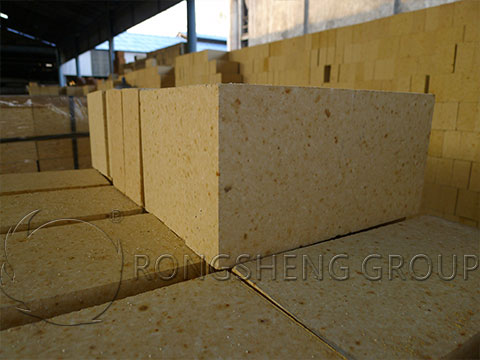
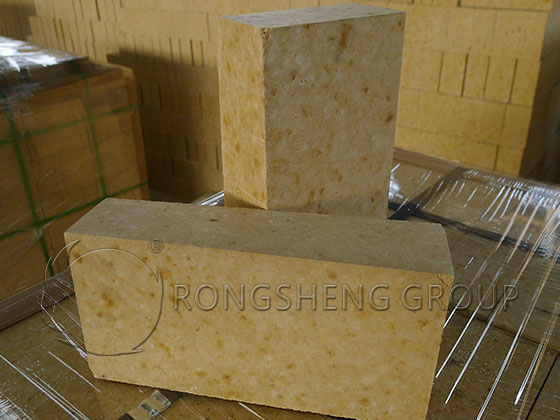
RS High Alumina Bricks for Sale

Silicon-Alumina Series Refractory Bricks

  1. High-Alumina Refractory Bricks: These are neutral refractory materials made from high-alumina bauxite clinker as the main raw material, soft clay and waste pulp as binders, and multi-grade particle size distribution. They are produced through high-pressure molding, drying, and high-temperature firing, resulting in an Al2O3 content greater than 75%. High-alumina bricks are classified into four grades based on Al2O3 content: extra-grade, grade 1, grade 2, and grade 3. Extra-grade high-alumina bricks have an Al2O3 content of no less than 80%, grade 1 no less than 75%, grade 2 no less than 65%, and grade 3 no less than 55%. High-alumina bricks are widely used in the steel industry, non-ferrous metal industry, and other industries.
  2. Clay Bricks: These are refractory materials made from clay clinker as aggregate and refractory clay as a binder, with an Al2O3 content of 30-48%. Clay bricks are typically made from hard clay as the main raw material, pre-calcined into clinker, then mixed with soft clay and molded using a semi-dry or plastic method, and fired at 1300-1400°C. They are commonly used refractory bricks in blast furnaces, hot blast stoves, heating furnaces, power boilers, lime kilns, rotary kilns, and ceramic kilns.
  3. Silica bricks refer to refractory bricks with a SiO₂ content of over 93%, and are a major type of acidic refractory brick. They are mainly used for lining coke ovens, and also in various glass, ceramic, and carbon calcining furnaces, and in high-temperature load-bearing parts of hot blast stoves. However, they are not suitable for use in thermal equipment with temperatures below 600°C and large temperature fluctuations.
  4. Corundum refractory bricks refer to refractory bricks with an Al₂O₃ content of not less than 90%, with corundum as the main phase. They are divided into sintered corundum bricks and fused corundum bricks.
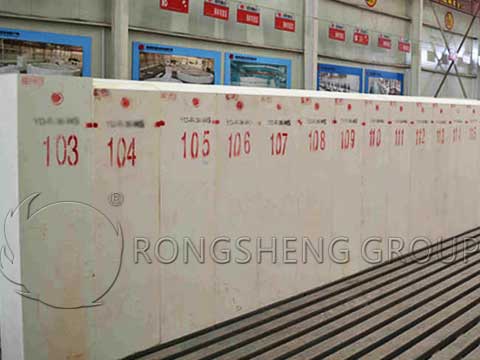
Rongsheng Magnesite Brick

Basic Refractory Bricks

Basic refractory bricks refer to refractory products with basic oxides and MgO and CaO as the main components. The main varieties include:

  1. Magnesia Refractory Bricks: Made from magnesite, with periclase as the main crystalline phase, and an MgO content of 80-85% or higher. Magnesia refractory bricks are the most important type of basic refractory brick, possessing high refractoriness and excellent resistance to basic slag and iron slag. They are mainly used in open-hearth furnaces, oxygen converters, electric furnaces, and for smelting of advantageous metals.
  2. Dolomite Bricks: A type of basic refractory brick produced using dolomite as the main raw material. Widely used in basic converters and can also be used as linings for certain ladle refining ladles.
  3. Forsterite Refractory Bricks: A type of refractory brick with forsterite (MgO-SiO₂) as the main component. Primarily used as checker bricks in open-hearth furnaces, ingot casting bricks, furnace bottoms in heating furnaces, and also showing good performance in copper smelting furnaces.

Carbon-Containing Refractory Bricks

Carbon-containing refractory bricks are made from carbon or carbon compounds.

  1. Carbon Bricks: High-temperature resistant, neutral refractory products made primarily from carbonaceous materials with the addition of appropriate binders. Carbon bricks are widely used for lining the bottom, hearth, belly, and lower part of blast furnaces.
  2. Graphite-Based Refractory Products: Refractory materials made from natural graphite as raw material and clay as a binder. These products mainly include graphite clay crucibles, cast steel stopper bricks, nozzle bricks, and steel ladle lining bricks.
  3. Silicon Carbide Refractory Products: High-grade refractory materials produced from silicon carbide (SiC). They have good wear resistance and corrosion resistance, high high-temperature strength, high thermal conductivity, low coefficient of linear expansion, and good thermal shock resistance. In iron and steel smelting, they can be used for steel ladle linings, nozzle stoppers, and blast furnace bottoms.
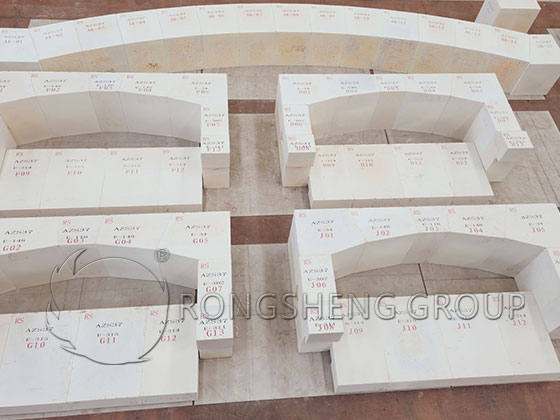
Fused AZS Bricks for Glass Kiln

Zirconium-containing Refractory Bricks

Zirconium-containing refractory bricks are an acidic material made from natural zircon sand. Zirconium refractory bricks have good slag resistance, low thermal expansion coefficient, high load softening temperature, high wear resistance, and good thermal shock resistance.

  1. Zircon bricks: They exhibit good resistance to slag and molten steel corrosion and have good thermal shock resistance. They are used as linings for stainless steel ladles, continuous casting ladles, casting gate bricks, sleeve bricks, and high-temperature induction furnace linings.
  2. AZS fused alumina bricks, also known as fused corundum bricks, have become an important refractory material in key parts of glass furnaces. They have strong resistance to molten glass corrosion.
  3. Zirconium-mullite fused alumina bricks: Characterized by a dense crystal structure, high load softening temperature, good thermal shock resistance, high mechanical strength at both room and high temperatures, good wear resistance, good thermal conductivity, and excellent resistance to slag corrosion. They are used in the discharge ports of metallurgical heating furnaces, soaking furnaces, and calcium carbide furnaces.
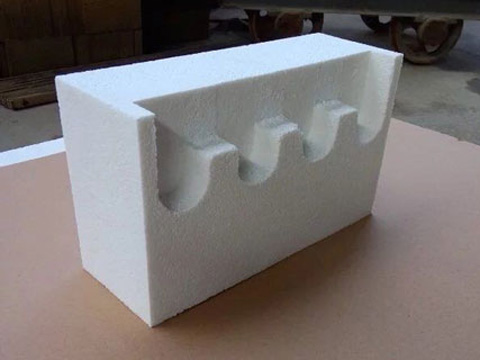
Alumina Bubble Brick - Rongsheng Refractory
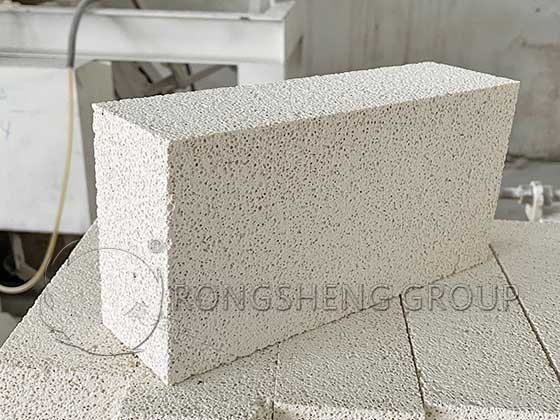
Alumina Bubble Brick

Insulating Refractory Bricks

Insulating refractory bricks, also known as lightweight refractory materials, refer to refractory materials with high porosity, low bulk density, and low thermal conductivity. They can be divided into:

  1. High-alumina insulating lightweight refractory bricks: These are lightweight insulating bricks with an alumina content of not less than 48%. They can be used for building insulation layers and in areas not subject to strong erosion or scouring from molten materials at high temperatures. The contact temperature should not exceed 1350°C.
  2. Mullite insulating refractory bricks: These are high-quality insulating refractory bricks made primarily from high-alumina bauxite clinker. A porous structure is formed through foaming or chemical methods. The mixture is then mixed with water to create a plastic mortar or slurry, which is extruded and fired at high temperatures. These bricks can be directly exposed to flames and exhibit high temperature resistance, high strength, and good energy-saving performance. They are used for linings in pyrolysis furnaces, hot blast stoves, ceramic roller kilns, and various resistance furnaces.
  3. Clay-based insulating refractory bricks are made primarily from refractory clay. They are produced by mixing refractory clay, cenospheres, and other binders with sawdust, followed by batching, molding, drying, and firing.
  4. Cenosphere bricks are insulating refractory products made primarily from cenospheres. Cenospheres are hollow aluminosilicate glass spheres floated from fly ash in thermal power plants. Cenosphere bricks can be formed using a semi-dry method.
  5. Alumina bubble bricks are made primarily from alumina hollow spheres and alumina powder, combined with other binders, and fired at 1750℃. The maximum service temperature is 1800℃. These bricks have high mechanical strength, several times that of general lightweight products. They are widely used in high-temperature and ultra-high-temperature kilns such as gasifiers in the petrochemical industry, reactors in the carbon black industry, and induction furnaces in the metallurgical industry, achieving very satisfactory energy-saving effects. Hollow alumina spheres have a refractoriness of over 1750℃, good thermal stability, low reheat linear change rate, durability, strong heat insulation properties, and low thermal conductivity.


The Effect of AZS Refractory Bricks Fused Zirconia Corundum Bricks in Glass Furnaces

Fused zirconia-corundum bricks, commonly known as galvanized iron bricks or cast zirconia-corundum bricks, are the most important refractory materials for ensuring the normal operation of glass melting furnaces. Currently, the increased melting rate, extended furnace life, and reduced fuel consumption in glass melting furnaces both domestically and internationally are mainly achieved through the use of this refractory material.

Fused Zirconia-Corundum Bricks

Fused zirconia-corundum bricks, also known as corundum-zirconia products, have a main chemical composition of 50%-70% Al₂O₃, 20%-40% ZrO₂, and the remainder SiO₂. The main mineral composition is zircon (ZrO₂), corundum (α-Al₂O₃), and a glassy phase. Zirconia crystals form the backbone of the brick. ZrO₂ has a high melting point (2715℃), good chemical stability, and strong resistance to acidic and alkaline media, especially molten glass.

Glass Kiln AZS Refractory Bricks

The performance of fused zirconia-corundum bricks improves with increasing ZrO₂ content. Generally, zirconia-corundum bricks are graded according to ZrO₂ content, such as 33%, 36%, and 41% (or 30%, 40%, and 50%), but there is no unified standard. Currently, products containing 33% zirconium are most commonly used, with a density of 3.65-3.7 g/cm³ and a maximum operating temperature of around 1700℃.

Fused zirconia-corundum bricks are used in industrial furnaces such as glass melting furnaces. In glass melting furnaces, they are used for lining the upper tank walls, small furnace arches, small furnace stacks, tongue arches, and breast walls.

Precautions for using fused zirconia-corundum bricks:

  • (1) Irregular thermal expansion. The expansion curve of fused zirconia-corundum bricks exhibits an anomaly around 1000℃, where the internal ZrO₂ crystals undergo a reversible crystal transformation, resulting in significant volume changes. Therefore, products containing ZrO₂ are not suitable for use in areas where the temperature fluctuates rapidly around 1000℃. During furnace baking and kiln firing, the temperature change between 900 and 1150℃ should not be too large, generally not exceeding 15℃/h, and a steady temperature rise is required.
  • (2) Shrinkage cavities often appear at the casting port during casting, resulting in more pores and lower density in the brick. Therefore, when lining the walls of the glass melting tank, the shrinkage cavities should be directed inwards towards the furnace. If the casting port faces outwards, leakage of molten glass can occur when the brick is eroded to a very thin thickness. When used in the upper flame space of the furnace, the service life is very long, and leakage of molten glass does not occur. Therefore, the casting port is always directed outwards to extend the service life.
  • (3) When fused zirconia-corundum bricks are laid in contact with clay refractory bricks, eutectic melting will occur at a high temperature of 1300℃. Therefore, when selecting refractory materials, it is important to avoid laying two refractory materials with severe eutectic melting in contact. For example, silica bricks placed below fused zirconia-corundum bricks are most susceptible to erosion by the fused zirconia-corundum bricks.

AZS Refractory Bricks for Glass Furnaces

Electrominated zirconia-corundum products for glass furnaces are classified into three grades based on their zirconia content: AZS-33 (33% zirconia content), AZS-36 (36% zirconia content), and AZS-41 (41% zirconia content). The products are further classified into two grades: Y (first-class) and H (qualified) based on their physicochemical properties, dimensional tolerances, and appearance.


Physicochemical Indicators 33# fused zirconia-corundum bricks 36# fused zirconia-corundum bricks 41# fused zirconia-corundum bricks
SiO2 14–16 ≤14.0 ≤13.0
Al2O3 47.55–50 44.55–50.5 44–48
ZrO2 32–36 35–40 40–44
Na2O 1.4–1.5 1.4–1.6 ≤1.3
Fe2O3+TiO2+CaO+k2O ≤2.5 ≤2.5 ≤2.5
room temperature compressive strength(Mpa) 350 350 350
thermal expansion coefficient(%) 0.8 0.8 0.8
Glass phase eluent temperature(℃) >1400℃ >1400℃ >1410℃
Resistant to glass corrosion (1500℃, 36 hours, ordinary glass) ≤1.4 ≤1.3 ≤1.2
density Ordinary casting ≥3.4 ≥3.5 ≥3.55
Inclined casting ≥3.45 ≥3.55 ≥3.6
No shrinkage cavities in casting ≥3.7 ≥3.8 ≥3.9
Softening temperature under load at 0.2 MPa >1700℃ >1700℃ >1700℃

The Application Effects of AZS Refractory Bricks in Glass Furnaces

AZS refractory bricks, scientifically known as fused cast AZS bricks, primarily serve glass furnaces. They are made by completely melting the raw materials, casting them into a mold, and then cooling and solidifying them. Shrinkage cavities caused by volume shrinkage during solidification are a significant concern during use. AZS refractory bricks (fused zirconia-corundum bricks) can be cast using ordinary casting, inclined casting, shrinkage-cavity-free casting, and quasi-shrinkage-cavity-free casting methods. These different casting methods cater to the requirements of various parts of ceramic frit furnaces, sodium silicate furnaces, and glass furnaces. They are erosion-resistant, corrosion-resistant, and have a long service life. Currently, the most commonly used method is electrofusion oxidation casting.

The development and evolution of AZS refractory bricks are driven by three major factors. First, glass manufacturers often need to adjust glass quality supply and demand to maintain minimum standards. Second, financial requirements for glass furnaces necessitate longer furnace operating cycles. Third, the impact of pure oxygen combustion systems. These three requirements typically determine the selection of refractory bricks during kiln repairs. These factors also influence glass manufacturers’ selection of refractory materials during kiln maintenance and the adoption of new techniques for large-scale overhauls during the operating cycle.

The application of molten alumina bricks in the melting pool roof has established its use. It is particularly prevalent in pure oxy-fuel furnaces used for melting high-quality glass. Before the advent of pure oxy-fuel technology, only β-alumina bricks were used in the melting pool roof structure, and no molten alumina bricks were used for the melting pool roof. Currently, both β-alumina and α-β-alumina molten castings are used in the production of tin-fiber (screen cone), float glass, and borosilicate glass in pure oxy-fuel furnaces, either partially or entirely, on the furnace roof. Molten alumina bricks can typically operate up to 1600°C or 1650°C (depending on the glass product), while furnace roofs constructed with fused alumina bricks can operate successfully at 1700°C. This creates better conditions for glass manufacturers producing refractory glass. AZS refractory bricks offer a longer lining life in glass kilns.


Refractory Materials Used in Thermal Power Generation Projects

Refractory materials used in thermal power generation projects are diverse. Based on application scenarios and performance requirements, they can be mainly classified into the following categories:

Shaped Refractory Products

  • Clay Refractory Bricks: Made primarily of refractory clay, containing 30%-46% alumina, with a refractoriness of 1580-17700℃, good thermal shock resistance, suitable for boiler walls, furnace roofs, etc., and resistant to acidic slag corrosion.
  • High-Alumina Refractory Bricks: Containing 48%-90% alumina, with a refractoriness ≥1700℃, high compressive strength, and high load softening temperature, commonly used in high-temperature areas of boilers, such as the furnace chamber and furnace bottom, and also exhibiting some resistance to alkaline slag corrosion.
  • Silica Bricks: Containing over 94% silica, with strong resistance to acidic slag corrosion and a high load softening temperature, but poor thermal shock resistance. Primarily used in acidic environments such as coke ovens and glass melting furnaces, and less commonly used in boiler bodies in thermal power generation, mostly in auxiliary equipment.
  • Magnesia bricks: with magnesium oxide as the main component, containing more than 80%-85% magnesium oxide, the refractoriness is higher than that of clay bricks and silica bricks. They have good resistance to alkaline slag and iron slag and are often used in alkaline environments such as open-hearth furnaces and oxygen-blown converters. They are also used in specific high-temperature equipment in thermal power generation.

Unshaped Refractory Materials

  • Refractory Castables: Composed of aggregates, fine powder, and binders, delivered in a dry state. Mixed with water before casting. Suitable for complex-shaped parts such as boiler furnaces, bottoms, and tops. Common types include clay-based, high-alumina, phosphate-bonded, and water glass-bonded. Features high compressive strength, thermal shock resistance, and abrasion resistance.
  • Refractory Plastics: Composed of aggregates, fine powder, binders, and liquid. Possesses good plasticity. Applied by ramming. Hardens upon heating after application. Suitable for boiler furnace walls and tops. Adaptable to complex shapes and temperature changes, offering good thermal shock resistance and abrasion resistance.
  • Refractory Rammed Mixtures: Non-adhesive before use. Applied by ramming. Suitable for boiler furnace bottoms and walls. Forms a dense refractory layer with high compressive strength and abrasion resistance.
  • Refractory mortar: Composed of refractory powder, binder, and additives, it is mixed with water to form a slurry. It is used as a joint material for shaped refractory products, ensuring the sealing and refractoriness of the joints.

Insulating Refractory Materials

  • Insulating Refractory Bricks: Such as clay insulating bricks, high-alumina insulating bricks, diatomaceous earth insulating bricks, etc., with a true porosity ≥45%, low bulk density, and low thermal conductivity, used as insulation layers in boiler furnace walls, roofs, and bottoms to reduce heat loss.
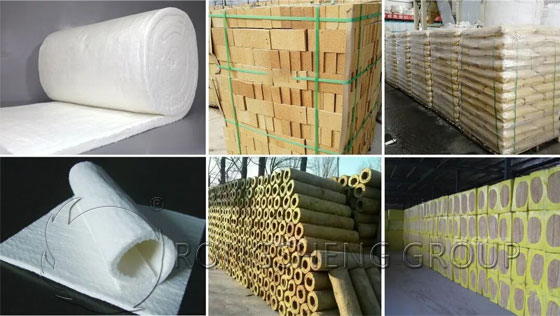
  • Ceramic Fiber Products: Including ceramic fiber blankets, ceramic fiber boards, ceramic fiber modules, etc., these products are heat-resistant (up to 1260℃ and above), have extremely low thermal conductivity, and good thermal shock resistance. They are used for insulation and heat preservation in boiler furnaces, roofs, and walls, effectively reducing heat loss.
  • Rock wool products: Made from natural rock through high-temperature melting, they possess low thermal conductivity, high refractory limit, and good mechanical strength. They are used for heat insulation and thermal insulation of boiler furnace walls, roofs, and bottoms, and are particularly suitable for environments requiring fireproofing and heat insulation.

The selection of the above refractory materials must be based on a comprehensive consideration of factors such as the specific application scenario of the thermal power plant project, temperature, slag properties, and mechanical load to ensure the safe and efficient operation of boilers and other equipment.

How to Implement High-Temperature Thermal Insulation Solutions for Power Plants?

A thermal power plant, or CDP, is a factory that uses the chemical energy of coal, oil, natural gas, or other fuels to produce electricity. A thermal power plant’s generator unit consists of three main components: a boiler, a steam turbine, and a generator, along with numerous auxiliary equipment and piping.

Thermal Insulation Solutions for Power Plants

Common Thermal Insulation Materials for Power Plants

External thermal insulation materials for power plants: Aluminum silicate fiber blankets, rock wool, glass wool, silicate boards, felt, pipe shells, boards, cloth, calcium silicate boards, pipe shells, aerogel composite insulation felt.

Other refractory materials for power plant insulation: Acid-resistant castables, wear-resistant castables, various light and heavy castables, refractory bricks, insulating bricks.

Zoned Thermal Insulation Solutions for Power Plants

The key to power plant insulation is first to divide the area into three main insulation zones based on application zoning. After on-site investigation, each zone is divided into three main insulation sections, and then insulation solutions are designed for each section.

High-Temperature Insulation Solution for Power Plant Boilers

Power plant boiler insulation includes the boiler body and some auxiliary equipment. Fuel burns in the boiler furnace, releasing heat energy. This heat is transferred through the metal walls, converting the water in the boiler into superheated steam with a certain pressure and temperature. The steam is then sent to the turbine, which drives the generator to produce electricity. The temperature of the superheated steam inside the boiler is 540℃.

Power Plant Boiler Body Insulation Solution

The main insulation layer of the power plant boiler body consists of: high-temperature anti-corrosion coating (anti-corrosion layer) + 100mm rock wool felt or ceramic fiber blanket (insulation layer) + galvanized flexible wire mesh (binding layer) + plastering material (surface layer) + ceramic fiber blanket (protective layer b) + fiberglass cloth (protective layer a) + aluminum powder heat-resistant paint (surface layer).

Insulation Material Selection for Other Insulation Components of the Boiler Insulation System

  • Boiler Water-Cooled Wall Insulation: Alumina Bricks + Rock Wool Board
  • Furnace Top Cover Insulation: Ceramic Fiber + Rock Wool Board
  • Furnace Top Cover Top Insulation: Refractory Castable
  • Furnace Inner Header Insulation: Ceramic Fiber Board, Ceramic Fiber Blanket
  • Steam Drum Insulation Material: Ceramic Fiber Blanket + Rock Wool Board
  • Downcomer Insulation: Ceramic Fiber Board, Ceramic Fiber Blanket + Rock Wool Board
  • Furnace Wall Insulation at Flue Corner: Ceramic Fiber Modules, Ceramic Fiber Blanket + Rock Wool Board
  • Air Preheater Insulation Material: Ceramic Fiber Board, Ceramic Fiber Modules, Ceramic Fiber Blanket + Rock Wool
  • Boiler Hot Air Duct Insulation: Ceramic Fiber Blanket Insulation + Rock Wool
  • Boiler Body Flue Insulation: Ceramic Fiber Module Insulation, Ceramic Fiber Blanket + Rock Wool
  • Electrostatic Precipitator Insulation: Rock Wool Board

High-Temperature Insulation Solutions for Steam Turbines

A steam turbine is a rotary power machine whose primary function is to convert the thermal energy of steam into mechanical energy.

The correctness and rationality of the structural design of the steam turbine insulation device, and the appropriateness of the selection of insulation materials, are crucial to the thermal economy and long-term operational safety of the steam turbine unit.

In the past, some power plant and shipyard steam turbines suffered from unreasonable insulation device structural design and inappropriate insulation material selection. This resulted in large temperature differences between the upper and lower cylinders, as well as large temperature differences between the inner and outer walls of the cylinders and flanges, leading to severe unit deformation and affecting the safe operation of the unit.

In my country, some power plants, shipyards, and industrial steam turbines have gradually replaced their insulation with new, detachable insulation structures. The lower cylinder uses a fixed insulation structure.

Upper Cylinder

Detachable insulation sleeve + outer protective layer (stainless steel plate or fiberglass), manufactured in sections and modules.

The inner layer of the removable insulation jacket for the steam turbine is either high-temperature resistant ceramic fiber cloth (resistant to 1260℃, long-term use at 1000℃) or high-silica cloth (resistant to 1000℃, long-term use at 950℃).

The inner core layer of the removable insulation jacket is a 240mm ceramic fiber blanket.

The outer layer of the removable insulation jacket for the steam turbine is silicone cloth.

Lower Cylinder

Fixed insulation structure (similar to boiler body insulation), insulation thickness is 1.1 times that of the upper cylinder.

Cylinder center split flange

Removable insulation jacket + outer protective layer (stainless steel plate or fiberglass), manufactured in sections and blocks.

Different insulation materials can be replaced according to actual application conditions, thereby changing the thickness and size to meet the insulation installation requirements of tight spaces between equipment.

Steam Pipeline Insulation Solution for Power Plants

A detachable insulation structure is adopted, with an insulation layer thickness of 180mm (90mm x 2 layers of ceramic fiber blanket).

Inner layer of the steam pipeline insulation jacket: Medium-alkali fiberglass cloth (resistant to 600℃, long-term use at 450℃);

Inner core layer of the steam pipeline insulation jacket: 180mm ceramic fiber blanket;

Outer layer of the steam pipeline insulation jacket: Silicone cloth/fiberglass reflective cloth.

The thickness of the inner core of the detachable insulation jacket is adjusted according to the three different pipe temperatures.

The Thermal Ceramic Detachable and Reusable Insulation Jacket (Pack) is a new generation of flexible thermal insulation product. Its advantages include detachability and reusability, meeting the insulation requirements of high-temperature working bodies that require regular maintenance or inspection.

Advantages of using detachable insulation sleeves on steam turbines:

  • Low thermal conductivity, excellent insulation effect;
  • Saves installation and maintenance time, significantly shortening the construction cycle and indirectly generating profits;
  • Can be disassembled and reused multiple times;
  • Flexible insulation, resistant to stepping and impact;
  • Outer layer is oil and water resistant, and resistant to acid and alkali corrosion;
  • Multiple installation options, convenient installation with no exposed areas;
  • Beautiful and clean product appearance, washable surface;
  • Long service life.

What are the Effects of the Main Raw Materials in Aluminum-Magnesium-Carbon Bricks on Their Performance?

Carbon-based refractories are a new type of refractory material developed in the late 1970s. Utilizing the high refractoriness and non-wetting properties of graphite, they significantly improve the high-temperature performance and erosion resistance of refractory materials. They possess excellent thermal shock stability, slag erosion resistance, spalling resistance, and high-temperature creep resistance. Alumina-magnesia-carbon bricks are carbon-based refractories with Al2O3 as the matrix. They are made primarily from high-quality high-alumina bauxite clinker, with the addition of appropriate amounts of high-purity magnesia, flake graphite, and binders, and are heat-treated at 200-300℃.

Rongsheng Alumina-Magnesia-Carbon Bricks

The Influence of Main Raw Materials on the Finished Product of Alumina-Magnesium-Carbon Bricks

High-Grade Bauxite Clinker

The main mineral components of high-alumina bauxite raw materials in my country are gibbsite and kaolinite. Bauxite clinker is a product of high-temperature calcination. High-grade bauxite clinker has an Al2O3 content of over 88.2%, reaching up to 91.3%. Although Al2O3 has strong erosion resistance, pure Al2O3 has a large expansion coefficient and is not resistant to spalling. When pure Al2O3 is used as the matrix, the matrix is easily penetrated and melted by slag, exposing the aggregate and leading to structural spalling.

High-Purity Magnesia

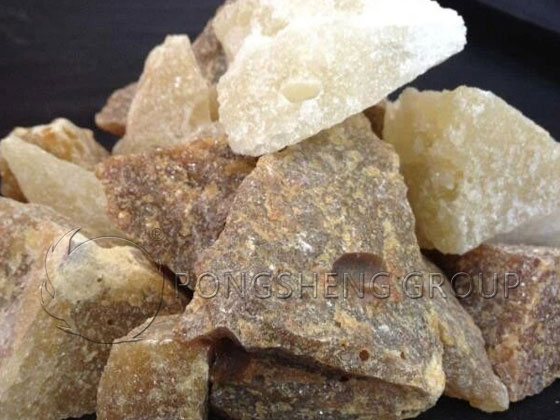
Magnesia is obtained by fully sintering raw materials such as magnesite, brucite, and seawater magnesia at 1600-1900℃. Magnesia is divided into sintered magnesia and seawater magnesia. Sintered magnesia is made from natural ore, while seawater magnesia is made from seawater magnesia. Magnesia’s main component is magnesium oxide, with small amounts of SiO2, CaO, Fe2O3, B2O3, etc. Its color ranges from yellow to brown, with periclase as the main crystalline phase. The grain size is 0.02~0.05mm, and the density is 3.50~3.65g/cm3. It exhibits good resistance to alkaline slag erosion.

The main indicators of high-purity magnesia are MgO content, CaO/SiO2 ratio, microstructure, and particle bulk density. Magnesia with high MgO content has periclase as the main crystalline phase, fewer impurities and cementing materials, and the resulting refractory materials have extremely high erosion resistance. The CaO/SiO2 ratio determines the phase composition of the matrix in magnesia, directly affecting the bonding of periclase and the high-temperature performance of the refractory material. Generally, magnesia with a C/S ratio of 3-8 has better high-temperature resistance; exceeding this range can lead to adverse effects. Microstructure is an important means of characterizing the grain size and bonding state of periclase, typically requiring a grain size of 80~150μm. Bulk density is an important indicator of the degree of sintering and compactness of magnesia. Magnesia with higher bulk density can resist slag intrusion and improve the corrosion resistance of refractory products.

Fused Magnesia
Fused Magnesia

Fused Magnesia

Fused magnesia, also known as fused magnesia, is obtained by melting magnesite or sintered magnesia in an electric arc furnace at a high temperature of 2500℃, cooling, and then crushing. The purity of fused magnesia is determined by the purity of the raw materials. Its main crystalline phase is periclase, which crystallizes from the melt. Periaclase crystals are large, dense, and have a high degree of direct crystal contact. It exhibits good water and slag resistance in the atmosphere, good high-temperature volumetric and chemical stability, and remains stable in an oxidizing atmosphere at 2300℃.

Graphite

Graphite possesses excellent thermal conductivity and refractory properties, with a melting point as high as 3500℃. Graphite has a low coefficient of thermal expansion, 1.4 × 10⁻⁶ at 1000℃. It has high thermal conductivity and good resistance to rapid heating and cooling, and is one of the few materials whose strength increases with temperature. Graphite also has a relatively large wetting angle with slag, exhibiting no eutectic relationship with Al₂O₃, SiC, or SiO₂, thus preventing slag from penetrating into the product. Because carbon can reduce iron oxide in the molten slag to metallic iron, it increases the viscosity of the slag, reducing the migration of slag components into the brick and thus reducing erosion.

The main role of graphite in carbon-containing products is to effectively prevent slag from penetrating the brick structure. This is achieved by increasing the wetting angle between the working surface of the brick and the slag, and by reacting with MgO in the brick to reduce metallic magnesium while generating CO gas. The pressure of the gas prevents slag penetration, while magnesium diffuses, volatilizes, and oxidizes on the working surface of the brick, forming a dense, impermeable MgO layer. This creates a strong reducing state within the brick, reducing iron oxides in the slag and increasing slag viscosity, thus preventing slag from penetrating the brick. Graphite with stronger erosion and slag corrosion resistance has a higher carbon content and larger flakes. The SiO2 content in graphite has the following relationship with the erosion index of magnesia-carbon bricks:

As the SiO2 content increases, the erosion index increases continuously, and the erosion resistance decreases continuously. When the SiO2 content in graphite exceeds 3%, the erosion index of magnesia-carbon bricks increases sharply, and its erosion resistance decreases sharply. As the flake particle size of the graphite in magnesia-carbon bricks increases, its oxidation resistance increases. When the flake graphite particle size exceeds 0.125 mm, the increase in oxidation resistance slows down; the suitable graphite particle size is 0.125 mm. Because graphite is easily oxidized to form CO, oxidized graphite loses these excellent properties, which reduces the erosion resistance of refractory materials. This is a fatal weakness of graphite and an important reason for the damage of carbon-containing materials.

Binder

Although the binder content in the finished product is low, it is one of the key technologies in the production of carbon-containing products. The binder directly affects the mixing and molding performance of the blank, as well as the microstructure of the finished product. During mixing and molding, the binder needs to have good wettability with refractory aggregates and graphite, and a suitable viscosity to improve the mixing quality and bulk density of the blank.

The main characteristics of the binder are:

  • (1) Good wettability: It has good wettability with both magnesia and graphite.
  • (2) It contains little or no harmful components.
  • (3) The properties of the mixed slurry do not change significantly over time, and the chemical reaction with the aggregate should be minimal.
  • (4) During the heating process of the finished product, the binder should have a high residual carbon rate, and the carbonized polymer should have good high-temperature strength.

Only with good wettability can the binder be evenly distributed on the surface of the particles and graphite, forming a continuous network structure as much as possible. Carbonization is necessary to form a continuous carbon skeleton, improving the strength and corrosion resistance of the finished product.

The type of binder and carbonization conditions directly affect the microstructure and properties of the bound carbon. Different carbonization processes of the binder result in significant differences in the structure of the generated bound carbon. To ensure sufficient strength in the molded brick blank, thermosetting phenolic resin is typically used as a binder in the production of alumina-magnesia-carbon bricks. The resin used should have suitable viscosity, high carbon content, and high residual carbon rate. Phenolic resin, a substitute for benzo[a]pyrene-rich coal tar pitch, is produced by reacting phenol and formaldehyde. Depending on the reaction conditions, the reaction product is phenolic varnish resin or methyl phenolic resin. Because phenolic resin is not thermoplastic when heated, it ensures the dimensional accuracy of the final product. Compared to graphite, the carbonization products of resin have a banded lattice structure, which stacks to form a layered structure (polymerized carbon or glassy carbon). During the high-temperature decomposition process, phenolic resin first releases water (from primary phenolic resin), phenol, cresol, and small amounts of xylenephenol and formaldehyde, ultimately forming polymeric carbon.

The synthetic resin mixes well with refractory particles at room temperature without heating, and its char residue is similar to that of asphalt, being a liquid of 50%–70%. The main drawbacks of primary phenolic resin are limited stability, the homogeneity of its carbonization products leading to easy oxidation, reduced erosion resistance, and sensitivity to thermomechanical stress. Adding rapidly oxidizing metal additives such as Al, Mg, and Si to the mixture is intended to compensate for these shortcomings.

Additives

The presence of graphite is what gives carbon composite refractories their excellent slag resistance and thermal shock stability. Damage to carbon composite refractories is mainly due to graphite oxidation. Once graphite is oxidized, its advantages are completely lost. To improve the oxidation resistance of carbon composite refractories, small amounts of additives, such as Si, Al, Mg, Zr, SiC, and BC, are often added.

The working principle of additives will be analyzed from both thermodynamic and kinetic perspectives:

From a thermodynamic perspective, the working principle of additives is that at the operating temperature, the affinity of the additive or the product of the reaction between the additive and carbon for oxygen is greater than that of carbon for oxygen, thus preferentially protecting the carbon from oxidation.

From a kinetic perspective, the compounds generated by the reaction of additives with O2, CO, or carbon alter the microstructure of carbon composite refractories. This includes increasing density, blocking pores, and hindering the diffusion of oxygen and reaction products. Non-oxides added to carbon-containing refractories typically have the following effects:

  • (1) By reducing carbon monoxide to carbon, the rate of carbon consumption is suppressed.
  • (2) Formation of carbides or oxides, increasing the densification of refractory materials.
  • (3) Further promotion of graphite crystallization.
  • (4) Reduction of open porosity.
  • (5) Formation of a protective layer.
  • (6) Improvement of high-temperature strength.

Electrofused AZS-33 Refractory Bricks for Glass Melting Furnaces

Fused cast zirconia-corundum (AZS) refractories are a unique type of refractory material, possessing a series of excellent properties such as dense structure, strong erosion resistance, and low contamination of molten glass. They are widely used in various glass melting furnaces in the building materials, light industry, pharmaceutical, and electronics industries, and are an indispensable key furnace-building material for glass melting furnaces.

Fused Cast Refractory Bricks Used in the Upper Structure of Glass Furnaces

In recent years, with the development of the glass industry, glass furnaces have become larger, with longer furnace lifespans, increased daily melting rates, and higher daily output. Glass melting and refining temperatures have increased, while the quality requirements for glass products have also risen. Energy and environmental protection issues have become increasingly prominent, and oxy-fuel combustion technology is attracting more and more attention from glass companies. Furthermore, overcapacity and fierce market competition have forced glass manufacturers to use cheaper fuels such as petroleum coke to reduce production costs. These changes in the glass industry have led to higher overall flame temperatures in glass furnaces and have also introduced large amounts of SO3, V2O5, water vapor, and alkaline volatiles, placing higher demands on refractory materials used in glass furnaces, especially fused cast AZS refractory materials used in the upper structure. Therefore, fused cast AZS refractory materials must undergo rigorous testing and quality supervision before use to ensure the safe and stable operation of glass furnaces and the production of high-quality glass products.

Glass Kiln AZS Refractory Bricks

Fused Cast AZS 33#

Fused cast zirconia-corundum refractories (AZS) are refractory products made primarily from industrial alumina, zirconium sand, and desilicationized zirconium, with a small amount of Na₂O flux added in the form of sodium carbonate. They are melted in an electric arc furnace and then cast into shape. Typically, based on zirconium dioxide content, fused cast AZS refractories are classified into three grades: 33#, 36#, and 41# (AZS33#, AZS36#, AZS41#).

AZS33# is the most widely used and extensively used product in the fused cast AZS series. It is mainly suitable for the upper structure of the melting pool, the walls and bottom of the working pool, and the feed channel. AZS36#, in addition to having the same aluminum-zirconium eutectic as AZS33# fused zirconia-corundum bricks, also contains more chain-like zirconium oxide crystals and has a lower glass phase content, thus further enhancing its corrosion resistance. Therefore, it is suitable for areas with high glass melt flow rates or high temperatures, such as critical parts like the tank walls near hot spots in the melting pool. AZS41# contains more uniformly distributed zirconium oxide crystals, and among the AZS series products for fused casting, it has the best corrosion resistance. Therefore, it is selected for critical parts of glass furnaces, such as the corners of the feeding inlet, flow channels, furnace sills, and bubbling areas at the bottom of the pool, to ensure that the lifespan of these parts is balanced with that of other parts.

Fused Chromium Zirconium Corundum Bricks

Fused chromium zirconium corundum bricks are produced by introducing 10%–30% Cr2O3 into AZS-33 bricks using a shrinkage-free casting method. They are abbreviated as AZCS bricks. The surface and interior of the brick are dark green. The brick contains 4.5% shrinkage pores and has no interconnecting pores. The formation of an aluminum chromium spinel solid solution increases the viscosity of the glass phase, greatly improving its resistance to glass melt erosion. This resistance is 3.4 times that of fused AZS-33 bricks and 2.6 times that of fused AZS-41 bricks.

Fused AZS Refractory Bricks for Glass Furnaces

Features of Fused Zirconia-Corundum Bricks

Fused AZS refractories are indispensable furnace-building materials for glass melting furnaces, and their production technology and quality directly affect the quality of molten glass and the furnace life. AZS bricks, based on their zirconium oxide content, can be classified into three grades: 33#, 36#, and 41#. The main raw materials for fused zirconia-corundum bricks are industrial alumina (Al2O3 content > 98.5%), zircon sand (ZrO2 content > 65.6%), desilicationized zirconium (ZrO2 content > 85%), soda ash (Na2CO3 content not less than 99%), borax (B2O3 content not less than 37%), and rare earth oxides (Y2O3 content not less than 45%).

When industrial alumina and zircon sand are mixed in a 1:1 ratio, the resulting refractory material contains approximately 33% ZrO2, i.e., AZS33# brick. Another raw material for producing high-quality fused cast AZS bricks is desilicationized zirconium, so AZS36# and AZS41# bricks must use it, and AZS33% bricks also use desilicationized zirconium to improve performance. Industrial alumina is produced by chemically treating bauxite raw materials to remove oxides of silicon, iron, titanium, etc. It is a high-purity alumina raw material, with an Al2O3 content generally above 98%. Desilicationized zirconium is produced by smelting zircon concentrate in an electric arc furnace using carbon as a reducing agent.

Zircon, also called zirconite, contains 67.1% ZrO2 and 32.9% SiO2. Zircon has a melting point of 2550℃, does not shrink when heated to 1750℃, has a small coefficient of linear expansion, and is chemically inert, difficult to react with acids, does not react with some molten metals, and has strong resistance to glass melt erosion. Therefore, the characteristics of fused zirconium corundum bricks are as follows:

  • (1) High temperature resistance.
  • (2) High compressive strength.
  • (3) Excellent thermal shock resistance.
  • (4) High bulk density and good thermal conductivity.
  • (5) Good wear resistance.
  • (6) Good resistance to acid and alkali corrosion.

Applications of AZS Bricks

AZS bricks are mainly used in key parts of high-temperature industrial metallurgical furnaces, such as steel, metallurgy, electronics, petrochemicals, fertilizers, non-ferrous metals, and refractory materials, including glass furnaces, fiberglass furnaces, waste incinerators, and electric furnaces.


Firing Temperature of Mullite Refractory Bricks

The firing temperature of mullite refractory bricks varies depending on the production process and raw materials. Here are some common variations:

  • Sintered mullite refractory bricks are generally fired between 1500℃ and 1700℃. If the raw materials have high purity and fine particle size, or if sintering aids (such as TiO₂, Y₂O₃, etc.) are added, the firing temperature can be appropriately reduced to 1500℃-1600℃. For higher density and grain development, the temperature may need to be increased to 1650℃-1700℃.
  • Electrominated mullite refractory bricks are fired at temperatures typically between 1700℃ and 1850℃ or even higher. This is to ensure sufficient mullite crystal development, resulting in better high-temperature performance and erosion resistance.
Rongsheng Mullite Insulation Brick

It should be noted that the specific firing temperature needs to be adjusted based on factors such as raw material ratios, brick thickness, and performance requirements. In actual production, the optimal temperature must be determined through experimentation.

Key Indicators of Mullite

What is Mullite? Mullite is a refractory material with 3Al₂O₃·2SiO₂ crystalline phase as its main component. Mullite is divided into two categories: natural mullite and synthetic mullite. Natural mullite is rare; it is generally synthesized artificially. The chemical composition of mullite is 71.8% Al₂O₃ and 28.2% SiO₂. Its mineral structure is orthorhombic, with crystals arranged in long columnar, acicular, or chain-like shapes. Acicular mullite interweaves to form a strong framework in finished products. Mullite is divided into three types: α-mullite, equivalent to pure 3Al₂O₃·2SiO₂, abbreviated as 3:2 type; β-mullite, with excess alumina in solid solution, resulting in a slightly expanded crystal lattice, abbreviated as 2:1 type; and γ-mullite, with small amounts of titanium oxide and ferric oxide in solid solution.

Mullite is chemically stable and insoluble in hydrofluoric acid. Its density is 3.03 g/cm³, Mohs hardness is 6-7, melting point is 1870℃, thermal conductivity (1000℃) is 13.8 W/(m·K), coefficient of linear expansion (20-1000℃) is 5.3 × 10⁻⁶/℃, and elastic modulus is 1.47 × 10¹º Pa. Due to its excellent high-temperature mechanical and thermal properties, synthetic mullite and its products exhibit advantages such as high density and purity, high high-temperature structural strength, low high-temperature creep rate, low thermal expansion coefficient, strong resistance to chemical corrosion, and thermal shock resistance. The key indicators for evaluating the quality of mullite are its phase composition and density.

As a high-temperature material, mullite possesses characteristics such as a high softening point under load, good creep and chemical corrosion resistance, a low coefficient of thermal expansion, and good thermal stability. Without added substances, mullite tends to form a glassy phase at grain boundaries, affecting the high-temperature performance of the material. When combined with corundum to form a corundum-mullite multiphase material, the formation of the glassy phase is reduced, significantly improving mechanical properties. Corundum-mullite multiphase materials combine the advantages of both single-phase materials, exhibiting excellent high-temperature strength, creep resistance, thermal shock resistance, and a high operating temperature (1650℃). They also possess good chemical stability and are unlikely to react with the substrate. They are particularly suitable for firing soft magnetic (ferrite) materials and electronic insulating ceramics.

Influence of Micropowders on the Properties of Corundum-Mullite Refractory Materials

Currently, corundum-mullite kiln furniture is commonly used in high-temperature pusher kilns. Compared with foreign products, domestic pusher bricks have a shorter lifespan and poorer stability, and their wear resistance and flexural strength are not ideal during application. They are prone to wear and breakage during use, especially in terms of thermal shock stability and creep resistance, which are the main reasons for poor pusher performance. Structure determines properties. Since corundum, mullite particles, and fine powders do not participate in the reaction during firing, the properties and structure of corundum-mullite materials are mainly determined by the content of silica micropowder and α-Al2O3 micropowder, as well as the firing temperature. Therefore, studying the influence of micropowders and firing temperature on the high-temperature properties of corundum-mullite materials is of practical significance.

(1) SiO2 micropowder, α-Al2O3 micropowder, and firing temperature all have a certain influence on structure and properties. α-Al2O3 micropowder has the greatest influence on high-temperature flexural strength. Next is SiO2 micropowder and firing temperature, with firing temperature having the greatest influence on thermal shock stability and creep resistance. Next were α-Al₂O₃ micropowder and silica micropowder. The optimal test conditions were: w(α-Al₂O₃ micropowder) = 11%, w(SiO₂ micropowder) = 3%, and a firing temperature of 1650℃. Under these conditions, the sample properties were: bulk density 2.96 g/cm³, porosity 18.5%, flexural strength loss percentage 30%, and creep percentage 0.99%.

(2) The α-Al₂O₃ micropowder, SiO₂ micropowder, and firing temperature have a significant impact on the bonding state between the particles and the matrix, as well as on the mullite, pores, and residual α-Al₂O₃ in the matrix. They also affect the coefficient of thermal expansion, elastic modulus, and thermal conductivity, ultimately affecting the thermal shock resistance of the material.

(3) The fracture of corundum mullite materials at room temperature is controlled by the crack propagation process, while at high temperatures it is controlled by the creep mechanism.


Why do Refractory Bricks Vary in Their Refractoriness?

Refractoriness is essentially the temperature at which a material softens under its own weight to a specific cone number. It is primarily determined by its chemical composition: the higher the content of high-melting-point oxides such as Al₂O₃, MgO, Cr₂O₃, and ZrO₂, the later the liquid phase appears, resulting in higher refractoriness. Conversely, the higher the content of fluxing impurities such as K₂O, Na₂O, and Fe₂O₃, the earlier the low-temperature liquid phase forms, thus decreasing refractoriness. Secondly, even with the same formula, insufficient firing temperature, low matrix sintering degree, and high glass phase content will also lower the refractoriness. Therefore, differences in refractoriness stem from the raw materials and firing temperature. In other words, “materials” and “fire” are inherent conditions; the absence of either determines the refractoriness.

High-Grade High-Alumina Bricks in RS Factory

Refractoriness of High-Alumina Refractory Bricks

The refractoriness of high-alumina refractory bricks varies depending on the aluminum content, impurity composition, and manufacturing process. Specific ranges are as follows:

  • Ordinary high-alumina bricks: Alumina content between 48% and 75%, refractoriness generally between 1750℃ and 1790℃.
  • High-alumina bricks (alumina content 75%-95%): Refractoriness increased to 1790℃-1850℃.
  • Corundum high-alumina bricks (alumina content ≥95%): Refractoriness can reach 1850℃-2000℃.

It should be noted that refractoriness is the softening temperature of a material under no-load, no-corrosion conditions. In practical applications, suitability should be comprehensively evaluated in conjunction with load softening temperature, slag resistance, thermal shock resistance, and other indicators.

Testing of Refractoriness

In the past decade, production lines have almost completely stopped routinely testing refractoriness for two reasons:

First, with the standardization of raw materials and the improved temperature control precision of tunnel kilns or shuttle kilns, the refractoriness fluctuation range of the same grade of bricks has been reduced to within ±10℃, rendering testing meaningless.

Second, users are more concerned with “operating condition indicators” such as load softening temperature, thermal shock resistance, slag resistance, and creep rate, which directly determine the furnace lining life. Refractoriness, however, is merely a threshold value for “not melting” and cannot characterize structural strength or erosion behavior, thus naturally taking a backseat.

Overview of Refractories in Acid, Alkali, and Neutral Brick Systems

  1. Acidic System: Typically silica bricks (SiO₂≥94%), refractoriness approximately 1710℃. Higher than clay bricks, but with poor thermal shock resistance and a loose structure at high temperatures, suitable only for static applications such as coke ovens and glass kiln roofs.
  2. Neutral System:
    • ① Clay bricks: refractoriness 1580~1690℃.
    • ② High-alumina bricks: refractoriness increases to 1750~1790℃.
    • Corundum bricks: can reach over 1850℃.
  1. Alkali System:

Magnesium bricks (MgO≥87%), magnesia-chrome bricks, and magnesia-zirconium bricks, due to the periclase melting point of 2800℃ and their high-purity, high-density matrix, generally have a nominal refractoriness of 2000℃, making them the highest among commonly used bricks.

The “Misalignment” Between Refractoriness and Service Temperature

Refractory temperature is the softening point under no load and no corrosion in a laboratory setting. Service temperature, on the other hand, is the extreme working surface temperature under load and chemical erosion in an industrial furnace. The two are not equivalent.

Empirically, high-alumina bricks have a refractoriness ≥1700℃ and a safe service temperature of approximately 1350℃. Corundum bricks have a refractoriness ≥1800℃ and a service temperature of approximately 1400℃. Basic bricks have a refractoriness standard of 2000℃, and their service temperature can be relaxed to 1700℃. In short, refractoriness provides a “temperature reserve,” while the service temperature must be reduced by a triple safety factor considering mechanical load, chemical corrosion, and thermal shock fatigue.

The Hidden Value Behind Refractoriness

While refractoriness has been marginalized, it remains a key indicator of slag resistance and creep performance. Higher main phase content and lower impurity levels lead to increased refractoriness while simultaneously reducing the amount of liquid phase and permeation channels, naturally enhancing erosion resistance.

Similarly, high refractoriness implies a high load softening temperature. Materials can maintain a structure with less glassy phase and a complete crystalline framework even above 1300℃, thus possessing the foundation for erosion and permeation resistance. Therefore, refractoriness is not useless; it simply relinquishes its role to more specific physicochemical indicators that characterize working conditions, while remaining a fundamental aspect of quality.

In short, refractoriness is determined by the combination of raw materials and firing temperature. While no longer measured daily, it remains a “birth certificate” for material purity and potential performance. When selecting kilns for engineering projects, first check the refractoriness to determine the upper limit, and then test indicators such as load softening, slag resistance, and thermal shock resistance to ensure that the kiln has a long service life, stable production, and low consumption.


Construction of Refractory Materials for the Bottom of Aluminum Electrolytic Cells

Construction of the refractory material at the bottom of the aluminum electrolytic cell. The construction of the cell bottom is crucial during the construction of the aluminum electrolytic cell. This part is mainly constructed using a combination of insulating materials, refractory bricks, and dry-mixed waterproofing material.

Construction of the bottom of the aluminum electrolytic cell

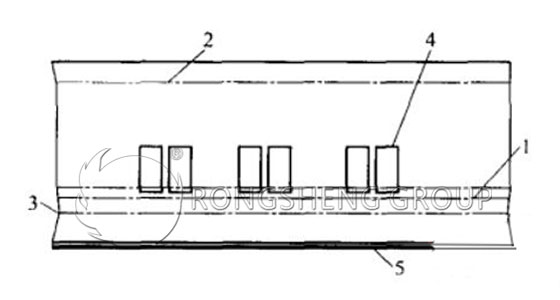
The specific construction steps for the bottom of the aluminum electrolytic cell should be as follows: After the cell shell has passed inspection, the longitudinal and transverse center lines of the cell are plotted. Based on the flatness of the cell bottom plate, the reference point for the bottom construction is determined, and the reference line for each layer of brickwork is laid out using a level instrument from this point. The center line for the cathode steel rod and the window installation is found according to the drawings, ensuring that the cathode steel rod is located in the center of the cell shell window. The cell construction lines are shown in Figure 1. Ceramic fiberboard, insulating board, and insulating bricks are dry-laid, while refractory bricks are wet-laid.

Figure 1. Marking Lines in Masonry

1-Reference point; 2-Horizontal control line; 3-Brick layer diagram; 4-Cathode window; 5-Trough shell bottom plate

Trough bottom insulation construction

The construction of the trench bottom insulation includes the laying of asbestos boards, insulation boards, and insulating bricks, all using dry-laying. When laying boards and bricks, they should be laid from the transverse center of the trench outwards, avoiding continuous joints, and gently tamped down with a wooden mallet. Boards and bricks are cut with a saw, and all gaps in each layer are filled with alumina powder. Gaps between boards/bricks and the trench perimeter are filled with dry-applied waterproofing material or refractory granules and compacted. Damaged insulation boards must be reworked by sawing, and their dimensions must be 2/3 of the design specifications. Local fabrication of insulation boards is also permitted depending on the trench bottom deformation, but the fabricated thickness should not exceed 10mm. Each layer of bricks should be laid with staggered joints, with gaps less than 1mm.

Refractory Brick Construction at the Bottom of the Tank

After laying a layer of alumina powder or refractory granules on the surface of the insulating bricks according to design requirements, use a plumb bob to lay the bricks layer by layer, creating a long plumb bob. Mark the longitudinal brick rows on its upper surface. During construction, use a plumb bob clamp on the brick layer to be laid, and use a plumb bob to hang lines on the plumb bobs on both sides. This controls the thickness and longitudinal arrangement of the bricks, ensuring accurate construction. The plumb bob construction at the bottom of the tank is shown in Figure 2.

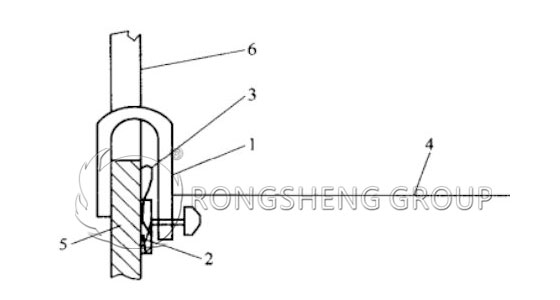
Figure 2. Hanging Lines at the Bottom of the Masonry

1-Clamp; 2-Plumb bob; 3-Plumb bob; 4-Line; 5-Side plate of the tank shell; 6-Cathode window

The mortar joints of the refractory bricks should be more than 90% full. The top joints, side joints, and horizontal joints should be laid according to design requirements. Fill the gaps around the masonry with refractory granules and compact them. After completion, clean the surface and check against the pre-drawn baseline. Measure nine points on the masonry surface; if any problems are found, address them until the standard is met. Its surface flatness requirement is no greater than ±2mm.

Construction of Dry-Type Impermeable Material at the Bottom of the Trench

Before laying the dry-type impermeable material on the insulating bricks, first, according to the pre-calculated compression ratio, make a special steel template of a certain height, which is used in conjunction with a screed. Generally, the dry-type impermeable material is compacted in two layers. After the first layer is added to the calculated height, it is leveled with a screed, and then a plastic film and a 1mm thick cold-rolled steel plate or plywood are laid on top to prevent dust during compaction. A special reciprocating tamper (approximately 6500 tamps per minute) is used to compact it according to the designed line and number of passes. After the first layer is completed, check whether the compacted height of the impermeable material reaches its compression ratio. After passing the check, lay the second layer, compacting the impermeable material to the designed elevation using the same method. After compaction, measure 9 points on the surface of the impermeable material according to the pre-drawn baseline for inspection. Any areas exceeding the standard can be repaired to achieve a levelness of ±4mm, ensuring the installation dimensions of the cathode carbon blocks.