Refractory bricks, as the name suggests, are high-temperature resistant bricks, also known as fire bricks. They are refractory materials with specific shapes and sizes. Based on their manufacturing process, they can be classified into fired bricks, unfired bricks, electrofused bricks, and refractory insulating bricks. Based on their shape and size, they can be classified into standard bricks, ordinary bricks, and special-shaped bricks. According to their composition, refractory bricks can be divided into five main categories: silica-alumina series refractory bricks, basic series refractory bricks, carbon-containing refractory bricks, zirconium-containing refractory bricks, and insulating refractory bricks.
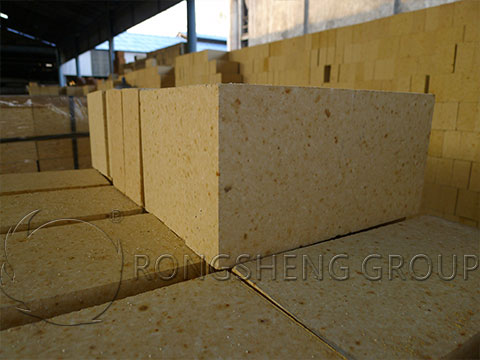
Silicon-Alumina Series Refractory Bricks
- High-Alumina Refractory Bricks: These are neutral refractory materials made from high-alumina bauxite clinker as the main raw material, soft clay and waste pulp as binders, and multi-grade particle size distribution. They are produced through high-pressure molding, drying, and high-temperature firing, resulting in an Al2O3 content greater than 75%. High-alumina bricks are classified into four grades based on Al2O3 content: extra-grade, grade 1, grade 2, and grade 3. Extra-grade high-alumina bricks have an Al2O3 content of no less than 80%, grade 1 no less than 75%, grade 2 no less than 65%, and grade 3 no less than 55%. High-alumina bricks are widely used in the steel industry, non-ferrous metal industry, and other industries.
- Clay Bricks: These are refractory materials made from clay clinker as aggregate and refractory clay as a binder, with an Al2O3 content of 30-48%. Clay bricks are typically made from hard clay as the main raw material, pre-calcined into clinker, then mixed with soft clay and molded using a semi-dry or plastic method, and fired at 1300-1400°C. They are commonly used refractory bricks in blast furnaces, hot blast stoves, heating furnaces, power boilers, lime kilns, rotary kilns, and ceramic kilns.
- Silica bricks refer to refractory bricks with a SiO₂ content of over 93%, and are a major type of acidic refractory brick. They are mainly used for lining coke ovens, and also in various glass, ceramic, and carbon calcining furnaces, and in high-temperature load-bearing parts of hot blast stoves. However, they are not suitable for use in thermal equipment with temperatures below 600°C and large temperature fluctuations.
- Corundum refractory bricks refer to refractory bricks with an Al₂O₃ content of not less than 90%, with corundum as the main phase. They are divided into sintered corundum bricks and fused corundum bricks.
Basic Refractory Bricks
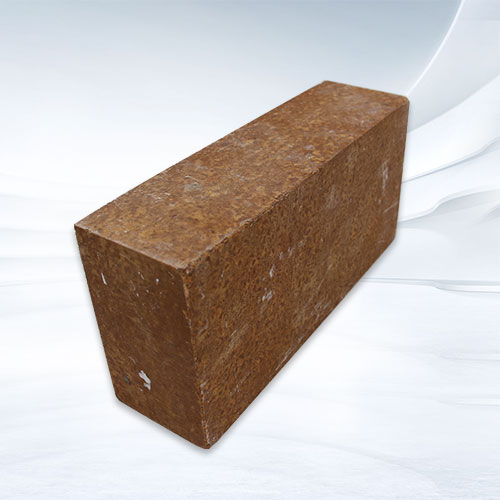
Basic refractory bricks refer to refractory products with basic oxides and MgO and CaO as the main components. The main varieties include:
- Magnesia Refractory Bricks: Made from magnesite, with periclase as the main crystalline phase, and an MgO content of 80-85% or higher. Magnesia refractory bricks are the most important type of basic refractory brick, possessing high refractoriness and excellent resistance to basic slag and iron slag. They are mainly used in open-hearth furnaces, oxygen converters, electric furnaces, and for smelting of advantageous metals.
- Dolomite Bricks: A type of basic refractory brick produced using dolomite as the main raw material. Widely used in basic converters and can also be used as linings for certain ladle refining ladles.
- Forsterite Refractory Bricks: A type of refractory brick with forsterite (MgO-SiO₂) as the main component. Primarily used as checker bricks in open-hearth furnaces, ingot casting bricks, furnace bottoms in heating furnaces, and also showing good performance in copper smelting furnaces.
Carbon-Containing Refractory Bricks
Carbon-containing refractory bricks are made from carbon or carbon compounds.
- Carbon Bricks: High-temperature resistant, neutral refractory products made primarily from carbonaceous materials with the addition of appropriate binders. Carbon bricks are widely used for lining the bottom, hearth, belly, and lower part of blast furnaces.
- Graphite-Based Refractory Products: Refractory materials made from natural graphite as raw material and clay as a binder. These products mainly include graphite clay crucibles, cast steel stopper bricks, nozzle bricks, and steel ladle lining bricks.
- Silicon Carbide Refractory Products: High-grade refractory materials produced from silicon carbide (SiC). They have good wear resistance and corrosion resistance, high high-temperature strength, high thermal conductivity, low coefficient of linear expansion, and good thermal shock resistance. In iron and steel smelting, they can be used for steel ladle linings, nozzle stoppers, and blast furnace bottoms.
Zirconium-containing Refractory Bricks
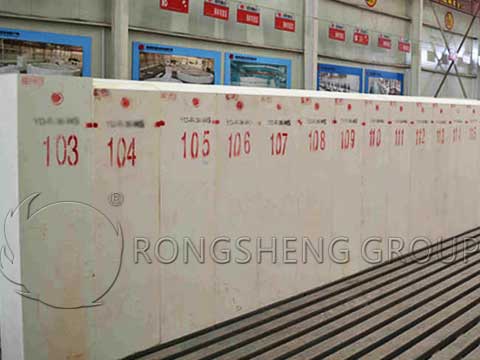
Zirconium-containing refractory bricks are an acidic material made from natural zircon sand. Zirconium refractory bricks have good slag resistance, low thermal expansion coefficient, high load softening temperature, high wear resistance, and good thermal shock resistance.
- Zircon bricks: They exhibit good resistance to slag and molten steel corrosion and have good thermal shock resistance. They are used as linings for stainless steel ladles, continuous casting ladles, casting gate bricks, sleeve bricks, and high-temperature induction furnace linings.
- AZS fused alumina bricks, also known as fused corundum bricks, have become an important refractory material in key parts of glass furnaces. They have strong resistance to molten glass corrosion.
- Zirconium-mullite fused alumina bricks: Characterized by a dense crystal structure, high load softening temperature, good thermal shock resistance, high mechanical strength at both room and high temperatures, good wear resistance, good thermal conductivity, and excellent resistance to slag corrosion. They are used in the discharge ports of metallurgical heating furnaces, soaking furnaces, and calcium carbide furnaces.
Insulating Refractory Bricks
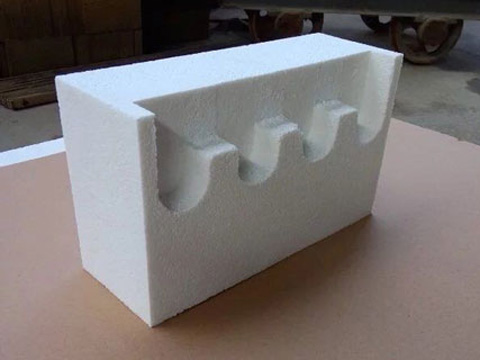
Insulating refractory bricks, also known as lightweight refractory materials, refer to refractory materials with high porosity, low bulk density, and low thermal conductivity. They can be divided into:
- High-alumina insulating lightweight refractory bricks: These are lightweight insulating bricks with an alumina content of not less than 48%. They can be used for building insulation layers and in areas not subject to strong erosion or scouring from molten materials at high temperatures. The contact temperature should not exceed 1350°C.
- Mullite insulating refractory bricks: These are high-quality insulating refractory bricks made primarily from high-alumina bauxite clinker. A porous structure is formed through foaming or chemical methods. The mixture is then mixed with water to create a plastic mortar or slurry, which is extruded and fired at high temperatures. These bricks can be directly exposed to flames and exhibit high temperature resistance, high strength, and good energy-saving performance. They are used for linings in pyrolysis furnaces, hot blast stoves, ceramic roller kilns, and various resistance furnaces.
- Clay-based insulating refractory bricks are made primarily from refractory clay. They are produced by mixing refractory clay, cenospheres, and other binders with sawdust, followed by batching, molding, drying, and firing.
- Cenosphere bricks are insulating refractory products made primarily from cenospheres. Cenospheres are hollow aluminosilicate glass spheres floated from fly ash in thermal power plants. Cenosphere bricks can be formed using a semi-dry method.
- Alumina bubble bricks are made primarily from alumina hollow spheres and alumina powder, combined with other binders, and fired at 1750℃. The maximum service temperature is 1800℃. These bricks have high mechanical strength, several times that of general lightweight products. They are widely used in high-temperature and ultra-high-temperature kilns such as gasifiers in the petrochemical industry, reactors in the carbon black industry, and induction furnaces in the metallurgical industry, achieving very satisfactory energy-saving effects. Hollow alumina spheres have a refractoriness of over 1750℃, good thermal stability, low reheat linear change rate, durability, strong heat insulation properties, and low thermal conductivity.