Why do Refractory Bricks Vary in Their Refractoriness?

Refractoriness is essentially the temperature at which a material softens under its own weight to a specific cone number. It is primarily determined by its chemical composition: the higher the content of high-melting-point oxides such as Al₂O₃, MgO, Cr₂O₃, and ZrO₂, the later the liquid phase appears, resulting in higher refractoriness. Conversely, the higher the content of fluxing impurities such as K₂O, Na₂O, and Fe₂O₃, the earlier the low-temperature liquid phase forms, thus decreasing refractoriness. Secondly, even with the same formula, insufficient firing temperature, low matrix sintering degree, and high glass phase content will also lower the refractoriness. Therefore, differences in refractoriness stem from the raw materials and firing temperature. In other words, “materials” and “fire” are inherent conditions; the absence of either determines the refractoriness.

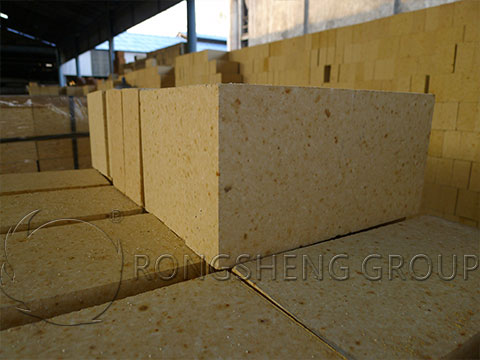
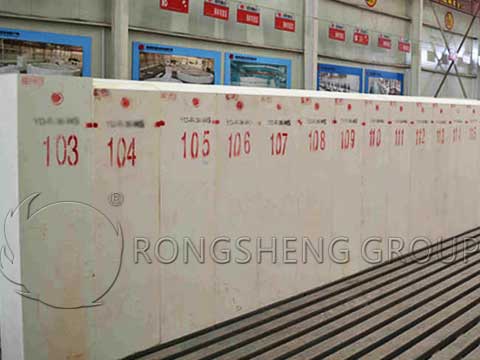
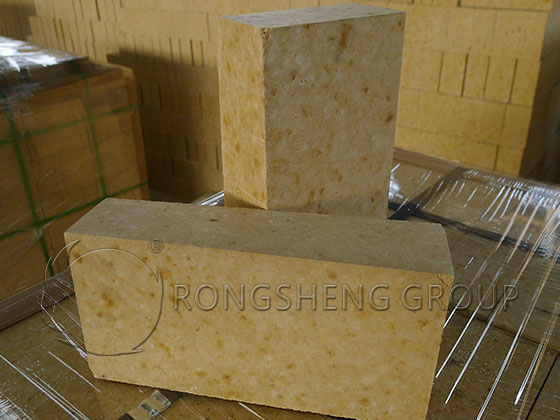
High-Grade High-Alumina Bricks in RS Factory

Refractoriness of High-Alumina Refractory Bricks

The refractoriness of high-alumina refractory bricks varies depending on the aluminum content, impurity composition, and manufacturing process. Specific ranges are as follows:

  • Ordinary high-alumina bricks: Alumina content between 48% and 75%, refractoriness generally between 1750℃ and 1790℃.
  • High-alumina bricks (alumina content 75%-95%): Refractoriness increased to 1790℃-1850℃.
  • Corundum high-alumina bricks (alumina content ≥95%): Refractoriness can reach 1850℃-2000℃.

It should be noted that refractoriness is the softening temperature of a material under no-load, no-corrosion conditions. In practical applications, suitability should be comprehensively evaluated in conjunction with load softening temperature, slag resistance, thermal shock resistance, and other indicators.

Testing of Refractoriness

In the past decade, production lines have almost completely stopped routinely testing refractoriness for two reasons:

First, with the standardization of raw materials and the improved temperature control precision of tunnel kilns or shuttle kilns, the refractoriness fluctuation range of the same grade of bricks has been reduced to within ±10℃, rendering testing meaningless.

Second, users are more concerned with “operating condition indicators” such as load softening temperature, thermal shock resistance, slag resistance, and creep rate, which directly determine the furnace lining life. Refractoriness, however, is merely a threshold value for “not melting” and cannot characterize structural strength or erosion behavior, thus naturally taking a backseat.

Overview of Refractories in Acid, Alkali, and Neutral Brick Systems

  1. Acidic System: Typically silica bricks (SiO₂≥94%), refractoriness approximately 1710℃. Higher than clay bricks, but with poor thermal shock resistance and a loose structure at high temperatures, suitable only for static applications such as coke ovens and glass kiln roofs.
  2. Neutral System:
    • ① Clay bricks: refractoriness 1580~1690℃.
    • ② High-alumina bricks: refractoriness increases to 1750~1790℃.
    • Corundum bricks: can reach over 1850℃.
  1. Alkali System:

Magnesium bricks (MgO≥87%), magnesia-chrome bricks, and magnesia-zirconium bricks, due to the periclase melting point of 2800℃ and their high-purity, high-density matrix, generally have a nominal refractoriness of 2000℃, making them the highest among commonly used bricks.

The “Misalignment” Between Refractoriness and Service Temperature

Refractory temperature is the softening point under no load and no corrosion in a laboratory setting. Service temperature, on the other hand, is the extreme working surface temperature under load and chemical erosion in an industrial furnace. The two are not equivalent.

Empirically, high-alumina bricks have a refractoriness ≥1700℃ and a safe service temperature of approximately 1350℃. Corundum bricks have a refractoriness ≥1800℃ and a service temperature of approximately 1400℃. Basic bricks have a refractoriness standard of 2000℃, and their service temperature can be relaxed to 1700℃. In short, refractoriness provides a “temperature reserve,” while the service temperature must be reduced by a triple safety factor considering mechanical load, chemical corrosion, and thermal shock fatigue.

The Hidden Value Behind Refractoriness

While refractoriness has been marginalized, it remains a key indicator of slag resistance and creep performance. Higher main phase content and lower impurity levels lead to increased refractoriness while simultaneously reducing the amount of liquid phase and permeation channels, naturally enhancing erosion resistance.

Similarly, high refractoriness implies a high load softening temperature. Materials can maintain a structure with less glassy phase and a complete crystalline framework even above 1300℃, thus possessing the foundation for erosion and permeation resistance. Therefore, refractoriness is not useless; it simply relinquishes its role to more specific physicochemical indicators that characterize working conditions, while remaining a fundamental aspect of quality.

In short, refractoriness is determined by the combination of raw materials and firing temperature. While no longer measured daily, it remains a “birth certificate” for material purity and potential performance. When selecting kilns for engineering projects, first check the refractoriness to determine the upper limit, and then test indicators such as load softening, slag resistance, and thermal shock resistance to ensure that the kiln has a long service life, stable production, and low consumption.


Construction of Refractory Materials for the Bottom of Aluminum Electrolytic Cells

Construction of the refractory material at the bottom of the aluminum electrolytic cell. The construction of the cell bottom is crucial during the construction of the aluminum electrolytic cell. This part is mainly constructed using a combination of insulating materials, refractory bricks, and dry-mixed waterproofing material.

Construction of the bottom of the aluminum electrolytic cell

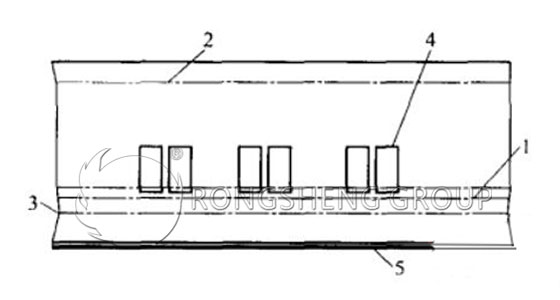
The specific construction steps for the bottom of the aluminum electrolytic cell should be as follows: After the cell shell has passed inspection, the longitudinal and transverse center lines of the cell are plotted. Based on the flatness of the cell bottom plate, the reference point for the bottom construction is determined, and the reference line for each layer of brickwork is laid out using a level instrument from this point. The center line for the cathode steel rod and the window installation is found according to the drawings, ensuring that the cathode steel rod is located in the center of the cell shell window. The cell construction lines are shown in Figure 1. Ceramic fiberboard, insulating board, and insulating bricks are dry-laid, while refractory bricks are wet-laid.

Figure 1. Marking Lines in Masonry

1-Reference point; 2-Horizontal control line; 3-Brick layer diagram; 4-Cathode window; 5-Trough shell bottom plate

Trough bottom insulation construction

The construction of the trench bottom insulation includes the laying of asbestos boards, insulation boards, and insulating bricks, all using dry-laying. When laying boards and bricks, they should be laid from the transverse center of the trench outwards, avoiding continuous joints, and gently tamped down with a wooden mallet. Boards and bricks are cut with a saw, and all gaps in each layer are filled with alumina powder. Gaps between boards/bricks and the trench perimeter are filled with dry-applied waterproofing material or refractory granules and compacted. Damaged insulation boards must be reworked by sawing, and their dimensions must be 2/3 of the design specifications. Local fabrication of insulation boards is also permitted depending on the trench bottom deformation, but the fabricated thickness should not exceed 10mm. Each layer of bricks should be laid with staggered joints, with gaps less than 1mm.

Refractory Brick Construction at the Bottom of the Tank

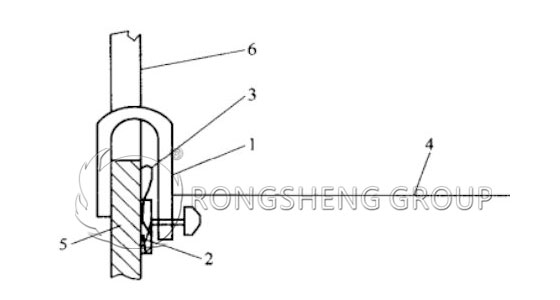
After laying a layer of alumina powder or refractory granules on the surface of the insulating bricks according to design requirements, use a plumb bob to lay the bricks layer by layer, creating a long plumb bob. Mark the longitudinal brick rows on its upper surface. During construction, use a plumb bob clamp on the brick layer to be laid, and use a plumb bob to hang lines on the plumb bobs on both sides. This controls the thickness and longitudinal arrangement of the bricks, ensuring accurate construction. The plumb bob construction at the bottom of the tank is shown in Figure 2.

Figure 2. Hanging Lines at the Bottom of the Masonry

1-Clamp; 2-Plumb bob; 3-Plumb bob; 4-Line; 5-Side plate of the tank shell; 6-Cathode window

The mortar joints of the refractory bricks should be more than 90% full. The top joints, side joints, and horizontal joints should be laid according to design requirements. Fill the gaps around the masonry with refractory granules and compact them. After completion, clean the surface and check against the pre-drawn baseline. Measure nine points on the masonry surface; if any problems are found, address them until the standard is met. Its surface flatness requirement is no greater than ±2mm.

Construction of Dry-Type Impermeable Material at the Bottom of the Trench

Before laying the dry-type impermeable material on the insulating bricks, first, according to the pre-calculated compression ratio, make a special steel template of a certain height, which is used in conjunction with a screed. Generally, the dry-type impermeable material is compacted in two layers. After the first layer is added to the calculated height, it is leveled with a screed, and then a plastic film and a 1mm thick cold-rolled steel plate or plywood are laid on top to prevent dust during compaction. A special reciprocating tamper (approximately 6500 tamps per minute) is used to compact it according to the designed line and number of passes. After the first layer is completed, check whether the compacted height of the impermeable material reaches its compression ratio. After passing the check, lay the second layer, compacting the impermeable material to the designed elevation using the same method. After compaction, measure 9 points on the surface of the impermeable material according to the pre-drawn baseline for inspection. Any areas exceeding the standard can be repaired to achieve a levelness of ±4mm, ensuring the installation dimensions of the cathode carbon blocks.


Lightly-Burned Dolomite Double Chamber Kiln (Double C Structure) Kiln Refractory Lining Material

Double-chamber kiln is widely used in the production of metallurgical lime due to its advantages such as low heat consumption, high degree of automation, easy-to-adjust production, parallel flow heat storage, less refractory material usage, less floor space, stable product quality, etc. A project uses this kiln to produce and supply light-burned dolomite. Rongsheng Refractory Material Manufacturer supplies refractory lining materials for double-chamber kiln double C structure kiln of light-burned dolomite.

Double-Chamber Kiln Refractory Lining Structure

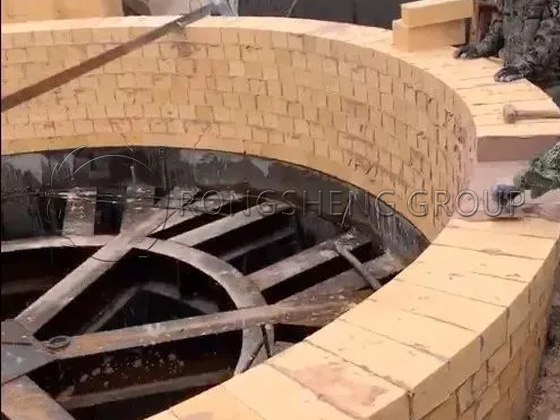
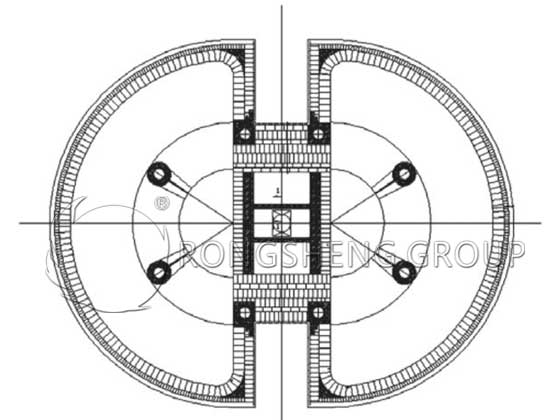
The construction of a double-chamber kiln of a light-burned dolomite manufacturer adopts a domestic double-chamber kiln with a “double C structure”. Its internal refractory masonry structure is shown in Figure 1. The double-chamber kiln lining structure is divided into cooling zone, calcining zone, and preheating zone from bottom to top. They are built with refractory materials with good high-temperature resistance, wear resistance, and thermal insulation performance. The two kiln chambers are constructed with an intermediate channel and 8 cooling pillars. The outer ring bricklayer of the kiln is counted from the bottom of the kiln chamber, a total of 194 layers.

Figure 1 Refractory masonry structure inside double-chamber kiln

The cooling belt and the bottom of the steel structure are leveled with low cement castables, and then the cooling belt is laid. From the 1st to the 40th floor, from the steel shell structure outward, coating material, two layers of fiberboard, insulation bricks, and high-strength clay bricks are used in sequence. The thickness of the fiberboard is 30mm, the thickness of the insulation brick is 230mm, and the thickness of the high-strength clay brick is 260mm. When laying each layer of bricks, expansion joints are reserved in the circular ring of the kiln brick layer at a certain distance.

From the 41st to the 82nd floor, as the kiln height gradually approaches the calcining zone area, the working temperature increases accordingly, and the brick lining working layer is changed to high-alumina refractory bricks.

The middle channel is equipped with a fire door. It is used to observe the ash accumulation during the kiln shutdown, and a template is required during masonry.

The calcining zone has the highest temperature, which can reach 1100℃. Considering the calcination characteristics and temperature, the working layer of the 83rd to 161st layers of bricks on the outer ring of the kiln is built with mullite refractory bricks. From the steel shell structure to the outside, it is built with coating material, two layers of fiberboard, insulation bricks, and mullite bricks in sequence.

Anchors are welded on the bottom of the steel structure and the supporting structure inside the kiln, and castables are used for masonry. At the same time, thermocouples are evenly arranged in the inner and outer ring areas of each kiln chamber to detect the calcination of the kiln.

The 162nd to 194th brick lining working layer is built with high-strength clay bricks as part of the preheating zone.

The entire kiln structure should be strictly symmetrical. In order to ensure the construction period, the masonry of the two kiln chambers can be carried out at the same time. During the masonry process, overlapping of brick joints should be avoided, and the mortar should be applied in sufficient and uniform amounts.

Problems with the Lining of the Double-C Structure Lime Kiln

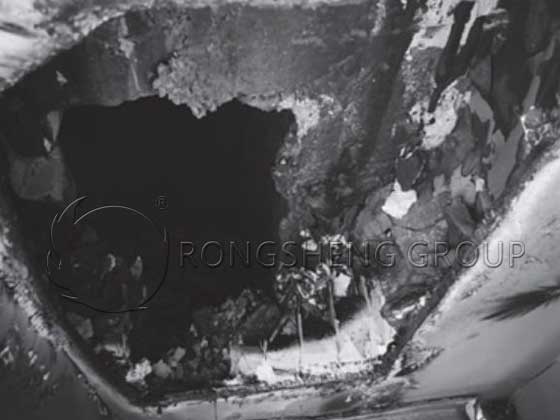
After the double C structure lime kiln was in production for a period of time, two high-temperature spots were found on the surface of the furnace shell, and it was forced to be emptied for inspection. It was found that the refractory bricks in the working layer at about 700mm from the bottom of the kiln spray gun were burned, and the refractory bricks in the insulation layer were molten (see Figure 2). In order to avoid the recurrence of this phenomenon, it is necessary to analyze the cause of the burning of refractory bricks. The project team conducted a comprehensive analysis of the aspects of design, process operation, raw material structure, equipment installation structure, etc. Find the cause and optimize and rectify it.

Figure 2 Burning condition of refractory material in kiln shell at high-temperature point
Figure 2 Burning condition of refractory material in kiln shell at a high-temperature point

After investigation and inspection, it was found that the coal powder spraying gun was not installed correctly, and the flame directly washed the furnace wall, which was the direct cause of the burning of the refractory materials. The coal powder conveying fan was not a variable frequency fan, the wind pressure was too high, and the flow rate was too fast. The coal powder guide pipe was worn in less than one month, and the coal powder conveying of the spray gun increased, which was another reason for the aggravation of the burning of the refractory materials.

Rectification of the Lining of the Double-C Structure Lime Kiln

The construction and maintenance team was required to strictly follow the drawings to ensure that the spray gun was vertically parallel and downward and to ensure the distance between the spray gun and the furnace wall. This reduced the burning of refractory materials.

At the same time, the pulverized coal conveying fan was retrofitted with frequency conversion, and the fan operation program was updated. That is, the fan operating frequency was reduced during the reversing period, and the fan speed was adjusted according to the kiln conditions during the combustion period. This ensured the transportation of pulverized coal while reducing power consumption. The double-chamber kiln after the rectification had a good operating effect, and no corresponding refractory material burning occurred.

How to Improve the Service Life of the Kiln Refractory Lining?

After the double C structure kiln refractory bricks were overhauled and the conveying fan frequency conversion was modified, the entire kiln no longer had refractory material burning. This fully proves that the rectification effect is good.

  • (1) The abnormal damage of the furnace wall in the high-temperature section of the lime kiln causes the furnace shell to turn red. The main reason is that the mullite bricks in the working layer are corroded and melted at high temperatures during the production process.
  • (2) Alkali metals such as K₂O and Na₂O react with mullite bricks at high temperatures to form low-melting products such as feldspar. The mullite bricks are continuously corroded, and the furnace wall becomes thinner after melting, which causes the furnace shell to turn red at high temperatures.
  • (3) The source of alkali metal oxides in the lime kiln is mainly the ash of the mixed coal. Due to the double C structure of the kiln type, abnormal installation of the spray gun will also cause ash to adhere near the end wall and corrode the furnace wall.
  • (4) The frequency conversion of the conveying fan is conducive to reducing power consumption, stabilizing the kiln condition, reducing the erosion of the coal powder guide pipe, and increasing its service life.

Rongsheng Refractory Material Production and Sales Manufacturers is a powerful refractory material production and sales manufacturer. Rongsheng Refractory Manufacturer can customize the construction and maintenance plan of refractory lining according to the actual working conditions of high-temperature industrial furnaces. For high-quality refractory bricks and amorphous refractory products, contact us for free samples and quotes.

How to Choose Refractory Bricks When Building Flues?

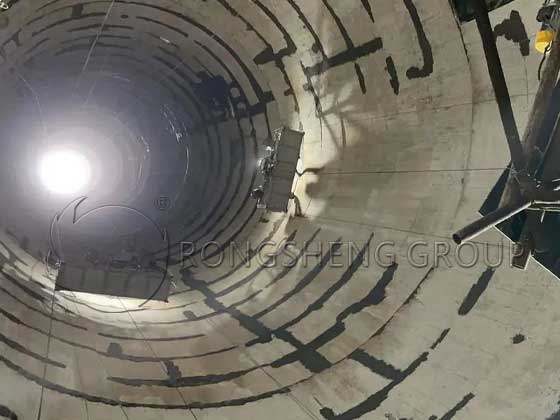
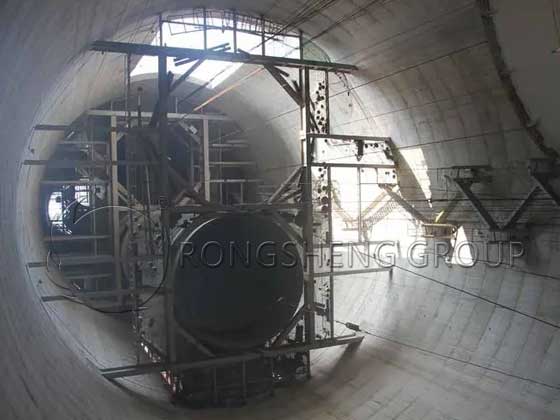
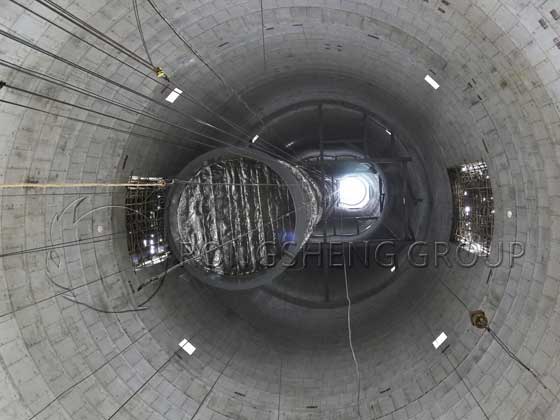
Power Plant Chimney Lining Repair

How to choose refractory bricks when building flues? In addition to weight, the selection of refractory bricks for flues should also be based on the flue gas properties, temperature reduction, and whether it is corrosive. kiln fire bricks. Therefore, lightweight refractory bricks are generally used, such as lightweight mullite bricks, lightweight clay bricks, lightweight silica bricks, etc. They are light in weight and have excellent fire resistance and heat insulation.

Power Plant Chimney Lining Repair

Refractory Bricks for Chimney Inner Wall

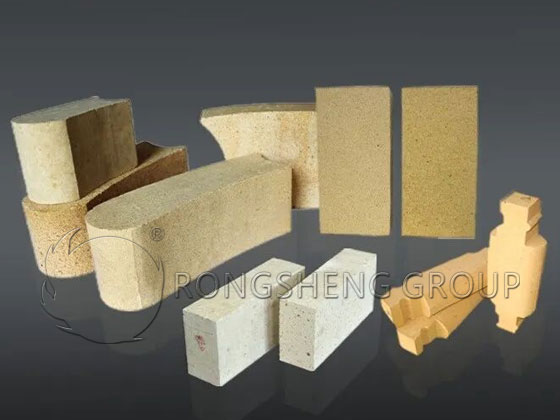
Refractory bricks are used for chimney inner wall. For round ones, special-shaped bricks, such as axe-shaped bricks or knife-shaped bricks, should be selected, and then some refractory casting materials should be added. For rectangular ones, standard refractory bricks are enough, and it is better to add casting materials.

The lining of chimney refractory bricks can be built with ordinary cement mortar, but it must be heat-resistant. Different industries may also have acid and alkali resistance requirements, and suitable refractory materials should be used.

How often should the acid-resistant bricks of chimneys be replaced? The quality and use conditions of acid-resistant bricks for chimneys produced by different materials and different manufacturers are different. Whether the chimney refractory bricks need to be replaced depends mainly on the degree of corrosion of the lining material of the chimney inner wall.

Chimney Lining Refractory Brick Lining

What are the Refractory Bricks Required for High-Temperature Flue Masonry?

Industrial chimneys are an important part of kilns. They are generally divided into red brick chimneys, concrete chimneys and steel chimneys, etc., and are lined with refractory bricks or refractory castables. kiln fire bricks. The size of industrial chimneys is determined according to the type of kiln and working conditions, and their shapes are mostly cylindrical.

The main function of industrial chimneys is to remove the waste flue gas in the kiln, and it also has the function of preventing the flame from burning in the furnace. When the temperature of the waste flue gas entering the chimney is high, its inner wall is generally built with a working layer. If the flue gas is acidic, acidic refractory bricks must be built, and lightweight refractory castables are also used. Rongsheng Refractory Material Manufacturer can provide high-quality high-temperature flue refractory bricks.

Since the temperature of flue gas is relatively high, the refractory bricks of flue should meet the characteristics of higher refractory bricks. However, some flue gas is corrosive when discharged, so refractory bricks need to be more corrosion-resistant. Therefore, when choosing refractory bricks for flue, in addition to considering the weight of flue, it is also necessary to choose according to the properties of flue gas produced by the medium. Such as the temperature of flue gas, whether it is corrosive, etc., so the refractory bricks of flue are generally based on lightweight refractory bricks. While reducing the weight of flue, it can also resist the scouring and corrosion of flue gas. Therefore, lightweight mullite bricks, lightweight clay bricks and lightweight silica bricks can be selected. In addition to light weight, these refractory bricks also have excellent fire resistance and thermal insulation. Ensure that the flue is not invaded by high-temperature heat flow, and at the same time, it can also resist the continuous scouring and corrosion of flue gas.

High-Temperature Chimney Bricks Lining

Refractory Bricks for High-Temperature Industrial Kilns

When choosing refractory bricks, you also need to make a reasonable choice based on the shape of the chimney, whether to use standard bricks or special-shaped bricks. If the chimney is round, you need to choose special-shaped refractory bricks, such as axe-shaped bricks or knife-shaped bricks. If the chimney is rectangular, standard refractory bricks can be used. kiln fire bricks. When laying bricks, you can choose to use high-temperature glue with the gap between bricks.

At present, the refractory bricks commonly used in chimney construction are: those that can absorb hydrogen fluoride should be alkaline refractory bricks, generally magnesia bricks. If the flue gas is acidic, refractory bricks resistant to acidic media should be selected. There are also common clay bricks, high-alumina bricks and silica bricks. When choosing, you should choose according to the properties of the flue gas.

The flue is the main device for high-temperature kiln exhaust gas emission, and it usually has to withstand the continuous scouring of high-temperature gas. Sometimes some flue gases are also corrosive, so when choosing flue refractory bricks, you usually have to choose bricks that are resistant to scouring and corrosion. At the same time, the bricks themselves also need to have a certain degree of fire resistance. Not only that, in order to reduce the pressure of the flue on the overall kiln and improve the stability of the flue, lightweight refractory bricks should be used as the main material.

Lightweight mullite insulation bricks

Currently, the refractory bricks that meet the above conditions mainly include lightweight mullite bricks, lightweight clay bricks and lightweight silica bricks. These bricks have good fire resistance, scouring resistance and corrosion resistance. Not only that, their weight is lighter than ordinary refractory bricks. Therefore, it is a good choice for building flues at present to ensure that the flue is not invaded by high-temperature heat flow, resist the continuous scouring and corrosion of flue gas, and reduce the overall weight of the chimney. When dealing with ordinary flue gas, we usually focus on lightweight mullite bricks and lightweight clay bricks. When facing gases with certain corrosive flue gas, we mainly focus on lightweight silica bricks because of its good corrosion resistance.

Lightweight clay bricks

When building flues, we need to choose according to the shape of the flue. Generally, for some round flues, special-shaped refractory bricks are mainly used, such as axe-shaped bricks or knife-shaped bricks. When facing some square flues, standard bricks can be used for masonry. When building, refractory mud is mainly used. Kiln fire bricks. It has a certain fire resistance and can ensure that the refractory bricks are closely connected. In the face of some occasions with corrosive flue gas, the refractory mud should also have a certain corrosion resistance.

Lightweight silica bricks

The above is the selection of flue refractory bricks. When choosing flue refractory bricks, in addition to considering the weight of the flue, you should also choose according to the properties of the flue gas produced by the medium. For example, the temperature of the flue gas, whether it is corrosive, etc., these are all things that need attention. kiln fire bricks. Choosing the right refractory bricks can not only improve the stability and thermal efficiency of the chimney, but also ensure the overall stability of the kiln. So pay special attention when choosing.

Refractory Materials for the Settling Chamber of Zinc Volatilization Rotary Kiln

·    [Abstract] Rotary kiln production and operation requires the use of refractory bricks as kiln lining, and low cement castables are commonly used as linings in the settling chamber. The lining treatment of the cone section depends on the situation. If the discharge opening is too small, no lining is required, otherwise low-cement castables are used and steel fibers are added to improve durability.

Zinc volatilization kilns all use rotary kilns for production and operation. The refractory bricks used for the kiln lining of the rotary kiln need to be made of consistent materials and accurate in size. Only then can the kiln body operate normally and the service life be extended.

Refractory Materials for the Settling Chamber

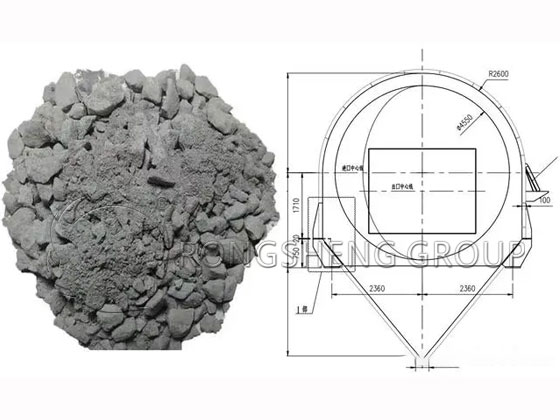
However, the kiln tail smoke chamber, which is the settlement chamber, is lined with clay bricks or low-cement refractory castables. Generally speaking, more low-cement castables are used, while clay bricks are rarely used as linings. The shape of the settling chamber is a cone, with the upper part larger and the lower part smaller, which facilitates the smooth discharge of smoke and dust. Because if this part is designed to be small, or the design of the unloading port is unreasonable, if it is too small, this part will be slapped during daily work to speed up the exhaust of smoke and dust.

At present, according to the situation of the manufacturers, some manufacturers basically do not do any lining treatment on the lower cone section of the settling chamber. The reason is that this area is often patted, and even the lining is patted off. It does nothing, but wastes the castables used and increases costs.

So, should this part be lined with cement refractory castables or bricks? In principle, it is still needed. Low cement castables are used as linings. If steel fibers are added to the castables in the cone section to increase the tensile effect, it will still have a certain effect. And if the discharge opening of the cone section is indeed too small, the use of low-cement castables as lining is indeed not very effective.

In short, whether this part is constructed with low cement castables or nothing is used depends entirely on the working conditions on-site. If the opening of the cone section is too small, there is no need for lining. If the unloading opening is of reasonable size, it is better to use low cement castable to cast the lining.

Rongsheng Refractory Materials Manufacturer has more than ten years of production and sales experience. It has its own unique insights into the design of refractory lining materials, thermal insulation, energy saving, and consumption reduction. We are committed to providing refractory lining solutions to extend the service life of refractory linings, thereby helping companies save production costs. We also have rich experience in various rotary kiln cases. Contact us for more solutions.

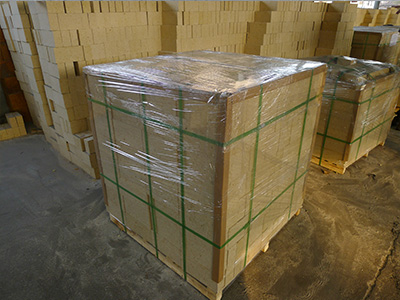
How Many Bricks in a Pallet of Refractory Bricks?

Refractory bricks are a special type of brick that is designed to withstand high temperatures and harsh environments. They are commonly used in industrial settings such as furnaces, kilns, and incinerators. If you’re working with refractory bricks, you may be wondering how many bricks are in a pallet. The number of bricks required to complete a construction project depends on the size and scope of the project, as well as the size of the bricks themselves. In this essay, we will explore the answer to this question in detail.

How Many Bricks in a Pallet of Refractory Bricks?

A pallet of bricks is a standard unit of measurement used by manufacturers and suppliers to package and transport bricks. It is a rectangular wooden or plastic platform that is used to hold a certain number of bricks. The number of bricks in a pallet can vary depending on the size of the bricks and the dimensions of the pallet.

The number of refractory bricks in a pallet can vary depending on the size and thickness of the bricks. A standard pallet of refractory bricks typically contains between 300 and 500 bricks. However, it is important to note that this number can vary depending on the manufacturer’s specifications.

Refractory bricks are typically denser and heavier than standard bricks, which means that fewer bricks can fit on a pallet. The size and thickness of the bricks can also play a role in determining the number of bricks that can fit on a pallet. Thicker and larger bricks take up more space, which can result in fewer bricks being able to fit on a pallet.

The weight of the pallet can also vary depending on the number of bricks on the pallet. A pallet of 300 refractory bricks will be lighter than a pallet of 500 refractory bricks, for example. This is an important consideration for those who need to transport bricks from one location to another.

When working with refractory bricks, it is important to know how many bricks are in a pallet. This information can help you plan your project and determine how many pallets of bricks you will need. It can also help you estimate the weight of the pallets, which is an important consideration when transporting the bricks.

In conclusion, the number of refractory bricks in a pallet can vary depending on the size and thickness of the bricks, as well as the manufacturer’s specifications. A standard pallet of refractory bricks typically contains between 300 and 500 bricks. Knowing how many bricks are in a pallet is an important consideration when working with refractory bricks, as it can help you plan your project and estimate the weight of the pallets. If you are unsure about the number of bricks in a pallet, be sure to check with the manufacturer or supplier for more information.

Comparison of the Performance of Corundum Bricks and Chrome Corundum Bricks in Applications

Corundum bricks are refractory bricks with an alumina content greater than 90%. Corundum bricks are divided into sintered corundum bricks and fused corundum bricks. The chrome corundum brick is a refractory brick with Cr2O3 added to the corundum. Chrome corundum bricks are divided into two types: fused cast chrome corundum bricks and sintered chrome corundum bricks.

RS Corundum Brick
RS Corundum Brick

Corundum bricks are used in industrial furnaces under high temperatures, high pressure, and other environments. Corundum bricks and chrome corundum bricks have similarities and differences.

  1. Fire resistance

Adding Cr2O3 to the corundum material will not only reduce the fire resistance of the material but will improve the fire resistance of the material. The refractoriness of chrome corundum bricks is greater than 1790°C and the softening temperature under load is greater than 1700°C, both of which are better than corundum bricks.

  1. Compressive strength

The normal temperature compressive strength of corundum bricks is 70~100MPa. The room temperature compressive strength of high-performance chrome corundum bricks is generally greater than 150MPa, which is significantly higher than that of corundum bricks. During the firing process of corundum bricks and chrome corundum bricks, Al2O3-Cr2O3 solid solutions are formed between the particles, between the particles and the fine powder, and between the fine powder and the fine powder. The solid solution connects the particles and fine powder together like a bridge so that the strength of the material is greatly improved.

RS Chrome Corundum Bricks
  1. Thermal shock stability

Adding Cr2O3 to corundum, when the Cr2O3 content is 10%-66%, the thermal shock stability of the material decreases with the increase of the Cr2O3 content. That is, chromium corundum bricks with low Cr2O3 content have better thermal shock stability than chrome corundum bricks with high Cr2O3 content. The Cr2O3 content of high-performance chromium corundum bricks is between 12% and 20%, and its thermal shock stability is improved compared with corundum bricks. Especially the AKZ chrome corundum brick produced by adding a small number of additives that cause phase change has better thermal shock stability.

  1. Resistance to slag erosion

Corundum bricks are severely eroded by slag, and the slag will completely penetrate into the brick and penetrate to the surface along the pores inside the brick, and the brick will turn brown with almost no slag remaining. Chrome corundum bricks are hardly corroded by molten slag, there is no obvious chemical reaction between the slag and the brick surface, the boundary between the inner hole edge and the slag is clear, and the slag rarely penetrates into the brick. Only a 5-10 mm thick metamorphic layer is formed around the brick hole, and a large amount of slag remains in the crucible hole. Chromium corundum bricks have better resistance to chemical erosion and permeability of gasifier slag than corundum bricks, and their resistance to structural spalling is also superior to corundum bricks.

  1. Application

Chrome corundum bricks are used as glass kiln lining, brushed glass flow hole cover, and plate brick, and are used for molten iron pretreatment devices, garbage incinerators, gasifier backing, etc. Corundum bricks are used in various high-temperature kiln linings and kiln furniture such as cracking and reforming furnaces in the petrochemical and chemical fertilizer industries, steelmaking furnaces in the metallurgical industry, and blast furnaces. Among them, chrome corundum bricks are more resistant to high temperatures and corrosion than corundum bricks, which can meet the common needs of industrial kilns.