Why do Refractory Bricks Vary in Their Refractoriness?

Refractoriness is essentially the temperature at which a material softens under its own weight to a specific cone number. It is primarily determined by its chemical composition: the higher the content of high-melting-point oxides such as Al₂O₃, MgO, Cr₂O₃, and ZrO₂, the later the liquid phase appears, resulting in higher refractoriness. Conversely, the higher the content of fluxing impurities such as K₂O, Na₂O, and Fe₂O₃, the earlier the low-temperature liquid phase forms, thus decreasing refractoriness. Secondly, even with the same formula, insufficient firing temperature, low matrix sintering degree, and high glass phase content will also lower the refractoriness. Therefore, differences in refractoriness stem from the raw materials and firing temperature. In other words, “materials” and “fire” are inherent conditions; the absence of either determines the refractoriness.
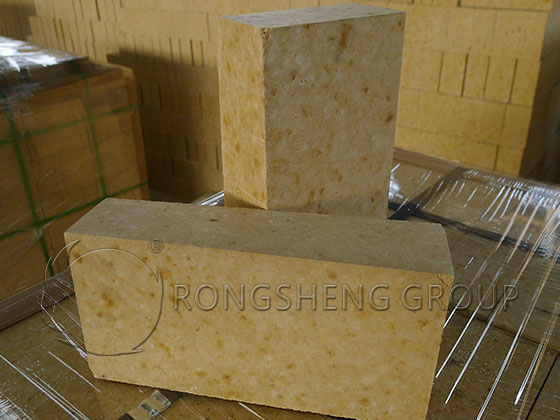
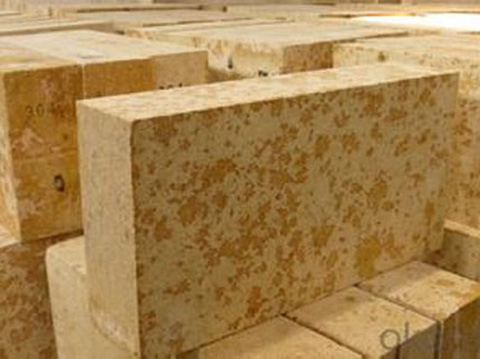
High-Grade High-Alumina Bricks in RS Factory

Refractoriness of High-Alumina Refractory Bricks

The refractoriness of high-alumina refractory bricks varies depending on the aluminum content, impurity composition, and manufacturing process. Specific ranges are as follows:

  • Ordinary high-alumina bricks: Alumina content between 48% and 75%, refractoriness generally between 1750℃ and 1790℃.
  • High-alumina bricks (alumina content 75%-95%): Refractoriness increased to 1790℃-1850℃.
  • Corundum high-alumina bricks (alumina content ≥95%): Refractoriness can reach 1850℃-2000℃.

It should be noted that refractoriness is the softening temperature of a material under no-load, no-corrosion conditions. In practical applications, suitability should be comprehensively evaluated in conjunction with load softening temperature, slag resistance, thermal shock resistance, and other indicators.

Testing of Refractoriness

In the past decade, production lines have almost completely stopped routinely testing refractoriness for two reasons:

First, with the standardization of raw materials and the improved temperature control precision of tunnel kilns or shuttle kilns, the refractoriness fluctuation range of the same grade of bricks has been reduced to within ±10℃, rendering testing meaningless.

Second, users are more concerned with “operating condition indicators” such as load softening temperature, thermal shock resistance, slag resistance, and creep rate, which directly determine the furnace lining life. Refractoriness, however, is merely a threshold value for “not melting” and cannot characterize structural strength or erosion behavior, thus naturally taking a backseat.

Overview of Refractories in Acid, Alkali, and Neutral Brick Systems

  1. Acidic System: Typically silica bricks (SiO₂≥94%), refractoriness approximately 1710℃. Higher than clay bricks, but with poor thermal shock resistance and a loose structure at high temperatures, suitable only for static applications such as coke ovens and glass kiln roofs.
  2. Neutral System:
    • ① Clay bricks: refractoriness 1580~1690℃.
    • ② High-alumina bricks: refractoriness increases to 1750~1790℃.
    • Corundum bricks: can reach over 1850℃.
  1. Alkali System:

Magnesium bricks (MgO≥87%), magnesia-chrome bricks, and magnesia-zirconium bricks, due to the periclase melting point of 2800℃ and their high-purity, high-density matrix, generally have a nominal refractoriness of 2000℃, making them the highest among commonly used bricks.

The “Misalignment” Between Refractoriness and Service Temperature

Refractory temperature is the softening point under no load and no corrosion in a laboratory setting. Service temperature, on the other hand, is the extreme working surface temperature under load and chemical erosion in an industrial furnace. The two are not equivalent.

Empirically, high-alumina bricks have a refractoriness ≥1700℃ and a safe service temperature of approximately 1350℃. Corundum bricks have a refractoriness ≥1800℃ and a service temperature of approximately 1400℃. Basic bricks have a refractoriness standard of 2000℃, and their service temperature can be relaxed to 1700℃. In short, refractoriness provides a “temperature reserve,” while the service temperature must be reduced by a triple safety factor considering mechanical load, chemical corrosion, and thermal shock fatigue.

The Hidden Value Behind Refractoriness

While refractoriness has been marginalized, it remains a key indicator of slag resistance and creep performance. Higher main phase content and lower impurity levels lead to increased refractoriness while simultaneously reducing the amount of liquid phase and permeation channels, naturally enhancing erosion resistance.

Similarly, high refractoriness implies a high load softening temperature. Materials can maintain a structure with less glassy phase and a complete crystalline framework even above 1300℃, thus possessing the foundation for erosion and permeation resistance. Therefore, refractoriness is not useless; it simply relinquishes its role to more specific physicochemical indicators that characterize working conditions, while remaining a fundamental aspect of quality.

In short, refractoriness is determined by the combination of raw materials and firing temperature. While no longer measured daily, it remains a “birth certificate” for material purity and potential performance. When selecting kilns for engineering projects, first check the refractoriness to determine the upper limit, and then test indicators such as load softening, slag resistance, and thermal shock resistance to ensure that the kiln has a long service life, stable production, and low consumption.
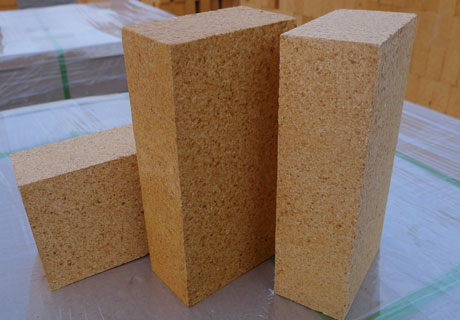
 

How to Use High Alumina Refractory Bricks and FireClay Refractory Bricks?

High alumina refractory bricks and fireclay refractory bricks are the two most commonly used refractory materials in shaped refractory materials. High alumina bricks have high refractoriness, good slag resistance, and high load softening temperature. The refractoriness of clay bricks is lower than that of high alumina bricks, and the slag resistance, especially the performance of acid slag resistance is better than that of high alumina bricks, and the thermal shock performance is good. Manufacturers of high alumina refractory bricks can provide methods of using high alumina refractory bricks to use high alumina refractory bricks more efficiently.

High-Grade High-Alumina Bricks in RS Factory

How to Use High Alumina Bricks

  1. The lining of important parts and parts with complex shapes should be pre-built first. For the lining with a complex structure and a large amount of refractory brick processing, it can be considered to change to the castable lining.
  2. The exposed metal parts left in the brick lining, including brick supporting boards, brick retaining boards, etc., should be sealed with special-shaped bricks, castables, or refractory fibers. It should not be directly exposed to hot kiln gas in use.
  3. Anchor bricks are masonry structural bricks, which should be set according to the design regulations and must not be omitted. Cracked anchor bricks shall not be used around the hanging holes. The metal hooks should be laid flat and hung firmly. The hanging hole and the hook cannot be stuck, and the gap left can be filled with refractory fiber.
  4. The expansion joints in the refractory brick lining must be reserved according to the design and must not be missed. The width of the expansion joint should not have a negative tolerance, and no hard debris should be left in the joint. And fill the seam with refractory fiber to avoid the phenomenon of being full on the outside and empty on the inside. Generally, expansion joints may not be provided in the heat insulation layer.
  5. When building capping bricks, joint bricks, and curve bricks, if the refractory bricks cannot meet the sealing requirements, the refractory bricks should be finished with a brick cutter, and the hand-processed refractory bricks should not be used. The size of the processed refractory bricks should not be less than 70% of the original refractory bricks. In the joint bricks and corner bricks of the plane, it shall not be less than 1/2 of the original brick. Must use the original brick lock.
How to Use Clay Refractory Bricks
Fireclay Bricks

How to Use Fireclay Refractory Bricks

  1. The selection of the starting point should be laid sequentially from the hot end to the cold end or from the low end to the high end.
  2. Arranging and marking the operating points.
  3. Brick selection, according to the need to use the fireclay refractory bricks of different materials in the hot and cold sections, select qualified bricks.
  4. If there are anchor nails or supporting bricks, weld the anchoring nails or supporting bricks.
  5. If there is a heat insulation layer (such as silicon-calcium board, etc.), it is necessary to install the heat insulation layer first.
  6. For mortar preparation and application, the mortar mud should match the refractory bricks.
  7. Laying bricks.
  8. Reserve and fill the swelling gap.

How to ash the general refractory brick?

Ashing is to pre-apply mud on the bonding surface of the refractory bricks to be built. According to the change of the type, shape, and location of the refractory bricks, the method of ashing is also different. The unevenness of the dusting process has a great influence on the strength of the masonry. When the dusted refractory bricks are opened for inspection after the masonry is completed, it can be seen that the joints are evenly covered with mud. However, refractory bricks with poor ash removal will have gaps on the contact surface, which will reduce the cohesive force of the brick body and may cause air leakage in the masonry.

(1) Clay ash with a trowel. He holds a brick in his left hand and a tile knife in his right. When the plastering method is used to make gray strips, the mortar is first taken with a trowel, and then the bricks are taken. When laying the gray strips, place one large side of the brick upwards. When laying the bricks in place, press the bricks tightly with your left hand, and tap with a mallet in your right hand until the bricks are finally tightened.

(2) Shovel ash. Hold the refractory brick in your left hand and a large shovel in your right hand. First use a large shovel to beat the mortar, and then take the refractory bricks. These operations are the same as the trowel ash. Attention should be paid to the four movements in the picture. The tip of the shovel moves backward along the edge of the refractory brick so that the mortar will naturally form a raised back for masonry.

Regarding the use of high-alumina refractory bricks and clay refractory bricks, Rongsheng refractory material manufacturers have put forward the above suggestions, hoping to help you when choosing high-alumina refractory bricks and clay refractory bricks. The refractory brick products of Rongsheng refractory brick manufacturer include special grade high alumina brick, first-grade high alumina brick, second-grade high alumina brick, third-grade high alumina brick, clay refractory brick, clay insulation brick, high alumina insulation brick, corundum brick, Corundum mullite bricks, magnesia bricks, magnesia carbon bricks, magnesia chrome bricks, etc. Rongsheng refractory brick manufacturers can also customize refractory bricks according to the actual needs of industrial furnaces or construction drawings. Contact us for free prices and samples, Email: inquiry@global-refractory.com, Tel/WeChat/WhatsApp: +8618538312977.

What is Alumina Silicate Refractory Brick?

Alumina Silicate Refractory Bricks, for those who do not understand the refractory industry, maybe this is a kind of refractory bricks containing aluminum and silicon. But for people in the refractory industry, there is no such name, only aluminum-silicon-based refractory bricks. So, what are Alumina Silicate Refractory Bricks? What is Alumina-Silicate Refractory Brick? First of all, let’s take a look at the definition, what does aluminum-silicon refractory brick mean?

Silicon Bricks - Rongsheng Refractory Bricks
Silicon Bricks

Alumina Silicate Refractory Bricks, also known as aluminum-silicon refractory bricks, are refractory products containing Al2O3 and SiO2 and are a series of aluminum-silicon refractory bricks. Aluminum-silicon-based refractory bricks have a wide range of applications and occupy a very important position in the refractory application industry. Its usage accounts for more than 40% of the entire refractory products.

By definition, Alumina Silicate Refractory Bricks are a series that includes multiple types of refractory bricks. Below we categorize them to give you a deeper understanding.

High Alumina Refractory Bricks - Rongsheng Company
High Alumina Refractory Bricks

Aluminum-silicon-based refractory bricks are classified in the order of increasing composition from SiO2 content to Al2O3 content.

It can be seen from the classification that silica bricks, clay bricks, and high alumina bricks are all commonly used refractory bricks for kilns. Often used for masonry kiln working layer, permanent layer, etc. Below we introduce the application of aluminum-silicon-based refractory bricks.

Mullite Bricks from Rongsheng Factory

Alumina Silicate Refractory Bricks and Their Application Range

  • Silica brick. Partition wall and lining of coke oven carbonization chamber and combustion chamber, the lining of hot blast stove roof and regenerator, small electric furnace roof masonry, glass kiln roof, acid steel furnace, and firing kiln dome.
  • Semi-silica brick. Mainly used in coke ovens, acidified iron furnaces, metallurgical furnace flues, ladle linings, molten iron tanks, glass kilns, heating furnaces, hot blast stove tops, boiler combustion chambers, etc. Semi-silica bricks are not only used in these parts but can also be used as raw materials to make refractory materials with better quality, such as flow steel bricks.
  • Clay bricks. Clay bricks are used to build heating and heat treatment furnaces, flues, open hearth regenerator checker bricks, and the bottom of regenerator walls. The lining of air ducts and gas ducts, dust collectors of iron furnaces, and linings of flues. The drying zone and preheating zone of the rotary kiln are lined. It is also a commonly used refractory material in furnaces such as boilers, lime kilns, glass kilns, and ceramic kilns.
  • High alumina brick. Masonry blast furnace, hot blast stove, ladle, rotary kiln lining, and other metallurgical kilns. High-alumina bricks can also be used as lattice bricks on hot blast stoves to stack regenerators.
  • Mullite bricks. Mullite bricks are commonly used in hot blast furnaces for ironmaking at high temperatures above 1200°C, parts of torpedo tankers impacted by molten iron, and slag lines. Furnace roof of steelmaking electric arc furnace, ceramic industrial furnace, regenerator arch, the superstructure of glass melting furnace, cement, rotary kiln lining, etc.
  • Corundum brick. Used in blast furnaces, hot blast furnaces, and refining furnaces in the metallurgical industry. Second-stage furnaces, gasification furnaces, gas-making furnaces, cracking furnaces, and various high-temperature heating furnaces in ceramics, building materials, and other industries in the petrochemical industry.
Rongsheng Corundum Bricks

It can be seen from the above list that aluminum-silicon-based refractory bricks are widely used in various kilns. One kind of refractory brick can be used for the refractory lining of many kinds of thermal furnace equipment, and one kind of kiln needs many kinds of refractory bricks. Therefore, when users communicate with refractory manufacturers about aluminum-silicon-based refractory bricks, they should determine the location of use and the use environment, so as to choose the correct Alumina Silicate Refractory Bricks.

Good quality refractory bricks are the basic conditions for increasing the service life of the kiln lining. Choosing a strong refractory manufacturer not only saves procurement costs, but also ensures the quality of refractory materials, reduces the number of furnace shutdowns and repairs, and briefly increases production costs. Contact Rongsheng refractory manufacturers to get the most competitive price of Alumina Silicate Refractory Bricks.