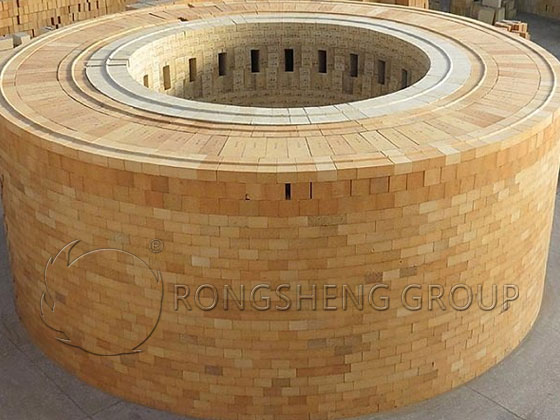
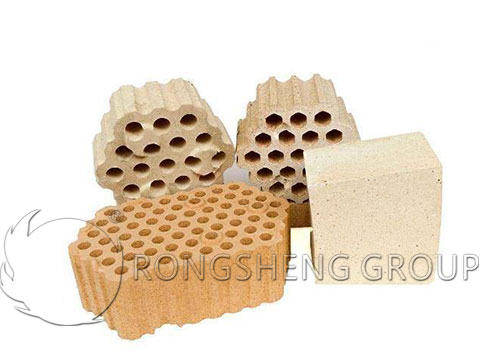
Lime Kiln Models and Refractory Bricks for Key Components

A lime kiln is a piece of equipment used for lime production; the specific models and the refractory brick materials employed vary depending on the production process and kiln structure. The following information outlines common lime kiln models, along with details regarding the refractory brick materials typically used in specific sections—including alumina content, bulk density, mass, and refractoriness.
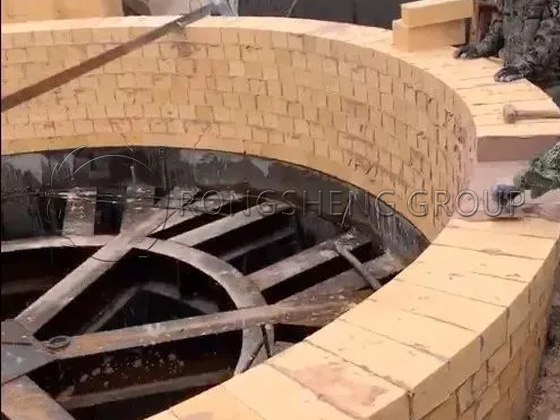
Lime kiln refractory brick Construction

Types of Lime Kilns and Refractory Bricks Used

Vertical Kiln

High-alumina bricks are typically used for the kiln lining. For instance, Grade I high-alumina bricks have a high alumina content (generally above 75%) and a relatively high bulk density (approximately 2.5–2.8 g/cm³). They are heavy, weighing around 4.6–4.9 kg per brick, and offer high refractoriness, capable of withstanding temperatures above 1790°C. Their advantages include high refractoriness, wear resistance, and erosion resistance, making them suitable for high-temperature environments. Disadvantages include a relatively high price, high thermal conductivity, and poor thermal insulation performance.

Lightweight insulating bricks can be used for the kiln roof. Diatomite bricks, for example, have a low alumina content (generally below 30%) and a low bulk density (approximately 0.6–1.0 g/cm³). They are lightweight, weighing around 1–2 kg per brick, with a lower refractoriness range of 1000–1300°C. Their advantages include excellent thermal insulation, effectively lowering roof temperatures and reducing heat loss. Disadvantages include low strength and poor wear resistance.

Rotary Kiln

High-alumina bricks or silica bricks are commonly used for the kiln lining. The alumina content and bulk density of the high-alumina bricks are similar to those used in vertical kilns. Silica bricks have a high silica content (generally above 93%) and a low bulk density (approximately 1.8–2.0 g/cm³). They are lightweight, weighing around 2–4 kg per brick, and offer high refractoriness, capable of withstanding temperatures above 1600°C. Their advantages include good thermal stability and the ability to withstand rapid temperature fluctuations. Disadvantages include a high price and poor resistance to alkalis.

Lightweight insulating bricks are generally used for the kiln roof. Alumina hollow sphere bricks, for example, have a high alumina content (generally above 60%) and a low bulk density (approximately 0.8–1.2 g/cm³). They are lightweight, weighing around 1–2 kg per brick, and offer high refractoriness, capable of withstanding temperatures above 1800°C. Its advantages include excellent thermal insulation, high refractoriness, and high strength; their disadvantage is the relatively high cost.

Sleeve Kiln

High-alumina bricks or mullite bricks are commonly used for the kiln lining. The alumina content and bulk density of high-alumina bricks are similar to those used in shaft kilns. Mullite bricks have a higher alumina content—typically around 70%—and a higher bulk density of approximately 2.6–2.8 g/cm³. They are heavier, weighing about 3–5 kg per brick, and offer high refractoriness, capable of withstanding temperatures above 1750°C. Their advantages are high refractoriness and good thermal shock resistance; their disadvantage is the relatively high cost.

Lightweight insulating bricks or ceramic fiber modules can be selected for the kiln roof. The properties of lightweight insulating bricks are similar to those used for rotary kiln roofs. Ceramic fiber modules have a lower alumina content (generally below 40%) and a lower bulk density (approximately 0.2–0.3 g/cm³). They are lighter, weighing about 0.5–1 kg per unit, with a lower refractory temperature rating (generally below 1200°C). Their advantages include excellent thermal insulation, light weight, and ease of installation; their disadvantages are lower strength and relatively high cost.

The national standards classify and define refractory bricks as follows:

  • Fireclay bricks: Aluminosilicate refractory materials containing 30%–48% Al₂O₃.
  • High-alumina bricks: Aluminosilicate refractory materials containing more than 48% Al₂O₃. Based on Al₂O₃ content, they are categorized into Grade I (Al₂O₃ > 75%), Grade II (Al₂O₃ 60%–75%), and Grade III (Al₂O₃ 48%–60%).
  • Silica bricks: Refractory materials containing more than 93% SiO₂.
  • Magnesia bricks: Refractory materials containing more than 80% MgO.
  • Special refractory bricks: Refractory materials with unique properties and applications, such as corundum bricks and silicon carbide bricks.

Parameters such as alumina content, bulk density, mass, and refractoriness vary among the different grades of high-alumina bricks.

It is important to note that the specific selection of refractory bricks should be based on a comprehensive assessment of the lime kiln’s actual conditions and operational requirements. Factors such as kiln operating conditions, fuel type, and production processes must be considered, alongside recommendations from the brick manufacturer. Furthermore, to ensure the safe operation and long-term stability of the lime kiln, the refractory lining should undergo regular inspection and maintenance, with damaged or worn bricks replaced promptly.

Magnesia-Alumina Spinel Bricks for Lime Kilns

Magnesia-alumina spinel bricks for lime kilns are high-performance refractory materials specifically designed for this application. Their primary constituent is magnesia-alumina spinel (MgAl₂O₄)—formed through the high-temperature reaction of magnesia and alumina oxides—though they may also contain specific amounts of other refractory oxides to enhance performance. Magnesia-alumina spinel offers excellent high-temperature resistance, corrosion resistance, and thermal shock resistance, making these bricks an ideal choice for critical sections of the lime kiln, such as the firing zone and preheating zone.

These bricks feature the following characteristics:

  • (1) High-temperature resistance: Magnesia-alumina spinel bricks possess exceptional refractoriness, enabling them to withstand the intense heat within the lime kiln and ensure stable kiln operation.
  • (2) Corrosion resistance: In the reducing atmosphere of a lime kiln, these bricks resist corrosion from kiln slag and furnace gases, thereby extending their service life.
  • (3) Thermal shock resistance: These bricks exhibit excellent thermal shock resistance, allowing them to withstand thermal stresses caused by rapid temperature fluctuations and preventing cracking or spalling.

Magnesia-alumina spinel bricks are primarily used in critical areas of the lime kiln—such as the firing and preheating zones—where refractory material performance requirements are extremely high. Their use can significantly improve both the operational efficiency of the lime kiln and the quality of the final product.


Use of Alumina Silica Fire Bricks in Hydrogen Reduction Furnaces

Hydrogen (H2) is a highly reducing gas and the lightest substance. Its molecular movement and diffusion speeds are extremely rapid, and it possesses strong permeability at both normal and high pressures. Due to H2’s strong thermal conductivity, the refractory materials used in the furnace’s heat-resistant structure must exhibit enhanced resistance to hydrogen reduction, lower porosity, and lower thermal conductivity.

Alumina Silica Fire Brick Used in Hydrogen Reduction Furnaces

In furnaces with low H₂ content and operating temperatures generally between 800°C and 1300°C, the lining refractory materials used are primarily alumina silica fire brick, primarily low-iron, high-alumina bricks and corundum bricks. The working layer primarily uses low-iron, high-alumina bricks and hollow corundum sphere castables, while the insulation layer primarily utilizes lightweight mullite bricks and low-iron insulating castables. This is primarily due to the performance characteristics of alumina-Si refractory materials that meet the requirements of actual working environments and have the potential to serve as refractory materials for furnace linings.

Use of Alumina Silica Fire Bricks
Use of Alumina Silica Fire Bricks in Hydrogen Reduction Furnaces

High-alumina bricks and corundum bricks are both alumina-silica fire bricks, which are based on alumina and silica. They offer a wide variety of products and a wide range of applications, representing a significant portion of refractory production. In addition to being made into fired or unfired bricks, aluminum-silicon refractories can also be made into cast products, as well as various grades of monolithic refractories, such as ramming materials, castables, and refractory coatings. The main advantages of aluminum-silicon refractories for their widespread application in high-temperature industries are:

  1. Excellent high-temperature resistance: Alumina silica fire brick has high refractoriness, excellent thermal shock resistance, and high-temperature chemical stability. They generally maintain good stability and strength in high-temperature environments and can withstand the extreme temperatures found in high-temperature furnaces.
  2. Good corrosion resistance: These refractories exhibit a certain degree of corrosion resistance against chemicals such as acids and alkalis, allowing them to operate stably for long periods in corrosive atmospheres.
  3. Good mechanical properties: These refractories generally possess excellent mechanical strength and durability, capable of withstanding the mechanical stresses and vibrations experienced during furnace operation.
  4. High adaptability: Aluminum-silicon refractories can be tailored to meet the specific refractory requirements of different industrial sectors through different formulations and preparation processes, demonstrating their high adaptability.
  5. Good cost-performance: Compared to other high-performance refractories, alumina silica fire bricks generally have a lower cost, providing a more economical solution.

To purchase high-quality alumina-silicon refractory bricks, please contact Rongsheng Refractory. Receive free samples and quotes.


Calculation and Laying Method of G-type Refractory Bricks for Lime Kiln

G1, G2, G3, G4, G5, G6, G7, G8 clay bricks and high alumina bricks, these types of refractory brick masonry circles need to be carefully calculated. At the beginning of kiln design, calculating the brick type and quantity required for G-size bricks often makes people dizzy. Today, we will bring you specific calculation methods and construction points to help you design furnace types, calculate purchase quantities and provide references for construction.

Lime kiln refractory brick Construction

Calculation of the Amount of Furnace bottom Bricks

The volume of the bottom of the lime shaft kiln can be calculated by dividing the total volume of bricks by the volume of each brick. When calculating the number of bricks per layer, the horizontal cross-sectional area of ​​the furnace bottom bricks can be divided by the corresponding surface area of ​​each brick. Generally, a loss of 2% to 5% should also be considered. If the weight of the bricks needs to be calculated, the weight of each brick is multiplied by the number of bricks.

Calculation of the Amount of Ring Furnace Body

The other parts of the lime kiln are all ring cylinders or cones. Regardless of the upper and lower layers or the inner and outer layers, rings must be built, and wedge bricks must be used when building rings. If a ring of any diameter is built, wedge bricks and straight bricks must be used together. Generally, G-1 straight bricks are matched with G-3 or G-5 wedge bricks, and G-2 straight bricks are matched with G-4 or G-6 wedge bricks. Due to the different required ring diameters, the number of straight bricks and wedge bricks is also different.

If G-3, G-4, G-5, G-6 wedge bricks are used alone to build rings, the formula can be listed:

nx=(2πa)/(b-b1)

Where:

nx——Number of wedge bricks for building a ring, pieces;

a——Brick length, mm;

b——Width of the big end of the wedge brick, mm;

b1——Width of the small end of the wedge brick, mm.

From the above formula, we can know that the number n of wedge-shaped bricks used in each ring is only related to the width of the two ends of the wedge-shaped bricks and the length of the bricks, but has nothing to do with the diameter of the ring.

It can be concluded that:

Number of bricks needed to build a ring with G-3 is n=97

Number of bricks needed to build a ring with G-4 is n=87

Number of bricks needed to build a ring with G-5 is n=48

Number of bricks needed to build a ring with G-6 is n=54

At the same time, the inner diameters of the rings built with the above four wedge-shaped bricks are 4150mm, 3450mm, 1840mm, and 1897mm, respectively.


If you want to build a ring of any diameter, you need to use straight bricks and wedge bricks together. The number of straight bricks can be calculated by the following formula:

nz=(πd-nx*b1)/b

Where:

nz——Number of straight bricks, pieces;

nx——Number of wedge bricks, which is a constant after the brick type is determined;

b1——Width of the small end of the wedge brick, mm;

b——Width of the straight brick, mm;

d——Inner diameter of the ring, mm.


Example: Try to use G-3 and G-1 bricks to build a ring with an inner diameter of 7.2 m. Find the number of wedge bricks and straight bricks required.

Solution:

nx=97 pieces

nz=(πd-nx*b1)/b=3.14*(7200-97*135)/150=65 pieces

Construction points of G-type bricks

When building a lime kiln, two types of bricks can be used to build rings of different diameters to adapt to the size of the furnace and the change of furnace diameter with height. Generally, refractory bricks G1 are matched with G3 or G5 wedge-shaped bricks, and refractory bricks G2 are matched with G4 or G6 wedge-shaped bricks. Due to the different ring diameters during the masonry process, the number of straight bricks and wedge-shaped bricks is also different.

When the inner lining of the lime kiln is built, the ring seams are required to be built with all staggered seams, and bricks must not be cut. If bricks must be cut, the cut surface must be smoothed. The thickness and staggered seams of the masonry are combined with different brick types with brick lengths of 230 mm and 345 mm. The thickness of the masonry can be increased or decreased by 115 mm and staggered seams can be achieved by matching. When the thickness change is less than 115 mm, the filler seams between the masonry and the furnace shell or the masonry and the cold wall can be used to adjust.

Of course, the specific dosage calculation and construction methods of the above methods are not fixed. It depends on the on-site furnace conditions and usage requirements.

The Use of High Alumina Bricks in the Medium Temperature Zone of Hot Blast Stoves

The selection of refractory materials for hot blast stoves is mainly determined by the temperature of the hot blast. When the wind temperature is lower than 900°C, clay bricks are generally used, and their service life can reach about 20 years. When the air temperature is between 900 and 1100°C, high-alumina bricks, mullite bricks, or sillimanite bricks are used for the furnace lining and checker bricks in the high-temperature part. When the air temperature is higher than 1100°C, high alumina bricks, mullite bricks, and silica bricks are generally used as furnace lining or checker bricks.

In recent years, newly built or renovated blast furnace hot blast stoves in various countries mainly adopted external combustion type. The supply air temperature is 1200~1350℃, and the vault temperature is generally 1500~1550℃, even close to 1600℃. Therefore, the high-temperature parts of the furnace lining and the upper layer of checker bricks are generally constructed with silica bricks, which has better results.

Low Creep High-Alumina Bricks for Hot Blast Stoves

What is the Alumina Content of High-Alumina Refractory Bricks Used in Hot Blast Stoves?

Regarding the high alumina refractory bricks with alumina content used in a new hot blast stove, it is generally recommended to choose high alumina refractory bricks with higher alumina content. High-alumina refractory bricks usually have an alumina content between 48% and 80%, which can provide better fire resistance and corrosion resistance.

The use of high alumina bricks in the medium temperature zone and high and low temperature alternating zones of hot blast furnaces.

The medium temperature area of the hot blast stove (600~1150℃) refers to the middle part of the flame in the combustion chamber, and in the regenerative type it refers to the middle part of the checker bricks, the transition section from high temperature to low temperature. In this area, low creep high alumina bricks or high-grade andalusite bricks are generally selected. For internal combustion and external combustion hot blast stoves, the area from the top of the burner to the vicinity of the hot blast outlet. As well as the top-fired hot blast stove, the space enclosed by the inner wall of the burner – the pre-combustion chamber, is a high and low temperature alternating area (35~1100℃). The temperature changes in this area are mainly caused by the mutual conversion of the “combustion-air supply” cycle of the hot blast stove. It is advisable to choose andalusite or cordierite bricks with good thermal shock resistance.

The hot air ducts of hot air stoves are also traditionally made of andalusite bricks. In recent years, with the increase in wind temperature, refractory bricks using andalusite-mullite composite have also appeared.

Kinds of Low-Creep High-Alumina Bricks for Hot Blast Furnace

There are many types of high alumina bricks, and their properties vary greatly depending on the Al2O3 content and crystal form.

  1. Low creep high alumina bricks

The main characteristic of low creep high alumina bricks is their good creep resistance. Domestic production of low creep high alumina bricks generally uses bauxite as the main raw material. The “three stone” minerals (andalusite, sillimanite, and kyanite) are additives. Among the “three stone” minerals, the addition of andalusite is more common.

Adding tristone to solve the creep resistance problem of high-alumina products lies in the final mulliteization of tristone. During the firing process of high alumina bricks, the three stones will undergo mullite formation, and the reaction will directly generate mullite. The accompanying SiO2 will react with high-alumina materials again, causing secondary mulliteization. After the final firing is completed, the three stones in the crystal phase will be completely converted into mullite, and n(Al2O3)/n(SiO2) is close to 3:2, forming a stable columnar mullite crystal phase structure. This structure determines that high alumina bricks have good creep resistance.

  1. Andalusite bricks

Andalusite bricks have good high-temperature properties, and their high-temperature creep resistance is better than high-alumina bricks and most mullite bricks. Moreover, the volume expansion associated with high-temperature mullite formation is small, and it has good thermal shock resistance. It is an ideal low-creep refractory material.

The main raw material used in the production of andalusite bricks is andalusite, and the proportion is generally higher than 40%. If it is made into andalusite-mullite composite brick, a part of mullite or corundum should also be added. If the mullite raw material is synthetic mullite. The crystals should be thicker to reduce the number of grain boundaries, weaken the slip of the crystals at high temperatures, and enhance the creep resistance of the bricks.

  1. Cordierite bricks

The linear expansion coefficient of cordierite bricks is small. The linear expansion coefficient at 20~900℃ is (1.25~1.92)×10-6℃-1, and it has good thermal shock resistance. However, the refractoriness of cordierite is low, only 1370℃. When the firing temperature is too high, a glass phase is easily produced. Pure cordierite bricks cannot be well used in high and low-temperature alternating areas due to their low operating temperature range. In actual production applications, cordierite is often added as an auxiliary raw material, which has a significant effect on improving the thermal shock resistance of bricks.

Brand & Logo Upgrade