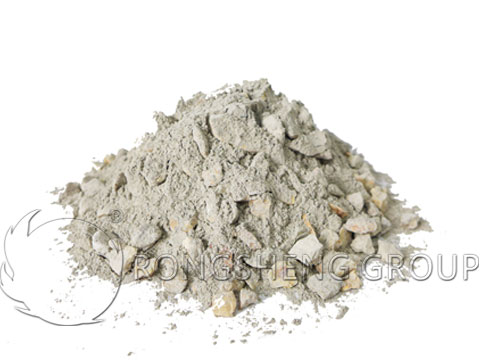
Corundum-mullite castable is a high-performance material for repairing hot blast stoves. Unlike high-temperature sintered refractory bricks, this material—though unsintered—offers superior airtightness, making it particularly suitable for emergency repairs on critical sections of the stove.
When components such as hot blast outlets or combustion ports suffer collapse or damage, traditional repair methods using composite bricks involve multiple stages—including manufacturing and pre-assembly—and struggle to meet rapid repair requirements due to the wide variety of brick types and limited usage volumes. Utilizing corundum-mullite castable for repairs effectively shortens the repair cycle and enhances operational efficiency.
Emergency Repair Process for the Hot Blast Outlet
The hot blast outlet is a critical passage within the hot blast stove, and its structural stability directly impacts operational safety. When a collapse occurs in this area and requires urgent attention, the repair can be carried out using the following steps:
- Demolition and cleanup. Systematically remove the collapsed material to ensure the repair zone is clean and safe, thereby preparing the site for subsequent operations.
- Reconstruction of the insulation layer. Construct an insulation layer inside the hot blast branch pipe using lightweight bricks to create an effective thermal barrier.
- Monolithic casting. After installing the formwork, perform a monolithic cast using corundum-mullite castable material. This process not only enables rapid repair but also ensures a tight connection between the hot blast branch pipe and the hot blast outlet, significantly enhancing the system’s sealing performance.
Emergency Repair Process for the Combustion Port
The combustion port is highly susceptible to damage within the hot blast stove. While the repair process is similar to that of the hot blast outlet, it must meet specific structural angle requirements:
- Removal of damaged sections. Clear away collapsed or damaged areas to ensure the repair substrate is intact and solid.
- Insulation layer construction. Rebuild the insulation layer using lightweight bricks to maintain the thermal performance of the combustion port.
- Sectional formwork and casting.
Implement a two-stage formwork process in the composite brick zone and perform a monolithic cast. Upon completion of the casting, ensure the structure achieves a 25° inclination angle to meet the original design specifications.
Emergency Repair Procedures for Other Areas
Corundum-mullite castables can also be used for emergency repairs in areas such as the straight sections of the hot blast stove’s main wall, the composite brickwork of the hot blast dome, and the connection points between the hot blast branch pipe and the furnace shell. When localized deformation or burn damage occurs in these areas and affects normal production, the following repair methods may be employed:
- Removal of damaged structures. Remove the damaged heavy brickwork and ensure the repair area is clean and free of debris.
- Repair of the insulation layer. Reconstruct the original insulation layer using lightweight mullite bricks to restore thermal insulation performance.
- Surface treatment. Apply asphalt paint to the surface of the lightweight bricks to enhance corrosion and water resistance.
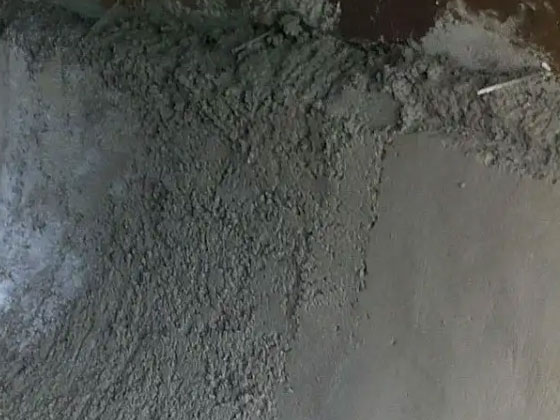
- Sectional monolithic lining installation. After erecting the formwork, install a monolithic lining in sections using corundum-mullite castable to complete the repair of the damaged upper sections of the hot blast stove.
Drying and Operational Management
Repaired areas—such as the hot blast outlet, combustion port, and hot blast branch pipe—must undergo a drying process strictly in accordance with the established drying curve. The drying procedure is crucial for fully realizing the performance potential of the corundum-mullite castable and directly impacts the service effectiveness of the repaired sections. Only after thorough drying can the repaired areas achieve optimal durability and stability, allowing for a transition to normal operation and ensuring the safe, efficient functioning of the hot blast stove.
How can the thermal shock resistance of corundum-mullite castables be improved?
Among high-temperature refractory materials, corundum-mullite castables are characterized by high load-softening temperatures and excellent creep resistance. However, pure corundum products exhibit suboptimal thermal shock resistance due to their high thermal expansion coefficients, whereas pure mullite products have lower thermal expansion coefficients and better thermal shock stability.
How can the thermal shock resistance of the castable be enhanced?
Corundum-mullite castables are composed of a composite of mullite and corundum. A mixture with a mullite-to-corundum mass ratio of 75:25 corresponds to the composition point in the SiO₂-Al₂O₃ phase diagram where a eutectic reaction occurs at 1840°C. Regarding thermal shock resistance, the mismatch in thermal expansion coefficients between mullite (which has a lower coefficient) and corundum (which has a higher coefficient) within the composite material generates micro-cracks. These micro-cracks increase the energy absorbed during fracture, thereby enhancing the castable’s thermal shock resistance.
While a composition at the eutectic point affects creep resistance, it is precisely at this ratio that the creep rate is minimized. When the mullite-to-corundum ratio is around 75:25, the aggregate significantly influences the product’s thermal expansion coefficient and the degree of thermal expansion mismatch. Under thermal shock stress, existing micro-cracks propagate, and transgranular fracture occurs within the aggregates, consuming a large amount of energy. This process inhibits the propagation of major cracks and influences the thermal shock stability of the corundum-mullite castable.
Improving the thermal shock resistance of castables
Of course, corundum castables can also exhibit excellent thermal shock resistance; differences in thermal shock stability arise from variations in the ratio of aggregate to binder. The coefficient of thermal expansion of corundum-mullite castables significantly influences their thermal shock stability; interestingly, micro-cracks resulting from thermal expansion mismatch can actually enhance the material’s thermal shock resistance.
In summary, a mullite-to-corundum ratio of 75:25 in the formulation yields optimal thermal shock stability. An apparent porosity of approximately 20% is highly beneficial for the thermal shock stability of the castable. Therefore, maintaining the apparent porosity of corundum-mullite castables at around 20% can further improve their thermal shock stability.