The primary purpose of wrapping tape (typically plastic electrical tape) around metal anchors used in refractory castables is to provide space for thermal expansion, thereby preventing the castable from cracking due to thermal stress during heating.
Key Reasons
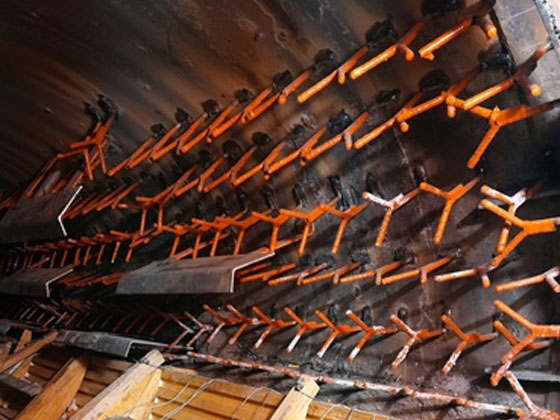
Significant Difference in Thermal Expansion Coefficients: The coefficient of thermal expansion for metal anchors (such as Q235B steel or 310S stainless steel) is far higher than that of refractory castables. Metals expand significantly at high temperatures; if in direct, rigid contact with the castable, this expansion generates immense tensile stress, leading to cracking or even spalling of the castable.
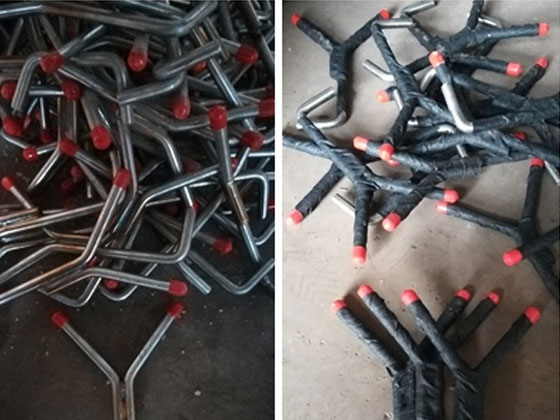
Tape as a Temporary Expansion Gap: Wrapping the anchor with tape 1–5 mm thick (or applying a coating of asphalt, paraffin, etc.) creates an isolation layer during installation. During the furnace dry-out or initial heating phase, the tape (or coating) burns off or volatilizes, leaving a small void that allows the metal anchor to expand freely, thus preserving the structural integrity of the castable.
The thickness of the tape wrapping is determined by a combination of the furnace’s operating temperature and the anchor layout density, and it is closely related to the metal anchor’s high-temperature linear expansion coefficient.
Alternative methods include coating the metal anchors with asphalt paint or fitting them with plastic protective caps.
Why do kilns and furnaces constantly require repair?
In high-temperature industries such as cement, power generation, metallurgy, and chemicals, kiln and furnace maintenance is an unavoidable issue. Furnace linings suffer continuous wear and tear from high temperatures, dust, erosion, and frequent thermal shock. Consequences range from localized spalling requiring minor repairs to complete shutdowns and total relining. A single major overhaul can halt operations for days or even weeks, leading to a compounding of production losses, energy waste, and maintenance costs.
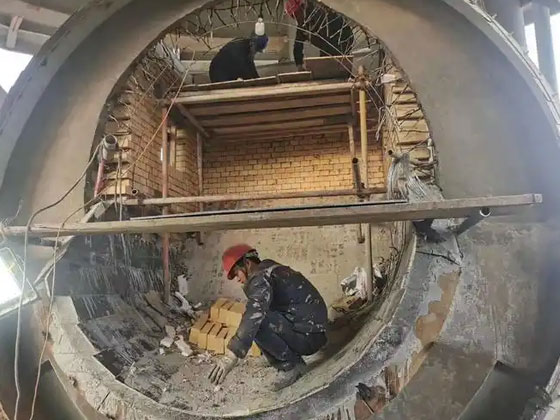
Many equipment and technical managers face a common puzzle: despite selecting “top-brand” refractory bricks, they still encounter problems like brick detachment, flame leakage, and service lives that fall short of expectations. The answer often lies not in the bricks themselves, but in the traditional masonry method—combining bricks with mortar—which inherently creates thousands of joints. These joints are precisely the weakest links in the entire lining. To fundamentally solve this problem, we turn to today’s featured solution: castables.
What are castables?
To put it simply: if refractory bricks are like “prefabricated panels,” then castable refractories are “high-temperature concrete” designed specifically for industrial equipment. Supplied as a mixture of loose aggregates and powders, the material is mixed with water on-site, then poured into molds or pumped directly to the installation area. After vibration for compaction and subsequent hardening and curing, it bonds firmly with the equipment to form a seamless, monolithic, high-temperature protective layer.
Technically speaking, castables are classified as “monolithic refractories.” Because they bypass the brick-pressing stage, they are not constrained by brick shapes and can be molded into structures of any complexity. They consist of four basic components:
- Aggregates: Refractory particles such as high-alumina bauxite or corundum; these act as the “skeleton,” determining strength and erosion resistance;
- Powders: Finely ground refractory powders that fill the voids between aggregates, increasing density;
- Binders: Most commonly calcium aluminate cement; these react with water to bond the aggregates and powders into a solid, cohesive mass;
- Additives: Small amounts of water reducers, dispersants, accelerators, anti-explosion fibers, etc., used to precisely tune construction and performance characteristics.
Principles of Industrial Refractory Castables
Core working principle: Transforming from “a bag of powder” into “a protective shell.” The process by which castables function can be summarized in three stages.
- Step 1: Mixing and casting. Water is added according to the manufacturer’s specified ratio, and the mixture is mechanically mixed into a slurry. It is then poured into formwork or pumped to the installation site. An immersion vibrator is used to expel air, ensuring the material fills every corner and preventing the formation of voids or weak points.
- Step 2: Curing and hardening. Upon contact with water, the calcium aluminate cement undergoes hydration; the resulting hydration products interlock, causing the slurry to harden gradually over a period ranging from a few hours to a day. After demolding, moisture-retention curing is required to allow full strength development—a step that lays the foundation for all subsequent performance characteristics.
- Step 3: High-temperature sintering. Before the furnace is put into operation, the temperature must be raised slowly according to a specific heating curve to first drive off free and chemically bound water. As the temperature rises further, a ceramic-bonding reaction occurs between the powder and the binder, ultimately forming a stable, dense, ceramic-bonded structure capable of withstanding high temperatures.
The key to this entire process lies in “monolithic integrity.” Traditional brick linings are assembled from individual bricks, making the joints inherent weak points; shrinkage and cracking at high temperatures allow slag, molten aluminum, and alkali vapors to penetrate, often leading to brick detachment, aluminum seepage, and flame leakage originating at these joints. In contrast, castables are poured as a single, seamless unit. They offer superior sealing and structural integrity, allowing complex areas—such as furnace roofs, nozzle zones, corners, and pipe openings—to be formed in one piece without the need to cut and shape custom bricks.
Illustration of the monolithic lining after casting: seamless and uniformly dense.
Applications of Industrial Refractory Castables
Refractory castables are suitable for use across virtually all high-temperature industries:
- Cement Industry: High-wear areas such as rotary kiln transition zones, kiln inlets/outlets, kiln hood assemblies, preheaters, and tertiary air ducts.
- Power Industry: Cyclone separators, loop seals (return legs), refractory belts, and ignition burners in circulating fluidized bed (CFB) boilers.
- Metallurgical Industry: Linings for aluminum melting/holding furnaces, heating furnace roofs and walls, ladle covers, and iron runners.
- Chemical & Petrochemical Industries: Linings for reformers, cracking furnaces, and gasifiers.
A simple rule of thumb for determining suitability: if the operating temperature exceeds 600°C, the component geometry is complex, or the application requires a seamless, airtight structure, there is almost certainly a suitable castable solution available.
Summary of Refractory Castable Essentials
Composition: Castables consist of aggregates, fines, binders, and additives. As unshaped (monolithic) refractories, their primary advantage lies in seamless, monolithic installation—eliminating the joints found in brickwork.
- Water Content is Critical: While excess water improves flowability, it causes a drastic drop in strength and abrasion resistance; strict adherence to the mixing ratio is mandatory.
- Curing and Dry-out Are Essential: Do not remove formwork or apply loads before hardening is complete. Dry-out must follow a specific heating curve; otherwise, trapped moisture cannot escape, leading to explosive spalling during heat-up.
- Selection Criteria: Consider three key factors—operating temperature, corrosive media, and operating conditions. For example, areas in frequent contact with molten aluminum require materials that are non-reactive with aluminum and resistant to aluminum penetration.
- Common Misconception: “Higher grade” does not always mean “better”; the best material is the one that is best matched to the specific operating conditions.