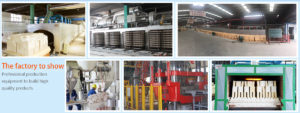
Why are Alumina Bubble Bricks Widely Used?

Alumina Bubble Bricks belongs to a kind of ultra-high temperature material energy-saving insulation material. It uses alumina hollow spheres and alumina powder as the main raw materials, combined with other binders, and fired at a high temperature of 1750 degrees. As a refractory manufacturer, why are alumina hollow ball bricks widely used? Why recommend alumina hollow ball bricks to customers? This will start with the performance of Alumina Bubble Bricks.
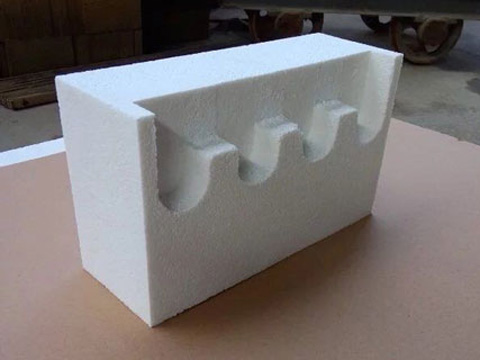
Alumina Bubble Brick - Rongsheng Refractory
Alumina Bubble Brick

The Manufacturing Process of Alumina Bubble Bricks

Alumina Bubble Brick is a new type of high-temperature insulation material, which is made by smelting and blowing industrial alumina in an electric furnace. With alumina hollow spheres as the main body, it can be made into products of various shapes, with a higher use temperature of 1800°C. The mechanical strength of the product is high, which is several times that of the general lightweight product, and the bulk density is only one-half of the corundum product. Among them, the alumina powder is produced by using reliable industrial alumina as the raw material, using a new high-temperature inverted flame kiln and a scientific calcination process. Manual selection, clear classification, fewer impurities, high conversion rate, stable shrinkage rate, and good consistency.
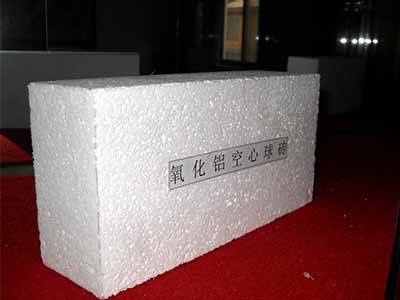
High-Quality Alumina Bubble Bricks
High-Quality Alumina Bubble Bricks for Sale

The Performance of Alumina Bubble Bricks

Alumina hollow ball and its products are a kind of light refractory material with excellent high-temperature resistance and energy saving, and it is very stable to use in various atmospheres. Especially it is used in the high-temperature furnace at 1800℃. Hollow balls can be used as high-temperature, ultra-high-temperature insulation fillers, high-temperature refractory concrete lightweight aggregates, high-temperature castables, etc. Hollow ball bricks can be used for high-temperature energy-saving (>30%) inverted flame kilns, shuttle kilns, molybdenum wire furnaces, tungsten rod furnaces, induction furnaces, nitriding furnaces, etc. Obvious effects will be achieved for reducing the weight of the furnace body, transforming the structure, saving materials, and saving energy.

The specific advantages of alumina bubble bricks are as follows.

  1. The operating temperature is high, up to 1750 degrees. Good thermal stability, the small change rate of the re-burning line, longer use.
  2. Optimize the structure and reduce the weight of the furnace body. The high-temperature-resistant materials currently used are heavy bricks with a bulk density of 2.6-3.0g/cm. The alumina hollow ball brick is only 1.1~1.5g/cm, the same volume of one cubic meter, the use of alumina hollow ball brick can reduce the weight of 1.1-1.9 tons.
  3. Save materials. To reach the same operating temperature, the price of heavy bricks is equivalent to that of Alumina Bubble Bricks, and considerable refractory materials are required for insulation. If alumina hollow ball bricks are used, 1.1-1.9 tons of heavy bricks can be saved per cubic meter, and 80% of refractory insulation materials can be saved.
  4. Save energy. Alumina hollow spheres have obvious thermal insulation properties, low thermal conductivity, and can play a very good thermal insulation effect. Reduce heat dissipation and improve thermal efficiency, thereby saving energy. The energy-saving effect can reach more than 30%.

Obviously, the excellent energy-saving effect of alumina hollow spheres makes it more competitive as a lightweight refractory material. Buyers of kiln lining materials will definitely prefer such superior refractory products. Therefore, not only refractory manufacturers recommend everyone to buy Alumina Bubble Bricks, but also its own advantages that make it so widely used. Alumina Bubble Bricks are widely used, for example, in high temperature and ultra-high temperature furnaces such as petrochemical industrial gasifiers, carbon black industrial reactors, metallurgical industrial induction furnaces. And they have achieved very good energy-saving effects.

For more refractory materials products, please contact us: inquiry@global-refractory.com.
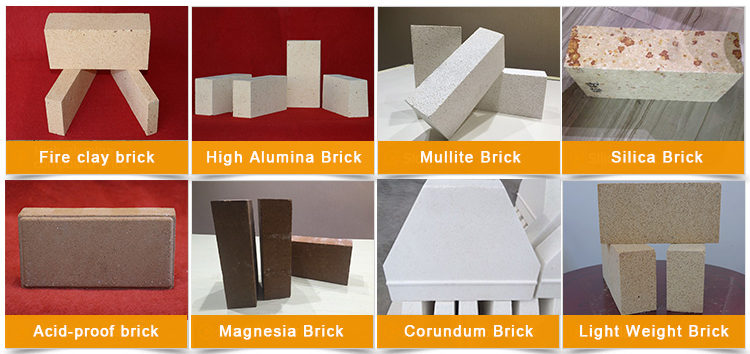
What are the Names of Refractory Materials?

What are the names of refractory materials? The question itself is inaccurate. For example, there are many kinds of cars, such as cars, vans, off-road vehicles, trucks, and so on. And there are many cars with different brands or shapes in various fields, but they are collectively called cars. Various refractory bricks or castables are collectively referred to as refractory materials. It cannot be specified which type or types of refractory bricks and castables. Because of the different fields of use, the refractory materials used in thermal equipment are also different.

Rongsheng Refractory Bricks Products

Refractory materials are divided into shaped products and unshaped products in terms of shape and are divided into three categories: ordinary, high-grade, and special-grade in temperature. The chemical properties are divided into acidic, neutral, and alkaline. Refractory insulation bricks and lightweight thermal insulation castables are called thermal insulation or thermal insulation refractory materials. No matter which method is used to define, they are called refractory materials.

Common acid-resistant bricks, oxide ceramics, refractory insulation bricks, acid-resistant refractory bricks, refractory slurries, refractory castables, lightweight thermal insulation castables, etc. Someone among them raised the question: How many names are there for the above refractory materials? He also cited a similar answer to refractory insulation bricks, also called insulation bricks.

There are many names for different refractory materials, and they are very complicated. And many materials are called differently because of different regions. For people who understand refractory materials and those who do not understand refractory materials, because they have different understandings of the same kind of refractory materials, there may be different names. For example, a common mullite insulation brick. Some people call it K23 fire brick and K28 fire brick; others call it JM23 insulation brick and JM28 insulation brick. There are others called SK32, SK34, SK36, SK37, SK38 refractory bricks, and so on. What they said is the same type of insulation brick products, and there may be slight differences in specific indicators. Therefore, as a refractory manufacturer and seller, no matter what the name of the refractory product is, we first need to confirm with the customer the application furnace type, use position and use temperature of the product that the customer needs. According to the customer’s specific needs, we will provide the customer with refractory materials that meet his thermal furnace equipment production needs.

Rongsheng Refractory Bricks Manufacturer

What are the thermal properties in refractories?

From the point of view of definition, inorganic non-metallic materials with refractoriness greater than 1580 ℃ are called refractory materials. Refractories are part of the material industry, and they are named after they are used in thermal kilns. So what are the thermal properties in refractories?

(1) Thermal expansion

The thermal expansion of refractory materials refers to the length change of the product during heating.

The expansion (or contraction) of refractory materials as the temperature changes in use will seriously affect the size, tightness, and structure of the thermal equipment masonry, and even damage the masonry. In addition, the thermal expansion of refractory materials can also reflect the thermal stress distribution and size of the product after being heated, crystal transformation and phase transformation, the generation of microcracks, and thermal shock resistance.

(2) Thermal conductivity

Under the condition of the unit temperature gradient, the heat flow rate per unit area of the material is defined as the thermal conductivity of the refractory material.

In actual production, the general thermal equipment needs to consider the amount of heat loss after passing through the refractory, and it is necessary to calculate the insulation effect of the insulating refractory. In some muffle furnaces and coke ovens, the partition walls of refractory materials are also required to have higher thermal conductivity. Therefore, the thermal conductivity of refractory materials is one of the key considerations in the design of thermal kiln lining. The pores in the refractory product have a great influence on the thermal conductivity. Within the temperature limit, for the porosity within a certain range, the greater the porosity, the smaller the thermal conductivity, and the better the thermal insulation effect.