Hardening and Curing of Rotary Kiln Lining Castables

After the castable begins to set, the curing time must be at least 24 hours at room temperature. To some extent, extending the curing time to 48 hours or longer will help increase the strength of the concrete. For low-cement castables, the setting time is often longer.

Curing of Rotary Kiln Lining Castables

For areas using high-strength castables, such as coal injection pipes and kiln openings, the curing and demolding times should be appropriately extended. Before hardening, moisture evaporation should be prevented. Treatments such as covering the lining surface with a thin layer of plastic or grass matting, or applying mud and water for curing, can be employed. During this period, due to the low strength of the concrete, excessive mechanical forces that could damage the concrete should be avoided. After hardening, the castable should be allowed to dry for a period of 24 to 48 hours at an ambient temperature of 15 to 30°C. The lower the temperature, the longer the curing time. If the temperature falls below 10°C, consider increasing the temperature to improve curing conditions. Sodium silicate and phosphate castables should be cured in a dry environment, utilizing the dehydration of the sodium silicate to increase strength. Avoid watering during curing. Demolding time should be appropriately selected. Non-load-bearing formwork should be demolded when the castable strength is sufficient to prevent it from falling apart due to cold. Load-bearing castables should be demolded when the strength reaches 70%. The core mold with higher strength should be demoulded in time without causing damage to the concrete, so as to avoid difficulty in demoulding due to excessive strength of the castable.
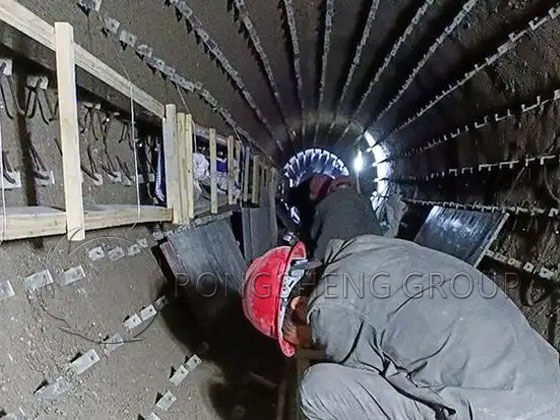
Construction of Refractory Castables for Rotary Kiln

Drying and Heating the Preheater and Precalciner Systems

After hardening or drying, the castable still contains residual physical and chemical water. This water must be removed by heating it to 300°C for gasification and dehydration. Due to the dense structure of the castable, the heating rate must be slow to avoid damage to the castable caused by stress due to rapid temperature increases and excessive evaporation of water. The kiln system’s drying and heating schedule may not always meet the drying requirements of the preheater and precalciner (the grate cooler, kiln head hood, and tertiary air duct meet the kiln system’s drying and heating schedule and are not listed separately). Therefore, the kiln system’s baking and heating schedule, described below, should be implemented in conjunction with the requirements of this section.

If the primary preheater fails to meet the drying requirements when the kiln system reaches 600°C (based on the kiln exhaust gas temperature), the kiln system’s holding time at 600°C should be extended. The final batch of refractory castables should be cured at approximately 25°C for at least 24 hours (for low-cement castables, the curing time should be extended to 48 hours, if appropriate). After the castable has achieved a certain strength, the formwork and supports are removed.

After drying for 24 hours, the curing process can begin. If the curing temperature is too low, the curing time will need to be extended. Based on the kiln exhaust gas temperature, increase the temperature at a rate of 15°C/hour until it reaches 200°C, holding it for 12 hours. Increase the temperature at a rate of 25°C/hour to 400°C, holding it for at least 6 hours. Increase the temperature to 600°C, holding it for at least 6 hours.

The following two conditions are necessary and sufficient for the bakeout of the decomposition furnace and preheater systems:

When the temperature of the refractory castable at the cyclone preheater pouring hole, on the side closest to the silicon cover plate, reaches 100°C, continue drying for at least 24 hours.

At the manhole door of the first-stage cyclone preheater, contact the flue gas with a clean piece of glass. If no moisture condensation on the glass is observed, hold it for 6 hours.

Curing and Curing Time for Refractory Castables

The curing and curing time for refractory castables are affected by a variety of factors. The following is a guide to common curing times:

Regular Curing Time

  • Formwork Curing: After pouring, the castable generally requires 24 hours of formwork curing before demolding.
  • Post-Demolding Curing: A 24-hour natural curing period is ideal after demolding. This allows the castable to reach a certain strength and avoid premature disturbance.

Adjustments for Special Situations

  • Low-cement castables: Curing requirements are higher, and curing time may need to be extended to 48 hours or even longer, depending on the material properties.
  • Winter Construction: When the ambient temperature is below 5°C, insulation measures (such as steam curing or electric heating) are required. Curing time may be extended to 48-72 hours to ensure sufficient curing of the castable.
  • High Temperature Environment: When the ambient temperature is above 30°C, moisture-retention curing is required to prevent rapid evaporation of moisture, which could affect strength. Curing time is generally no less than 24 hours.

Curing Precautions

  • During curing, maintain the ambient temperature between 15-35°C and avoid sudden temperature fluctuations.
  • Cement-bonded castables require moist curing, while waterglass or phosphate-bonded castables should be cured in a dry environment and avoid watering.
  • During curing, avoid striking or vibrating the castable to prevent cracking.

The curing and curing time for common refractory castables at room temperature (10-30°C) is generally around 48 hours, but the specific time varies depending on factors such as material type, ambient temperature, and construction process. During construction, strictly follow the material specifications and construction specifications to ensure that curing conditions meet standards and guarantee the performance and service life of the castable.
 

How to Use Low Cement Refractory Castable?

Low-cement castables are mainly used in various heat treatment furnaces such as furnace walls, furnace roofs, furnace bottoms, aluminum ladles, chutes, smelting equipment, high-temperature kiln linings, heating furnaces, and soaking furnaces of aluminum melting furnaces. Low-cement castables have high refractoriness, good high-temperature performance, high medium-temperature, and high-temperature strength, and good anti-stripping and anti-erosion properties. So, how to use low cement refractory castable? What are the precautions in the use of low cement castables? Rongsheng refractory manufacturers, based on years of experience in production, sales, and construction, will answer your questions.

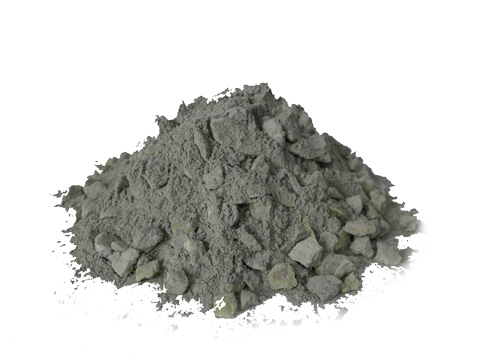
Rongsheng Low Cement Castable

How to Use Low-Cement Castables?

  1. Stir

Must be mixed with a forced mixer. Use clean water, the water temperature should be 10-25 ℃. Strictly follow the mixing ratio given in the material instruction manual for ingredients and water. In order to overcome the uneven particle size distribution of the dry aggregate during transportation, it should be dry mixed for 1 minute and then mixed with water for 4 to 5 minutes.

  1. Pouring

The mixed castable is quickly transported to the pouring site, and the castable is poured into the mold with a small shovel and a special hopper. When pouring, the material should be cut from one side of the formwork to prevent the lower part from creating a void. When cutting the material, prevent the wrapped ceramic fiber felt from breaking and falling off. After the material is full, start the vibrator, and the material surface will sink during the vibration. Add materials in time. When the castable surface no longer sinks or the surface is flooded and no bubbles escape, the vibration can be stopped, and the vibration time is generally 2 minutes.

  1. Demolition and repair

When the temperature in the furnace is between 10 and 25°C, the formwork can be removed 8 hours after pouring, and the castable can be cured naturally after the formwork is removed. The pouring quality should be checked in time, and general defects will not be dealt with. However, important parts and larger problems need to be repaired to make the lining meet the requirements of the production process.

Precautions for the Use of Low-Cement Castables

  1. Adjust the castable according to the proportion

When using low-cement castables, attention should be paid to the deployment method, and the proportion must follow the corresponding regulations. Do not add water arbitrarily or blindly add castables. Once the ratio is wrong, the pouring effect will be greatly reduced. Therefore, castable operators must have rich experience and be able to complete the deployment of castables in a reasonable proportion to ensure smooth follow-up work.

  1. The evenly stirred castable should be used as soon as possible

In the actual application of low-cement castables, many customers mixed the castables evenly and left them aside, and did not use them in time. The disadvantage of this is that the low-cement castable exposed to the air will evaporate more water, which will reduce the moisture content of the castable, which is not conducive to the use of the castable.

  1. The storage of castables should be mainly dry

If the amount of low-cement castables purchased is large, it needs to be stored in a relatively dry environment in time, and the corresponding protection work should be put in place to ensure that the castables are not affected by the external air and avoid quality damage. Take the appropriate amount before use, and do not put all the castables on the construction site, this behavior will interfere with the preservation of castables.

  1. Formulate a reasonable oven curve

The outstanding feature of low-cement castables is dense and high strength, which brings benefits to use, but improper baking will easily cause peeling or bursting. Therefore, it is very important to formulate a reasonable oven curve. If necessary, an excellent explosion-proof admixture can be used, so that the moisture of the low-weight cement castable can be removed smoothly without causing any side effects.

According to the use method of low cement castable, the ideal use effect can be achieved. It should be noted that the air permeability of low-cement castables is poor, and it is easy to cause peeling or bursting during the baking process. The baking system should be formulated reasonably according to its material, construction thickness, and construction site. At the same time, metal aluminum powder, organic fiber, etc. can also be added to the castable. Make it easier to remove moisture and increase the service life of low cement refractory castables. Rongsheng Refractories Co., Ltd. produces and sells various castable products such as low-cement castables, which are easy to use, excellent in performance, and wide in application. Contact us for free samples and price information.

Why are High Alumina Castables So Popular?

The high-aluminum castable is based on the traditional ratio, adjusted the particle gradation, and added different additives to reduce the amount of cement and improve the performance. Improve the medium temperature strength and load softening temperature, reduce the thermal conductivity, and have good thermal stability. High-alumina castables are resistant to penetration, erosion, impact, and abrasion. Good mechanical properties, strong integrity of the furnace body structure, and better air-tightness than brick furnaces. Extend the furnace life, save the cost of repairing the furnace, and have the characteristics of high aluminum castables with significant economic benefits.

High Alumina Castable Refractory - Rongsheng Company
High Alumina Castable Refractory

The Effect of Adding High Alumina Cement to Refractory Castable

The high alumina cement is added to the refractory castable for binding.

According to the content of alumina, alumina, and calcium oxide in high alumina cement, there are CA-50, CA-70, and CA-80. CA-50 high alumina cement is yellow cement, and its raw materials are bauxite and limestone. CA-70 high-alumina cement has fewer impurities and has better setting characteristics and refractoriness than CA-50 refractory cement. The binder used in the preparation of low cement refractory castables. The aluminum content of CA-80 high-alumina cement is 80%, and it contains α-AL2O3 fine powder, which is used as a binder in high-grade refractory castables. Because CA-70 and CA-80 have high aluminum content in cement, they can improve the weak links of the setting-speed and medium temperature strength of refractory castables. And because of the low calcium content, the later strength of the refractory castable has a longer service life.

The higher the alumina content, the higher the refractoriness; the lower the alumina content, the higher the calcium oxide content. Add high-alumina cement as a binder to demould the refractory castable within 24 hours. High alumina cement will affect the fluidity, construction time, and demoulding time of refractory castables. If used improperly, it will have a great impact on the construction of refractory castables.

The use of high alumina cement is divided into three stages: dissolution, nucleation, and precipitation. For example, CA-50 high alumina cement is generally used in medium and low-grade refractory castables. CA-50 cement has the weakest strength at 800℃. Therefore, if the temperature of the furnace lining is 800℃, it is also the most embarrassing temperature. The temperature is not high, instead of using general refractory castables, low cement castables must be used. Low-cement castables have low calcium content, good strength at medium temperature, and good strength in later use.

CA-70 and CA-80 high-alumina cement have high aluminum content and a low addition ratio. Therefore, it is used in low cement refractory castables, which not only enhances the strength of the refractory castable but also reduces the calcium content of the refractory castable. It can also improve the use of medium temperature strength.

Therefore, adding high-alumina cement to refractory castables not only depends on the combination but also pays attention to the use temperature to determine whether to add CA-50 high-alumina cement or CA-70 and CA-80 high-alumina cement.

Is there a difference between high-alumina castable and high-alumina low-cement castable?

There is a difference between high-aluminum castables and high-alumina low-cement castables.

The high-aluminum castable refractory cement is added in 12%, which is convenient for construction and fast in the early stage, but the calcium content is high, and the later use strength is not as good as the low cement castable. High-aluminum low-cement castable refractory cement is added in 6%, low calcium content, and good strength in later use.

If used for chimney lining, it is better to use high aluminum castable. Because of a large amount of refractory cement added, the chimney lining will encounter the impact of smoke and water mist. Due to a large amount of cement on the surface of high-aluminum castables, the construction speed is fast and the surface is smooth. Therefore, in this case, high-aluminum castables are more suitable.

High-aluminum low-cement castables have a small amount of refractory cement binder added, and a small amount of water added during construction. It is easy to bake and has good strength in later use and high-temperature resistance. In addition, the raw materials and binders of high-alumina and low-cement castables are better than those of general high-alumina castables, and the refractory cement is also relatively different in grades. The price is also relatively higher than that of high-aluminum castables.

High-alumina and low-cement castables are relatively used in high-temperature parts. It has a better effect than high aluminum castable. The material matrix used is also different than the high-aluminum castable. So these two castables are different.

Rongsheng Refractory Material Manufacturer and Sales Factory

Rongsheng is a refractory castable manufacturer with rich production and sales experience. Rongsheng’s advanced environment-friendly and fully automatic unshaped refractory production line have an annual output of tons. If you need to buy high-quality high-aluminum refractory castables and high-alumina low-cement refractory castables, please contact us. We will provide you with refractory products that best suit your production needs according to your specific production needs.