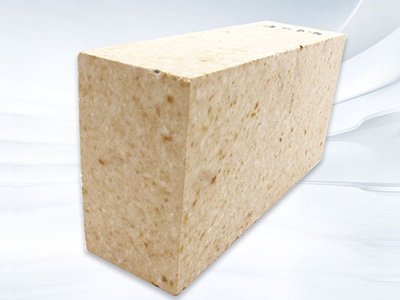
Alumina-silicon refractories are mainly composed of Al₂O₃ and SiO₂, with corundum and mullite as their primary phases. Corundum possesses advantages such as high mechanical strength, wear resistance, and high chemical stability. Mullite exhibits advantages such as high refractoriness, high load softening temperature, excellent thermal shock resistance, and strong resistance to chemical corrosion. Therefore, alumina silica fire brick possess excellent mechanical properties, high-temperature resistance, and corrosion resistance, making them widely used in high-temperature industrial equipment such as blast furnaces and converters.
With the development of hydrogen metallurgy technology, the hydrogen content in reducing gases will further increase, and the service environment of refractory materials will become more demanding. Therefore, the applicability and corrosion mechanisms of alumina-silicon refractories have become a research hotspot for scholars both domestically and internationally. This paper introduces the research results on the thermodynamic stability of refractory materials under reducing atmospheres, the influence of various factors on reaction rates, and the research on the corrosion mechanisms of alumina silica fire brick, aiming to provide a reference for extending the service life of refractories used in hydrogen-based shaft furnaces.
Thermodynamic Stability Studies
Many scholars have analyzed the potential reactions between various components of alumina silica fire brick and reducing gases, as well as the Gibbs free energies of these reactions, through thermodynamic calculations. Simultaneously, the thermodynamic software FactSage was used to simulate the thermodynamic equilibrium states of refractory material components with reducing gases at different temperatures, atmosphere compositions, and pressures, thus obtaining the order of thermodynamic stability of each component under a reducing atmosphere.
Some scholars have calculated the standard Gibbs free energies of the reactions of corundum, quartz, and mullite with H₂ at 1400℃, and calculated the equilibrium partial pressures of the gaseous products. These were used to determine the thermodynamic stability of the reactants, with the order being corundum > mullite > quartz. This indicates that corundum possesses good thermodynamic stability under a pure H₂ atmosphere. Subsequently, the partial pressures of gaseous products when typical components in brown fused alumina reach equilibrium with H₂ below 1400℃ were further calculated, yielding the following thermodynamic stability order for each component in the brown fused alumina raw material: Al₂O₃ > CaO > MgO > SiO₂ > TiO₂ > Fe₂O₃.
Some researchers have calculated the Gibbs free energy changes of possible chemical reactions between components such as Al₂O₃, MgO, CaO, ZrO₂, MA, CA₆, Fe₂O₃, Cr₂O₃, and SiO₂ and H₂ in refractory materials within the temperature range of 600–1600 K. The results show that the Gibbs free energy changes of the components Al₂O₃, MgO, CaO, ZrO₂, MA, and CA₆ with H₂ are all greater than zero. This indicates that the reaction is not easily initiated, and these components exhibit good thermodynamic stability in a pure H₂ atmosphere. Other impurities, such as Fe₂O₃ and Cr₂O₃, react more readily with H₂, exhibiting poor stability. Furthermore, at temperatures above 1200℃, SiO₂ reacts with H₂ to produce SiO and H₂O gases. Therefore, Fe₂O₃, Cr₂O₃, and SiO₂ are relatively unstable in reducing atmospheres, and the content of these components should be controlled in alumina silica fire brick manufactured under high-temperature reducing atmospheres.
Scholars have calculated the partial pressure of water vapor at equilibrium of the reduction reactions of refractory material components (MgO, CaO, Al₂O₃, CA₆, 3Al₂O₃·2SiO₂, SiO₂, TiO₂, Fe₂O₃) under different atmospheres [pure H₂ atmosphere, a mixed atmosphere of 75%(φ)H₂+25%(φ)CO] and different pressures (0.2~1 MPa) for different service environments inside hydrogen-based shaft furnaces. The results show that:
- 1) Under a pure H₂ atmosphere, the main components of alumina silica fire brick can be reduced to elemental forms or lower valence compounds. Fe₂O₃ and TiO₂ are relatively easily reduced, and the equilibrium partial pressure of water vapor for 3Al₂O₃·2SiO₂ and SiO₂ is basically the same at different temperatures. The thermodynamic stability order of the components in the refractory material is: MgO > CaO > Al₂O₃ ≈ CA₆ > 3Al₂O₃·2SiO₂ ≈ SiO₂ > TiO₂ > Fe₂O₃.
- 2) Under a mixed atmosphere, Al₂O₃, MgO, CaO, and CA₆ do not undergo reduction reactions. The stability of 3Al₂O₃·2SiO₂, SiO₂, TiO₂, and Fe₂O₃ is worse than under a pure H₂ atmosphere.
- 3) Under different pressures, the partial pressure of water vapor is the same when all components reach equilibrium with the reducing gas.
- Among the main components of aluminosilicate refractories, Al₂O₃ exhibits strong thermodynamic stability, while SiO₂, Cr₂O₃, Fe₂O₃, and TiO₂ show relatively weak stability under reducing atmospheres. Therefore, the contents of SiO₂, Cr₂O₃, Fe₂O₃, and TiO₂ in the material should be controlled under high-temperature and high-pressure reducing atmospheres.
Factors Affecting the Reduction Reaction Rate
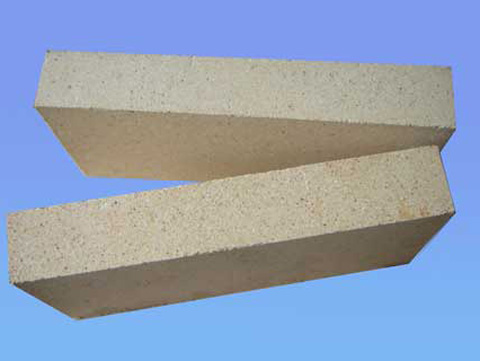
During service, refractory materials are subjected to the combined effects of hydrogen-rich gas erosion, thermal stress, and mechanical loads. Therefore, the factors influencing the reduction reaction in refractory materials are extremely complex. These include the diffusion and adsorption of reducing gases, chemical reactions, and the desorption of gaseous products. As the reaction continues, the refractory material itself undergoes changes, such as mass loss, chemical changes, and alterations in pore structure. Currently, research on the effects of reduction reactions mainly focuses on the chemical composition of the refractory material, temperature, and the composition of the reducing atmosphere.
Performance Characteristics of Aluminosilicate Refractory Components under Reducing Atmospheres
Simulation calculations using FactSage thermodynamic software revealed the thermodynamic stability order of various components in aluminosilicate refractories under reducing atmospheres, providing a theoretical basis for the rational selection and precise design of refractory materials. In the erosion tests of alumina silica fire brick, the factors affecting the reduction reaction rate mainly include the chemical composition of the refractory material, temperature, and the composition of the reducing atmosphere. Increasing the reduction temperature, increasing the CO concentration in the reducing gas, and having a higher SiO₂ content in the material components all increase the degree of reaction. Under high-temperature conditions, the phase composition and microstructure of aluminosilicate refractories undergo significant changes after being eroded by a reducing atmosphere, thus reducing their stability under reducing atmospheres. With the further development of low-carbon metallurgical technology, the increased volume ratio of H₂ in the reducing gas and the rise in temperature will make the service environment of aluminosilicate refractories even more severe. Therefore, to address the current problems in the resistance of aluminosilicate refractories to reducing gas erosion and improve their service life, research can be conducted in the following directions:
- (1) Thermodynamic simulations of various gases (H₂, CO, CO₂, H₂O, and CH₄) should be performed, along with corresponding high-temperature simulated erosion tests to verify the stability of alumina silica fire brick under complex operating conditions.
- (2) Refractory material design should be tailored to the service conditions of different parts of hydrogen-based shaft furnaces. Aluminosilicate refractories can improve their reduction resistance and inhibit CO disproportionation by improving chemical composition, controlling apparent porosity, reducing glass phase composition, and decreasing Fe₂O₃ content, thus extending their service life.
- (3) Long-term kinetic studies should be conducted to quantify the reaction rate of aluminosilicate refractories under reducing atmospheres, identify the main factors affecting the reaction rate, and predict the service life of aluminosilicate refractories under service conditions.