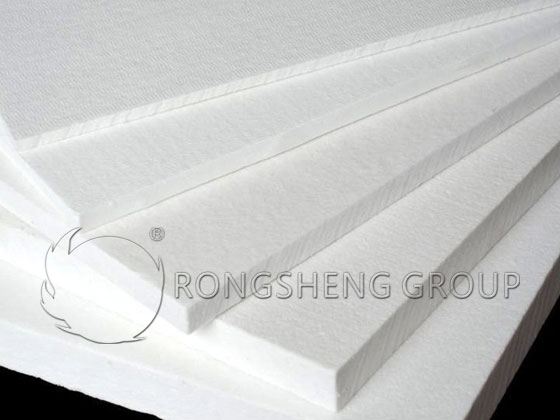
Refractory ceramic fiber refers to man-made mineral fiber suitable for use as thermal insulation at temperatures above 800°C. Refractory ceramic fiber boards are rigid, flat products typically manufactured using a wet process and containing inorganic or organic binders. So, what are the characteristics of ceramic fiber boards, and how are they installed?
Characteristics of Ceramic Fiber Boards
1. Ceramic fiber boards are not only rigid in texture but also possess excellent toughness and strength, making them resistant to wind erosion. They offer very high compressive strength and a long service life. Additionally, ceramic fiber is an environmentally friendly material; it has low thermal inertia, allowing for precise control over heating response times.
2. Ceramic fiber boards are not brittle, which gives them good toughness; furthermore, precise manufacturing ensures excellent flatness. They are convenient to install and easy to cut. They dry very quickly—often achieving thorough, uniform drying within just a few minutes—and have a very low moisture content, ensuring high quality.
How to Install Ceramic Fiber Boards
1. First, clean the wall surface to remove loose dust, grease, and other debris. Scrape away any loose concrete or debris from cracks; repair any areas where the plaster or render has delaminated (hollow spots).
2. High standards of flatness are required for installing ceramic fiber boards; surface deviations must not exceed 4 mm. If the deviation is significant, grind down protruding areas. Fill in recessed areas with a repair layer at least 6 mm thick, ensuring that both internal and external corners remain square and true. Additionally, use specialized adhesive mortar and surface-specific bonding agents for the installation.
3. Mix the adhesive mortar at a water-to-mortar ratio of 1:5. Add water while mixing and continue for at least 5 minutes, ensuring consistent mixing intensity and moderate viscosity. Let the mixture rest for 5 minutes, then stir it again before application. Use the prepared mortar within one hour; using it within this timeframe maximizes the bond strength between the board and the mortar, ensuring a secure attachment.
Installation Procedures for Ceramic Fiber Boards Across Different Industries
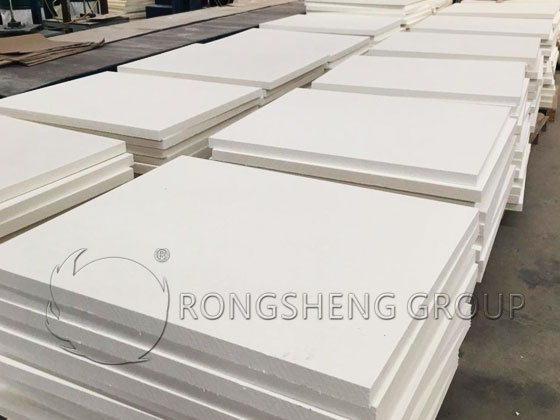
Installation procedures for ceramic fiber boards vary depending on the industry in which they are applied. Therefore, it is crucial to avoid errors during installation, as mistakes can compromise the quality of the finished assembly.
Industrial Furnace Construction
1. Clean the surface of the area to be lined (including the substrate surface).
2. Adhesive mixing ratio: Mix the adhesive powder and sodium silicate (water glass) evenly at a 1:1.2 ratio (do not use water).
3. Use plastering tools to apply the adhesive evenly to the surface of the insulation board. Press the boards firmly together—both vertically and horizontally—to ensure a tight, secure bond.
Manufacturing and Heat Treatment Industries
1. Clean the concrete wall surface to remove loose dust, oil stains, debris, and areas with hollow spots (delamination).
2. Remove loose concrete fragments, inclusions, and hollow areas from the ceiling slab, then repair these spots.
3. The surface flatness deviation for bonding ceramic fiber boards must not exceed 4mm. If the deviation exceeds this limit, grind down protruding concrete areas and fill in recessed areas. For fill-in thicknesses exceeding 6mm, use 1:2.5 cement mortar; for thicknesses less than 6mm, use polymer bonding mortar. Ensure the overall wall flatness remains within 4mm, with square internal and external corners and straight vertical alignment.
4. The mortars used include a specialized bonding mortar and a high-temperature adhesive for the surface layer.
5. Mix the bonding mortar at a water-to-mortar weight ratio of 1:5. Add water while stirring; mix for at least 5 minutes to ensure thorough, uniform blending, achieving moderate consistency and appropriate viscosity.
6. After mixing, let the mortar sit for 5 minutes and stir again before use; the prepared mortar must be used within one hour.
7. To enhance the bond between the extruded board (XPS) and the bonding mortar, [treat the surface] prior to bonding the fiber board.
Construction Industry
For general renovation and interior finishing, the installation method is very simple. Since the board is primarily used for fireproofing and thermal insulation, leaving it exposed is generally not recommended; instead, installers should bond the ceramic fiber board tightly against the unfinished wall and secure it with mechanical anchors (nails). The exterior is then finished with wall cladding.
Therefore, when installing and using ceramic fiber boards across various industries, it is essential to strictly adhere to the correct installation procedures to ensure the highest quality of the installation.